





First, What Exactly is Thrust?
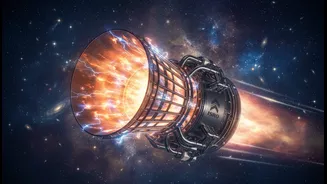
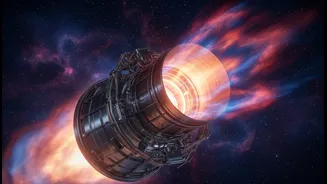
In simple terms, thrust is the force that pushes a rocket upwards. It's a direct application of Newton's Third Law of Motion: for every action, there is an equal and opposite reaction. A rocket engine works by expelling a massive amount of hot gas downwards
at very high speed. This downward action creates an equal, opposite reaction force that pushes the rocket up. The amount of this push is its thrust, typically measured in Newtons (or kilonewtons, kN). More thrust means more power to lift heavier objects or to send them further into space.
Why More Power is a Game-Changer
India's current rockets, like the highly reliable Polar Satellite Launch Vehicle (PSLV) and the Geosynchronous Satellite Launch Vehicle (LVM3), have been the backbone of its space program. They have successfully launched numerous satellites and missions like Chandrayaan and Mangalyaan. However, for India to compete in the lucrative global market for heavy satellite launches and to realize its ambitions of a space station by 2035 and crewed lunar missions by 2040, it needs rockets that can lift significantly heavier payloads. This is where high-thrust engines become non-negotiable. They are essential for reducing launch costs, launching multiple satellites at once, and sending large-scale interplanetary and human missions into deep space.
India’s Next Leap: The Semi-Cryogenic Engine
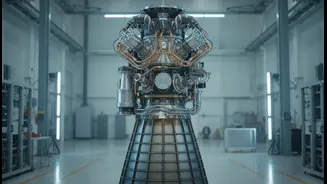
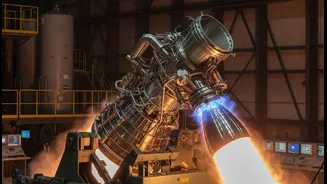
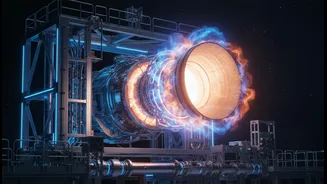
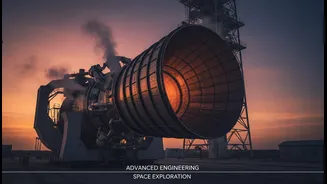
The key to achieving higher thrust for the Indian Space Research Organisation (ISRO) lies in the development of semi-cryogenic engines. ISRO is developing the powerful SE-2000 engine, which is designed to produce a massive 2,000 kN of thrust. Unlike a fully cryogenic engine that uses super-cooled liquid hydrogen, a semi-cryogenic engine uses refined kerosene (or 'ISROSENE') as fuel, which can be stored at room temperature, and liquid oxygen as the oxidiser. This combination is more stable, less complex to handle, and allows for more powerful, efficient, and cost-effective engine designs suited for heavy-lift rockets. Recent tests have shown great progress, with the engine's power head article being successfully tested at significant thrust levels in June 2026.
The Future Ride: Next Generation Launch Vehicle
The SE-2000 engine is the heart of India's planned Next Generation Launch Vehicle (NGLV). Approved by the Union Cabinet in September 2024, the NGLV is envisioned as a partially reusable, three-stage rocket that will eventually replace the entire fleet of PSLV and GSLV rockets. This future rocket is projected to be capable of lifting up to 30 tonnes to Low Earth Orbit—three times the capacity of the current LVM3. With a reusable first stage, the NGLV aims to make space access much more affordable, positioning India as a major player in the global launch industry.
Guidance for Future Rocket Scientists
For students and enthusiasts captivated by India's journey to the stars, this technological leap presents immense opportunities. The development of advanced propulsion systems requires skilled engineers in fields like propulsion engineering, materials science, avionics, fluid dynamics, and control systems. The growing involvement of private companies like Skyroot Aerospace and Agnikul Cosmos, alongside government giants like ISRO and DRDO, is creating a vibrant ecosystem for aerospace careers in India. Aspiring engineers should focus their studies on these core areas. Pursuing projects, internships, and specialised courses in propulsion technology can provide a significant advantage in joining this high-growth sector.