





A Flawless Arrival in Orbit
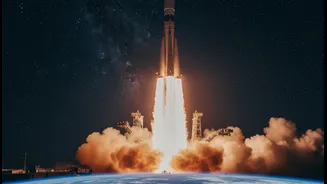
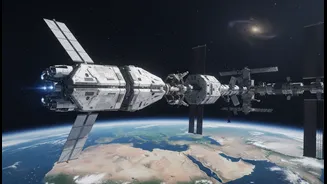
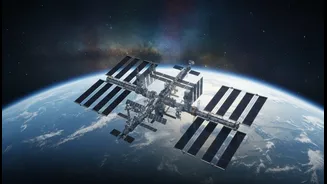
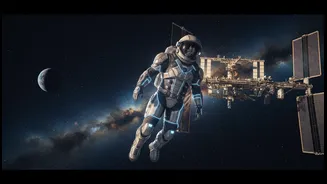
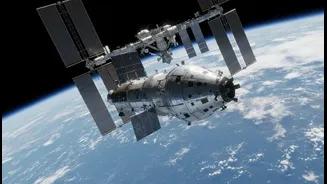
In the early hours of July 15, 2026, the Soyuz MS-29 spacecraft carrying Menon and his fellow crewmates, Russian cosmonauts Pyotr Dubrov and Anna Kikina, successfully docked with the ISS. The event marked the beginning of Menon's first spaceflight, an ambitious
long-duration stay focused on a wide array of scientific experiments. After launching from the Baikonur Cosmodrome in Kazakhstan, the crew's swift journey concluded with hugs and handshakes from the astronauts already aboard the orbiting laboratory, officially starting Menon's tenure as a flight engineer for Expedition 75. The mission not only represents a personal pinnacle for Menon but also a moment of immense pride for the Indian diaspora worldwide.
From Physician to Pioneer
Anil Menon's journey to the stars is a testament to a lifetime of dedication across multiple demanding fields. Born in Minneapolis, Minnesota, to an Indian father from Kerala and a Ukrainian mother, his background is a rich tapestry of cultures. A graduate of Harvard and Stanford, where he earned degrees in neurobiology, mechanical engineering, and medicine, Menon's resume is nothing short of extraordinary. He is a practising emergency physician and a Colonel in the U.S. Space Force. His career has taken him from being a first responder at disaster sites like the 2010 Haiti earthquake to serving as a flight surgeon in Afghanistan. He has even provided medical care to climbers on Mount Everest, showcasing his expertise in extreme environments. Before his selection as a NASA astronaut in 2021, Menon was SpaceX's first-ever flight surgeon, where he helped launch the company's first humans into orbit and built its medical program from the ground up.
A Laboratory in the Heavens
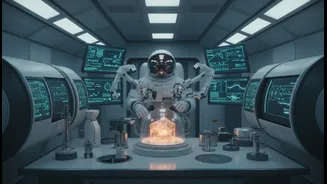
Menon’s eight-month mission is packed with scientific objectives that leverage the unique microgravity environment of the ISS. Given his extensive medical background, a significant portion of his research will focus on human physiology. He will conduct experiments studying the effects of long-duration spaceflight on the human body, including how microgravity impacts muscle atrophy, bone density, and vision. These studies are not just for the benefit of future astronauts on long journeys to the Moon and Mars; they also provide invaluable data for medical challenges on Earth, helping scientists better understand diseases like osteoporosis and Parkinson's. Menon is also tasked with testing technology to produce intravenous fluids from the station’s water supply, a critical capability for future deep-space medical emergencies.
Carrying on a Proud Legacy
Anil Menon joins a distinguished lineage of astronauts with Indian roots. He follows in the footsteps of pioneers like Rakesh Sharma, the first Indian citizen in space, and NASA astronauts Kalpana Chawla, Sunita Williams, and Raja Chari. His journey is particularly celebrated in Kerala, the home state of his father. Menon has maintained a strong connection to India throughout his life, having spent a year there as a Rotary Ambassadorial Scholar to support polio vaccination efforts. His mission is seen as an inspiration, especially as India advances its own human spaceflight ambitions with the Gaganyaan program. Menon's close friendship with Gaganyaan astronaut-designate Prasanth Balakrishnan Nair further strengthens this bond, creating a bridge between NASA's current explorers and India's future ones.