





Beyond Simple Typing
For generations, taking notes has been a manual task. Whether with pen and paper or a laptop, the process relied on a student's ability to listen, synthesize, and write simultaneously. This often leads to a divided focus, where the act of capturing information
overshadows the process of absorbing it. AI note-taking tools fundamentally change this dynamic. These aren't just digital notebooks; they are intelligent assistants that can transcribe spoken words in real time, organize messy information, and even identify key ideas without your intervention. This frees up students' cognitive resources to engage with the material on a deeper level, ask questions, and participate in discussions.
Perfect Recall with Automated Transcription
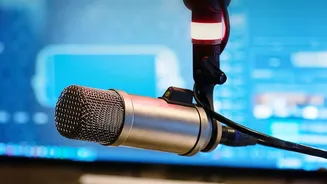
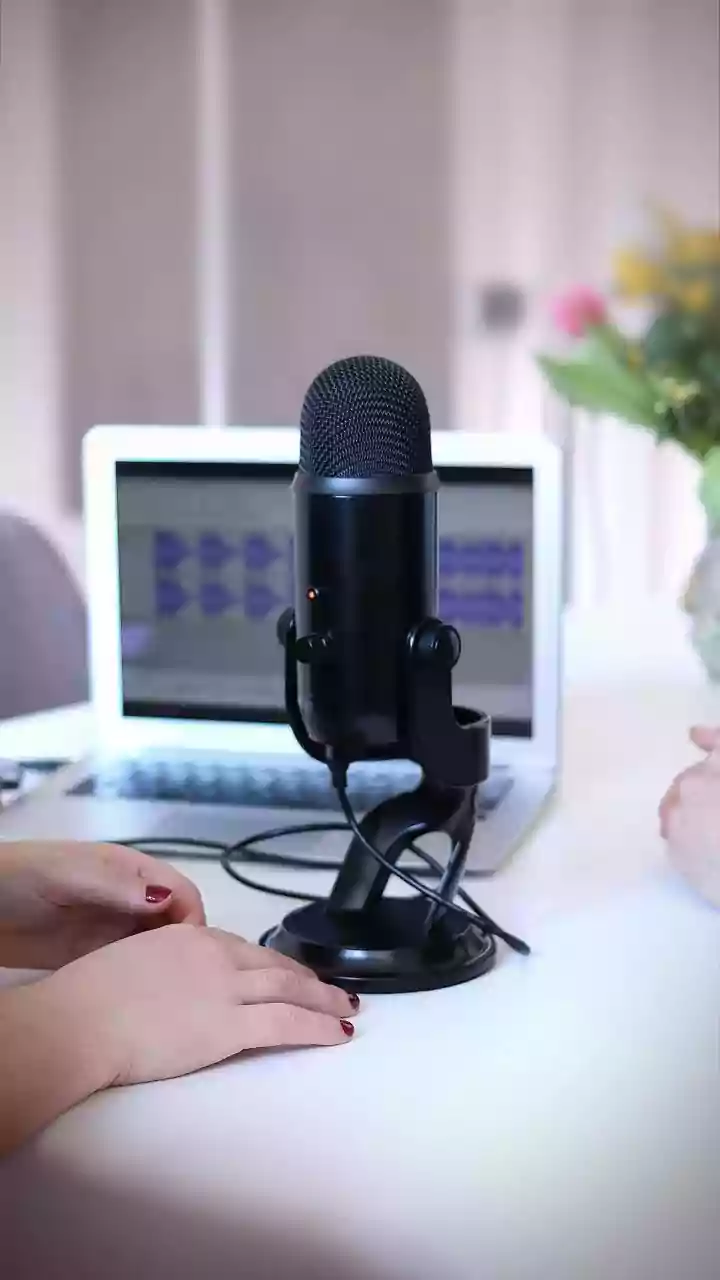
One of the most immediate benefits of AI note-takers is their ability to create an accurate, word-for-word transcript of a lecture. Tools like Otter.ai and others can record audio and instantly convert it into searchable text. This solves the age-old problem of missing a key point while you were busy writing down the previous one. Students can be fully present during class, confident that they won't miss any information. Later, they can revisit the transcript to clarify concepts, pull exact quotes for an essay, or review a complex explanation at their own pace. This creates a powerful safety net, reducing the anxiety that comes with fast-paced lectures and ensuring every detail is captured.
From Raw Notes to Smart Summaries
A full lecture transcript can be overwhelming. This is where the 'intelligence' in AI truly shines. Many platforms can analyze a large body of text and automatically generate concise summaries, highlight key concepts, and even create a structured outline. Instead of rereading pages of notes, a student can get a one-page study guide with the most critical information in minutes. This capability is invaluable when dealing with dense subjects like law, medicine, or engineering. The AI can sift through the noise and present the core material, allowing students to quickly identify what’s most important and focus their study efforts accordingly, a process that can dramatically reduce stress and preparation time.
Activating Your Knowledge with AI Study Aids
Passive rereading is one of the least effective ways to study. True mastery comes from active recall—forcing your brain to retrieve information. This is where AI tools become powerful study partners. Many can automatically turn lecture notes into flashcards, practice quizzes, and self-test questions. By engaging with AI-generated questions, students are practicing retrieval, which is scientifically proven to strengthen memory retention. This transforms study from a passive review into an active, engaging process. Instead of spending hours manually creating flashcards, students can generate them with a click and spend their time actually learning the material.
A Tool, Not a Shortcut
While the benefits are significant, it's crucial to view these AI tools as a way to learn smarter, not as a shortcut to avoid work. The goal isn't to outsource thinking but to automate lower-level tasks so more time can be spent on higher-order thinking like analysis, synthesis, and critical evaluation. The most successful students will use AI to transcribe a lecture but then use the summary to formulate their own understanding. They will use AI-generated flashcards not just to memorize, but to identify weak spots in their knowledge that require further review. When used responsibly, AI doesn't replace the learning process; it augments it, making it more efficient, personalized, and ultimately, more effective.