



Decoding Front-of-Pack Promises
The front of a package is prime marketing real estate, designed to catch your eye with appealing claims. Words like 'natural,' 'healthy,' 'multigrain,' or 'made with real fruit' create a health halo, suggesting a product is better for you than it might
be. However, many of these terms are loosely regulated, if at all. For instance, 'multigrain' simply means a product contains more than one type of grain; it doesn't guarantee those grains are whole. The product could be made mostly of refined flour (maida) with only tiny amounts of other grains added for show. Similarly, a 'made with real fruit' claim can be placed on a product that contains more sugar and artificial flavours than actual fruit. Recently, the Food Safety and Standards Authority of India (FSSAI) has started cracking down on brands for using such misleading terms, flagging claims like 'healthy' or 'zero maida' on products that don't live up to the hype.
The Ingredient List: Your Source of Truth
The single most important part of any food label is the list of ingredients. According to FSSAI rules, ingredients must be listed in descending order by weight. This means the first three ingredients make up the bulk of what you're eating. If you see sugar (or its many aliases like glucose syrup, maltodextrin, or corn syrup), refined flour (maida), or hydrogenated oils at the top of the list, you can be sure it's not a health food, no matter the claims on the front. A shorter ingredient list is often a good sign, indicating a less processed product. Be wary of long lists filled with chemical-sounding names and additives. While not all additives are harmful, a reliance on them often signals a highly processed item stripped of its natural nutrients.
Mastering the Nutrition Facts Panel
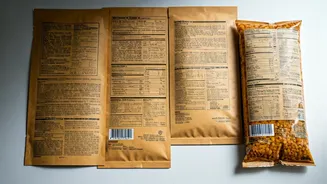
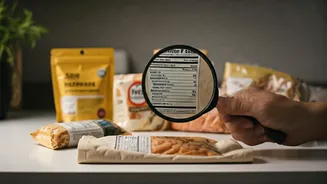
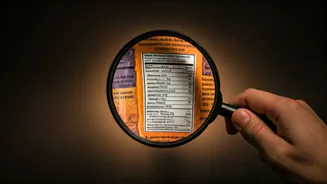
The nutrition information panel is where the numbers don't lie, but they can be confusing. The first thing to check is the serving size. Manufacturers often list unrealistically small serving sizes to make the calorie, sugar, and fat content seem lower. Always check how many servings are in the package and multiply the nutritional values by the amount you actually plan to consume. Pay close attention to total sugars, sodium, and trans fats. FSSAI mandates that total fat, saturated fat, trans fat, total sugar, and sodium be declared. A Daily Value (DV) of 5% or less of a nutrient is considered low, while 20% or more is high. This can help you quickly assess whether a food is high in things you want to limit, like sodium or saturated fat.
Look for Genuine Certification Logos
While many marketing terms are vague, official certifications are not. If a product claims to be organic, it must carry the FSSAI's unified organic logo, known as the 'Jaivik Bharat' logo. This mark, supported by either the NPOP or PGS-India certification, is a reliable indicator that the product complies with national organic standards. The absence of the Jaivik Bharat logo on a product sold as 'organic' is a major red flag, and FSSAI has issued notices to companies for making such unverified claims. Other mandatory marks to look for include the FSSAI logo with its license number (which should be on all packaged food), and the green or brown dot indicating a vegetarian or non-vegetarian product.
Beyond 'Premium': What to Look For
The trend of 'premiumisation' in India often means consumers are paying more for perceived quality, which could be anything from healthier ingredients to better packaging. But true premium quality isn't about a fancy label; it's about transparency. Instead of being swayed by buzzwords, focus on tangible attributes. For breads and biscuits, look for '100% whole wheat' as the first ingredient, not just 'wheat flour' or 'multigrain'. For snacks, check that the protein and fibre content are reasonably high and the sugar content is low. For oils, look for specific types like 'cold-pressed groundnut oil' rather than a generic 'edible vegetable oil,' which is often palm oil. Making these checks a habit turns you into a conscious consumer who can see past the marketing and choose foods based on what's actually inside.