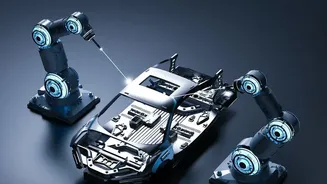









The Challenge of Manual Testing
In software development, testing is non-negotiable. Before any new feature goes live, it must be checked for bugs and errors. A huge part of this process involves writing "test scripts," which are small programs that check if the code works as expected.
For junior developers, this is often a time-consuming and repetitive task. It requires meticulous attention to detail and can feel like a bottleneck, preventing them from focusing on building new skills and contributing to more complex parts of a project. The frustration is common: you want to build, but first, you have to write dozens or even hundreds of similar tests, a process that can be both slow and prone to human error.
Enter Synthetic Code and Data
This is where synthetic code and data platforms come in. At its core, "synthetic" simply means the data or code is artificially generated by a computer program rather than by a human. Instead of using sensitive real-world user data, which comes with privacy risks, these platforms create realistic but fake data for testing. More powerfully, many now use artificial intelligence to generate the test scripts themselves. These AI-driven tools analyze an application's requirements, its existing code, or even just plain English descriptions of what a feature should do, and then they write the foundational test scripts automatically.
The Automation Process Explained
So, how does an entry-level developer actually use one of these platforms? The workflow is surprisingly straightforward. Instead of starting with a blank file, the developer might provide the AI with a user story from a project management tool like Jira, a simple text prompt, or a design file. For example, a developer could write, "Test the user login flow, including a successful login, a failed login with the wrong password, and a failed login with the wrong username." The platform's AI then interprets this request, analyzes the application's user interface, and generates the necessary code for an automation framework like Selenium or Playwright. The developer receives a ready-made script that they can then review, refine, and add to the project's test suite.
Major Benefits for Junior Developers
For someone just starting their career, these tools are more than just a time-saver. They act as a powerful learning accelerator. By generating initial scripts, the AI provides a working example of testing best practices, helping the developer learn proper syntax and structure. This frees them from the drudgery of writing boilerplate code and allows them to focus on higher-level problems, like understanding the business logic behind the test and handling complex edge cases the AI might miss. It significantly shortens the path from learning to contributing, making junior developers more effective, more quickly.
What These Tools Don't Replace
It's crucial to understand that these platforms are assistants, not replacements for developers. While an AI can generate a script to check if a button works, it doesn't understand the user's ultimate goal or the business context. Human oversight remains essential. Entry-level developers still need to review the AI-generated code, debug it when it fails, and, most importantly, apply critical thinking to devise tests for complex scenarios the AI can't predict. The goal isn't to stop learning how to write tests, but to automate the repetitive parts and elevate the developer's role to one of a reviewer and strategist.