





A Landmark Policy Shift Opens the Skies
The single biggest catalyst for this boom has been a seismic shift in government policy. For decades, the Indian Space Research Organisation (ISRO) held a near-monopoly on all space activities. The historic reforms announced in June 2020, and solidified
with the Indian Space Policy 2023, effectively opened the entire value chain to private enterprise. This wasn't just an invitation; it was a fundamental re-imagining of India's space program. The policy created a clear framework for private companies to build and launch rockets, own and operate satellites, and sell data and services. The establishment of the Indian National Space Promotion and Authorisation Centre (IN-SPACe) has been crucial. It acts as a single-window agency, streamlining the complex process of approvals, facilitating technology transfers from ISRO, and providing access to government testing facilities. This predictable regulatory environment has given investors and entrepreneurs the confidence to venture into a capital-intensive industry.
From Government Agency to Friendly Giant
Under this new paradigm, ISRO's role has gracefully evolved. Rather than being the sole actor, it is now an enabler and collaborator. This has been a game-changer. Startups can now leverage decades of ISRO's expertise, infrastructure, and technology. To date, over 100 technologies have been transferred from ISRO to the private industry, fast-tracking development. This collaborative approach prevents startups from having to reinvent the wheel, allowing them to focus on innovation and commercialisation. Furthermore, a steady stream of talent is flowing from ISRO into the private sector. While this presents a challenge for the government agency, these experienced scientists and engineers bring invaluable expertise to the startup ecosystem, strengthening the domestic industry as a whole.
The Fuel: Funding and Ambitious Founders
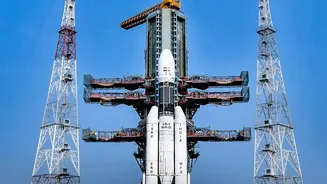
Innovation needs capital, and India's space-tech sector is attracting significant investment. In the last three years, Indian space startups have raised around $390 million, with $150-160 million coming in this year alone. This influx of cash comes from both domestic and global venture capitalists who see immense potential. The recent success of companies like Skyroot Aerospace, which became the country's first space unicorn, has further validated the sector. Skyroot’s recent successful maiden flight of its Vikram-1 rocket made India only the third country, after the US and China, to have a privately developed vehicle reach orbit on its first attempt. This milestone, along with Agnikul Cosmos's successful test of its 3D-printed engine, has sent a powerful signal to the world: Indian startups are not just experimenting, they are executing.
Building for India and the World
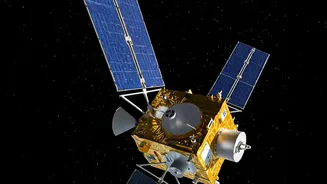
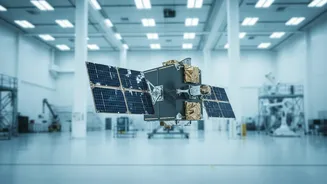
The innovation isn't just happening in launch vehicles. Indian space startups are active across the entire spectrum. Companies like Dhruva Space are building satellites and ground station services, while Pixxel and GalaxEye are developing constellations for high-resolution Earth observation. GalaxEye’s development of a satellite that combines optical and radar imaging promises all-weather visibility for sectors like defence and disaster management. Others, like SatSure, are focused on the downstream applications, using satellite data and AI to provide decision intelligence for agriculture, finance, and climate risk assessment. This diversification is critical, as it builds a resilient ecosystem where companies provide services to each other and cater to a global market. The goal is not just to meet India's domestic needs, which currently rely on foreign satellites for 40-50% of its capacity, but to become a global hub for space technology and services.