



The Power Bank Puzzle: Cabin Luggage Only
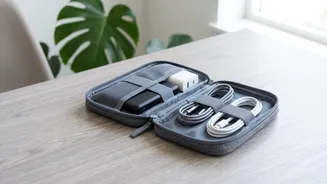
This is the single most important rule for electronics: power banks and any spare lithium-ion batteries must be packed in your carry-on or cabin baggage. They are strictly prohibited from checked-in luggage. The reason is safety. A faulty lithium-ion battery
can pose a fire risk, and if this happens in the cabin, the crew can address it immediately. A fire in the cargo hold would be far more dangerous. Regulations in India, set by the Bureau of Civil Aviation Security (BCAS), specify capacity limits in Watt-hours (Wh). Power banks up to 100Wh are generally allowed without needing special permission from the airline; this covers most standard models up to around 20,000mAh or 27,000mAh. For larger power banks between 100Wh and 160Wh, you must get prior approval from your airline, and there's usually a limit of two units per person. Anything over 160Wh is banned from passenger aircraft altogether. To avoid issues, ensure the capacity is clearly printed on your power bank, as security may refuse it otherwise.
Cameras and Other Valuables: Keep Them Close
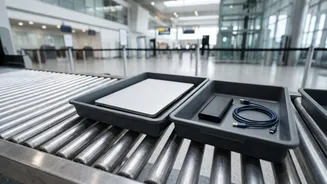
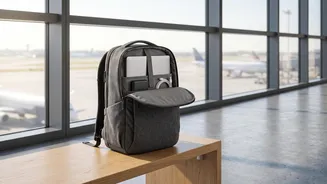
Like power banks, valuable and fragile electronics such as laptops, tablets, and cameras should travel with you in your cabin bag. While these devices are technically allowed in checked luggage if they are switched off, airlines strongly recommend against it. There are two main reasons for this. Firstly, checked baggage can be handled roughly, risking damage to delicate equipment. Secondly, keeping valuables with you minimises the risk of theft. All electronic devices need to be removed from your bag and placed in a separate tray for security screening. Spare camera batteries follow the same rule as power banks—they must be in your carry-on luggage. Camera accessories like tripods can often be taken in the cabin, provided they fold down to fit within the airline's size limits (usually under 55 cm) and don't have sharp, exposed metal spikes. Larger tripods should be placed in your checked baggage.
Decoding the Liquid Rule: The 100ml Formula
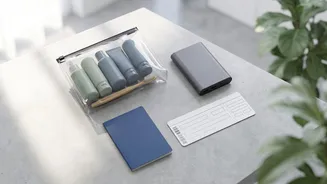
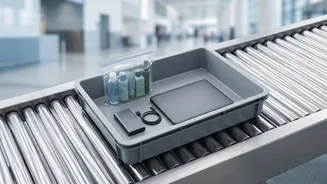
For both domestic and international flights departing from India, the rule for liquids, aerosols, and gels (LAGs) is the same. Any such item in your cabin baggage must be in a container that is 100ml or smaller. It is the size of the container that matters, not how much liquid is inside; a half-full 200ml shampoo bottle will not be allowed. All these small containers must fit comfortably inside a single, transparent, resealable plastic bag with a capacity of no more than one litre (roughly 20cm x 20cm). Only one such bag is permitted per passenger. Items like beverages, perfumes, lotions, toothpaste, and hair gel all fall under this rule. The main exceptions are for essential medicines (with a prescription, if possible), and baby food or milk when travelling with an infant; these should be declared to security personnel for inspection.
Packing Your Checked Luggage: The Right Place for Everything Else
Your checked luggage is the perfect place for items that aren't allowed or are impractical for the cabin. This includes larger quantities of liquids. Full-sized bottles of shampoo, sunscreen, and other toiletries should go into your checked bag. There is no 100ml limit for liquids in checked baggage, though some airlines have overall volume limits for certain items like alcohol. It's also where you should pack any sharp objects like large scissors or knives, which are prohibited in the cabin. While it might be tempting to put all your electronics in one place, remember the cardinal rule: no power banks or spare lithium batteries in checked luggage. Items with installed batteries, like an electric toothbrush or a switched-off camera, are generally fine, but the loose power sources must stay with you.