




What 'Low-Impact' Really Means
First, let’s clear up a common misconception: low-impact does not mean low-results. An exercise is defined as 'low-impact' if it minimizes the jarring force on your joints. This is typically achieved by keeping at least one foot on the ground at all times,
or by having your body weight supported by water or a piece of equipment. Think of brisk walking, cycling, or using an elliptical machine, as opposed to high-impact activities like running or jumping, where both feet leave the ground simultaneously. The primary benefit is a significant reduction in stress on your knees, hips, and ankles, which lowers the risk of injury and makes exercise more accessible for people with joint pain, arthritis, or those just starting a fitness journey. This joint-friendly approach allows for greater consistency, which is a key predictor of long-term fitness success.
The Powerful Heart-Health Connection
The most important muscle you're training during cardio is your heart, and it responds to challenge, not just impact. Low-impact exercises are incredibly effective at improving cardiovascular health because they elevate your heart rate and keep it there for a sustained period. This trains your heart to become stronger and more efficient, allowing it to pump more blood with less effort. Over time, this leads to a lower resting heart rate, reduced blood pressure, and improved circulation. Consistent cardio activity also helps make blood vessels more flexible and reduces systemic inflammation, both of which are critical in lowering the risk of heart disease. In fact, low-impact exercise can be just as effective as its high-impact counterparts for building aerobic capacity when performed with the right intensity and frequency.
Top Low-Impact Exercises for Your Living Room
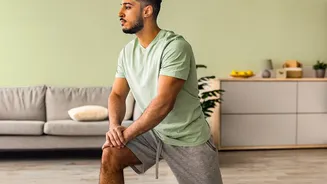
You don't need a gym membership or expensive equipment to get a great low-impact workout. Many effective exercises can be done right at home using just your body weight. Some of the best options include: Marching or Walking in Place: A simple but powerful starting point. Lift your knees toward your chest and swing your arms to increase intensity and get your heart rate up. Bodyweight Squats: This functional movement strengthens your legs and glutes without any jarring. Focus on keeping your back straight and sinking your hips as if sitting in a chair. Low-Impact Jumping Jacks: Instead of jumping, step one foot out to the side at a time while still performing the classic overhead arm motion. You can hold light weights to increase the difficulty. Step-Touches: A classic aerobic move, simply step one foot to the side, then bring the other foot to meet it. Add arm movements to boost the intensity. Chair Workouts: For those with limited mobility, a sturdy chair provides a great base for seated jabs, leg lifts, and arm circles to get your blood pumping.
Creating a Sustainable Home Routine
Consistency is more important than intensity when it comes to reaping long-term heart benefits. The advantage of low-impact exercise is that it allows for more frequent training sessions with less required recovery time compared to high-impact workouts. Aim for at least 150 minutes of moderate-intensity activity per week, as recommended by major health organizations. This could be broken down into 30-minute sessions five days a week. Start small with 10 or 15-minute workouts and gradually increase the duration as your endurance improves. The key is to build a habit you can stick with. Try different exercises to keep your routine from becoming monotonous and find activities you genuinely enjoy. Whether it's dancing around your living room or taking a brisk walk around the block, the best workout is the one you do consistently.