





What Are Bharat Atta and Rice?
The 'Bharat' brand is a Central government initiative designed to tackle food price inflation by providing essential staples to the public at controlled, subsidised rates. The primary products under this scheme are 'Bharat Atta' (fortified wheat flour)
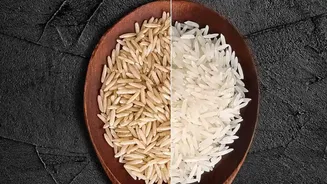
and 'Bharat Rice'. The goal is to increase the supply of these key commodities in the open market, thereby helping to stabilise their prices for all consumers. The initiative is managed through a network of government-affiliated cooperative agencies, including NAFED, NCCF, and Kendriya Bhandar, which handle the distribution and sale of these products.
The Fixed Per-Kilo Price Point
The defining feature of the Bharat brand is its fixed and affordable pricing. Bharat Atta is sold at a maximum retail price (MRP) of ₹27.50 per kilogram. Similarly, Bharat Rice is available for a fixed price of ₹29 per kilogram. These prices are significantly lower than the prevailing market rates for many other brands, which can fluctuate based on location, quality, and retailer. The products are typically sold in convenient 5 kg and 10 kg packages, making the total price easy to calculate. This clear, nationwide pricing provides a reliable benchmark for consumers looking to manage their monthly grocery budgets.
Where to Find These Subsidised Staples
Availability is a key component of the scheme. Bharat Atta and Rice are sold through a wide network of over 2,000 outlets associated with NAFED, NCCF, and Kendriya Bhandar. A fleet of around 800 mobile vans has also been deployed across the country to reach consumers directly in their localities. While the initial rollout focused on these physical cooperative stores and mobile units, the government has indicated that the products will progressively become available through other retail chains and even e-commerce platforms to ensure broader accessibility for everyone.
Your Guide to Smart Comparison Shopping
The transparent pricing of Bharat Atta and Rice empowers you to make smarter purchasing decisions. The most effective way to compare is by using the 'unit price'—the cost per kilogram. Many supermarket labels show this in smaller print, but you can easily calculate it yourself. When you're at your local kirana store or supermarket, ignore the total pack price for a moment. Instead, divide the total price of any brand of atta or rice by its weight in kilograms. For example, if a 10 kg bag of another atta brand costs ₹450, its per-kilo price is ₹45. Comparing this to Bharat Atta's fixed ₹27.50 per kilo reveals a substantial saving. This simple calculation strips away the confusion of different package sizes (e.g., comparing a 5 kg bag to a 7.5 kg bag) and shows you the true cost of the product. By using the Bharat brand's price as your baseline, you can instantly see whether you're getting a good deal on other products or if the subsidised option is the most economical choice.
Beyond Price: Quality and Value
While price is the main draw, the government has also focused on ensuring a standard of quality. Bharat Atta is often described as fortified, meaning it contains added nutrients to enhance its nutritional value. The rice is also sold as a fortified grain in many cases, aimed at improving public health alongside affordability. While these may not be premium, specialty grain varieties, they are positioned as a reliable, consistent, and healthy option for daily consumption. The core proposition is value-for-money, ensuring that no family has to compromise on essential nutrition due to high market prices. The initiative also includes other staples like Bharat Dal (chana dal) at ₹60 per kg and, at times, onions at subsidised rates to provide comprehensive relief.