





How Do Hydrogen Trains Work?
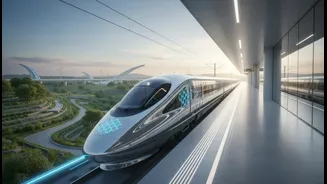
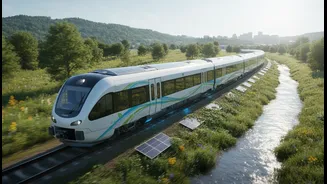
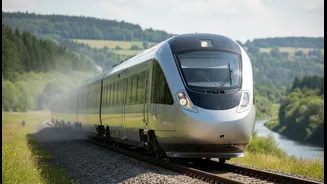
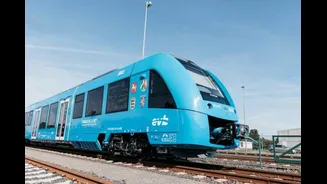
At its heart, a hydrogen train is an electric train that carries its own power plant. Instead of drawing electricity from overhead lines, it uses hydrogen stored in onboard tanks. Inside a device called a fuel cell, the hydrogen gas reacts with oxygen
from the air. This electrochemical process generates electricity, which powers the motors that turn the wheels. The only by-products are heat and pure water, making it a zero-emission option at the point of use. Many designs also include batteries to store excess energy, such as from braking, which can provide a power boost when accelerating.
The Promise of Cleaner Journeys
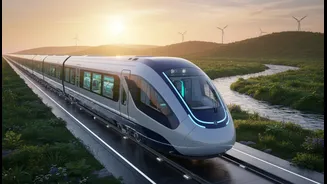
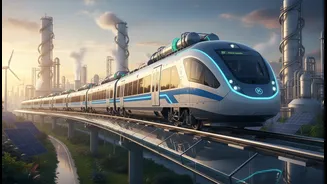
The most significant advantage of hydrogen trains is their environmental benefit. Replacing diesel trains, which emit carbon dioxide and other pollutants, with hydrogen alternatives can dramatically improve air quality, especially in and around urban areas. They also operate much more quietly than their diesel counterparts, reducing noise pollution along railway lines. However, the 'green' credentials of a hydrogen train depend entirely on how the hydrogen fuel is produced. For the benefits to be fully realised, the hydrogen must be 'green hydrogen'—produced by splitting water using renewable energy like solar or wind. If it's made using fossil fuels, known as 'grey hydrogen', the process still generates carbon emissions, though fewer than burning diesel directly.
A Perfect Fit for Shorter Routes
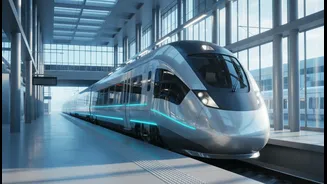
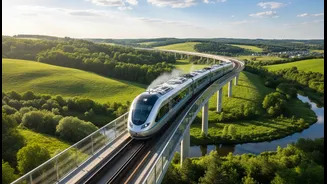
Hydrogen technology is particularly well-suited for short-to-medium distance routes that are not currently electrified. Electrifying a railway line with overhead cables is extremely expensive, often running into crores per kilometre, and isn't economically viable on lines with less frequent services, like many regional or heritage routes. Hydrogen trains offer a way to decarbonise these lines without the massive upfront cost of electrification. They can be refuelled in a matter of minutes, similar to diesel trains, and have a significant range, often up to 1,000 kilometres on a single tank, making them a practical alternative.
India's Hydrogen Rail Ambitions
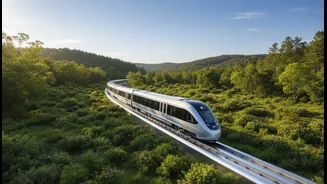
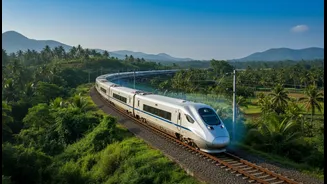
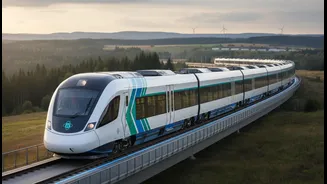
India is moving quickly to join the global league of nations exploring hydrogen rail. As part of its ambitious goal to achieve a Net Zero railway network by 2030, Indian Railways is launching its first hydrogen train. The inaugural service is expected to be flagged off on July 17, 2026, on the Jind-Sonipat section in Haryana. This 10-coach train, developed by the Integral Coach Factory in Chennai, will have an operational speed of 75 kmph and emit only water vapour. A dedicated hydrogen production and refuelling facility has already been established in Jind to support the project. This is a key part of the 'Hydrogen for Heritage' programme, which aims to deploy 35 hydrogen trains on scenic and hill routes, replacing diesel-powered trains and preserving the natural beauty of these areas.
Hurdles on the Track
Despite the promise, the path to widespread hydrogen rail adoption has challenges. The technology is currently expensive, with hydrogen-powered trains costing significantly more than battery-electric or even conventional electric options over their lifetime in some studies. Building the necessary infrastructure for producing, storing, and transporting green hydrogen is a massive undertaking that requires significant investment. Furthermore, while the technology is safe, storing highly combustible hydrogen gas onboard requires robust and specialised tanks and safety systems. These factors mean that while hydrogen is a powerful tool for decarbonisation, it is likely to be one part of a wider strategy that also includes further track electrification and battery-powered trains.