






The Science of Bitterness
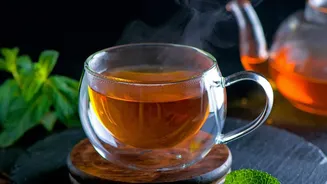
That unpleasant, astringent taste in an over-brewed cup comes from compounds called tannins. Tannins are polyphenols naturally present in tea leaves, and they contribute to the colour and body of the brew. When tea leaves sit in hot water, they begin
to release their flavour compounds. The desirable, aromatic, and sweet notes often come out first. However, if the leaves are left in the water for too long, they release an excess of tannins, which results in a bitter, drying taste that can overpower all the other delicate flavours.
More Than Just Time
While steeping time is the most common culprit, water temperature is an equally crucial factor. Pouring water that is too hot onto delicate tea leaves can 'scorch' them, extracting bitter compounds almost instantly, long before the full flavour has a chance to develop. Different types of tea require different water temperatures to bring out their best characteristics. The less oxidized a tea is (like green or white tea), the cooler the water should generally be. Robust, fully oxidized black teas can handle much higher heat. Getting both time and temperature right is the secret to a balanced cup.
Delicate Leaves: Green and White Teas
Green and white teas are the most sensitive to over-steeping. Their delicate leaves contain compounds that can turn bitter very quickly with excessive heat. For these teas, use water that is well below boiling, typically between 70°C and 85°C (160°F to 185°F). If you don't have a temperature-controlled kettle, simply let boiling water cool for two to three minutes before pouring. A short steep time of just 1 to 3 minutes is usually all that is needed to produce a smooth, fragrant, and sweet cup.
The In-Between: Oolong Teas
Oolong teas represent a wide spectrum, from lightly oxidized leaves that resemble green tea to heavily roasted varieties that are closer to black tea. This diversity means their ideal steeping parameters can vary. As a general rule, a water temperature between 85°C and 96°C (185°F to 205°F) is a good starting point. Steeping times can range from 3 to 7 minutes, depending on the specific tea and how tightly the leaves are rolled. Many high-quality oolongs are designed to be steeped multiple times, with each infusion revealing new layers of flavour.
Robust Brews: Black and Herbal Teas
Black teas are fully oxidized, which makes their leaves much more resilient to heat. They brew best with water at or near a full boil, between 93°C and 100°C (200°F to 212°F). A steeping time of 3 to 5 minutes is standard; a shorter time yields a brighter cup, while a longer steep produces a stronger body that can stand up to milk and sugar. Most herbal 'teas' (called tisanes) are also very forgiving and should be brewed with boiling water for 5 to 7 minutes or even longer, as they generally don't contain the tannins that cause bitterness in true tea.
The Art of the Second Steep
Avoiding over-steeping doesn't just improve the taste of your first cup—it makes it possible to brew a second or even third. This practice, known as re-steeping, is a wonderful way to get more value from high-quality loose-leaf teas and explore how their flavour evolves. When you over-extract all the compounds in the first infusion, there is nothing left for subsequent cups. By brewing your tea correctly the first time, you preserve the leaf's integrity, allowing it to offer more of its character in later steepings. Simply use fresh hot water and increase the steeping time slightly for each new infusion.