







More Than Just a Houseboat
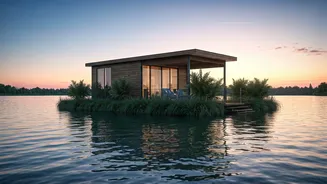
When you hear “floating home,” you might picture a rustic, bohemian houseboat. But a new wave of aquatic architecture is changing that perception entirely. These are not simply boats people live on; they are custom-designed, stationary homes built on buoyant,
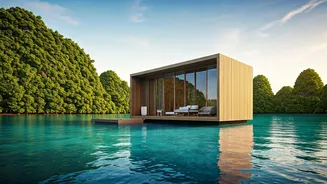
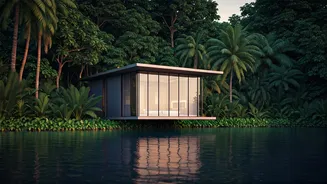
stable foundations, often connected to land for utilities but designed for a life on the water. Unlike traditional houseboats, which are typically retrofitted vessels, modern floating homes are architecturally conceived from the ground up. They prioritise space, light, and a seamless connection with the surrounding water, featuring floor-to-ceiling windows, open-plan living areas, and outdoor decks that make the lake or sea an extension of the living room. They represent a fundamental shift in thinking: instead of building near the water, why not build on it?
The 'Eco' in Eco-Conscious
The “eco-conscious” label is more than just a marketing buzzword; it’s central to the design philosophy. Many of these homes are engineered to be self-sufficient and have a minimal environmental footprint. Solar panels on the roof often generate all the necessary electricity, while advanced systems harvest and filter rainwater for household use. Wastewater is treated on-board through closed-loop biological systems, preventing any discharge of pollutants into the surrounding water. The construction materials are also carefully chosen, favouring sustainably sourced wood, recycled steel, and high-performance insulation to reduce energy consumption. The very act of floating, rather than building on land, can also preserve sensitive coastal ecosystems by avoiding the need for disruptive foundations and land clearing.
A Fortress of Serenity
The appeal of a “safe getaway” is twofold: it’s about physical security and mental peace. Structurally, these homes are remarkably robust. Built on concrete and foam-filled pontoons, they are engineered for immense stability, barely moving even in choppy water. Many are designed to withstand significant weather events, with some even classified as “amphibious” homes that can rest on the ground in a riverbed but are designed to float upwards during a flood. This makes them a resilient solution in flood-prone areas. Beyond physical safety, they offer an unparalleled sense of privacy and seclusion. Being surrounded by water creates a natural moat, distancing you from the noise and intrusion of everyday life. This separation fosters a unique sense of tranquillity, making these homes the ultimate sanctuary for those looking to disconnect and recharge.
Living the Dream: A Reality Check
While the dream is alluring, the reality involves some unique practicalities. Unlike buying a traditional home, securing a spot for a floating home requires navigating a complex web of regulations. Mooring rights, zoning laws, and access to utilities like sewage and electricity (if not fully off-grid) can be significant hurdles depending on the location. In India, while houseboats are common in places like Kerala and Kashmir, purpose-built modern floating homes are still a nascent concept, with regulations yet to catch up. The cost can also be substantial, often comparable to or exceeding that of a luxury land-based property due to the specialised engineering, materials, and logistics involved. It’s a lifestyle that requires not just financial investment but also a pioneering spirit and a willingness to embrace a different way of living.
The Future is Afloat?
So, are floating homes just a niche luxury for the wealthy, or do they point towards a more sustainable future? The answer is likely both. For now, they remain a high-end aspiration. However, the technology and principles behind them hold immense promise. In countries like the Netherlands, entire floating communities have been developed as a practical response to rising sea levels and land scarcity. These projects demonstrate that water-based living can be scaled up to create resilient, sustainable neighbourhoods. As climate change continues to impact coastal cities globally, the idea of adapting by living with water, rather than fighting it, is gaining serious traction. These dream getaway spaces may well be test-beds for the climate-adaptive cities of tomorrow.