

The story of our solar system has a beginning, a middle, and an end. For billions of years, the Sun has been the stable center of our cosmic neighborhood. But new simulations are rewriting the final chapter, suggesting a far more chaotic and messy end.
The Old Story of the Sun's Demise
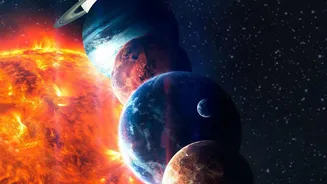
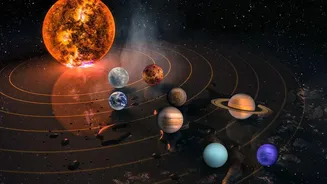
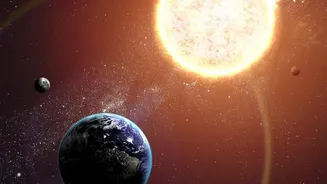
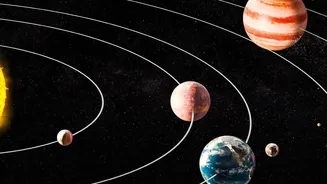
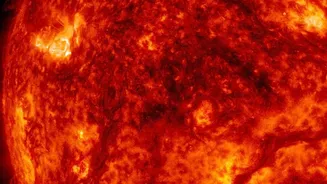
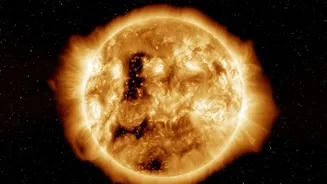
For decades, our understanding of the Sun's future, some five billion years from now, followed a predictable script. After exhausting the hydrogen fuel in its core, it would swell into a massive red giant, likely consuming Mercury, Venus, and possibly Earth. Following this expansion, it would shed about half of its mass into space before collapsing into a dense, dim remnant called a white dwarf. In this long-accepted model, the mass loss was assumed to be smooth and symmetrical. The Sun's gravitational grip would weaken, causing the surviving outer planets—Jupiter, Saturn, Uranus, and Neptune—to drift into wider, but still stable, orbits. The whole system would simply become a larger, colder version of its former self, predicted to remain stable for tens or even hundreds of billions of years.
A New, More Violent Simulation
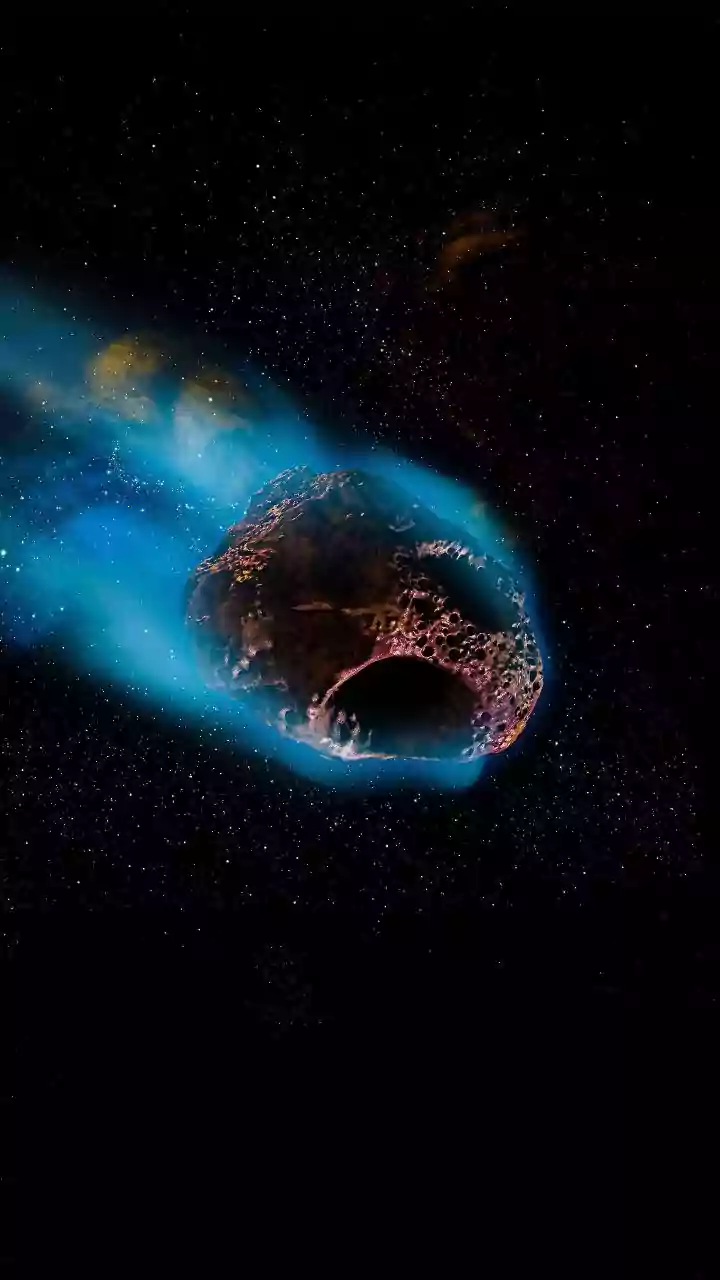
Recent research published in The Astrophysical Journal Letters challenges this picture of a peaceful decline. A new set of sophisticated simulations paints a much more turbulent picture. The key insight comes from observations of other dying stars, which suggest that mass loss is not a gentle, continuous process. Instead, it appears to happen in thousands of distinct, lopsided bursts. Each time the Sun ejects a massive cloud of gas asymmetrically, it will experience a tiny recoil, like a small kick in the opposite direction. While each individual kick is small, the cumulative effect of thousands of these events over millions of years introduces a random, unpredictable element into the orbits of the planets.
The Chaos of Uneven Mass Loss
This 'uneven' or 'stochastic' mass loss is the game-changer. Previous models were like imagining a spinning weight slowly getting lighter, with everything adjusting smoothly. The new model is like that weight getting lighter by randomly throwing off small pieces in different directions. Each throw gives the central star a nudge, and these nudges disturb the delicate gravitational balance of the planets. Researchers ran hundreds of simulations to model these effects. When they simulated a smooth mass loss, the solar system remained stable, just as previously thought. But when they introduced the uneven, bursting mass loss, chaos ensued.
A New Fate for the Giant Planets
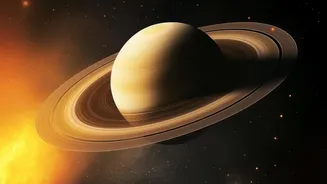
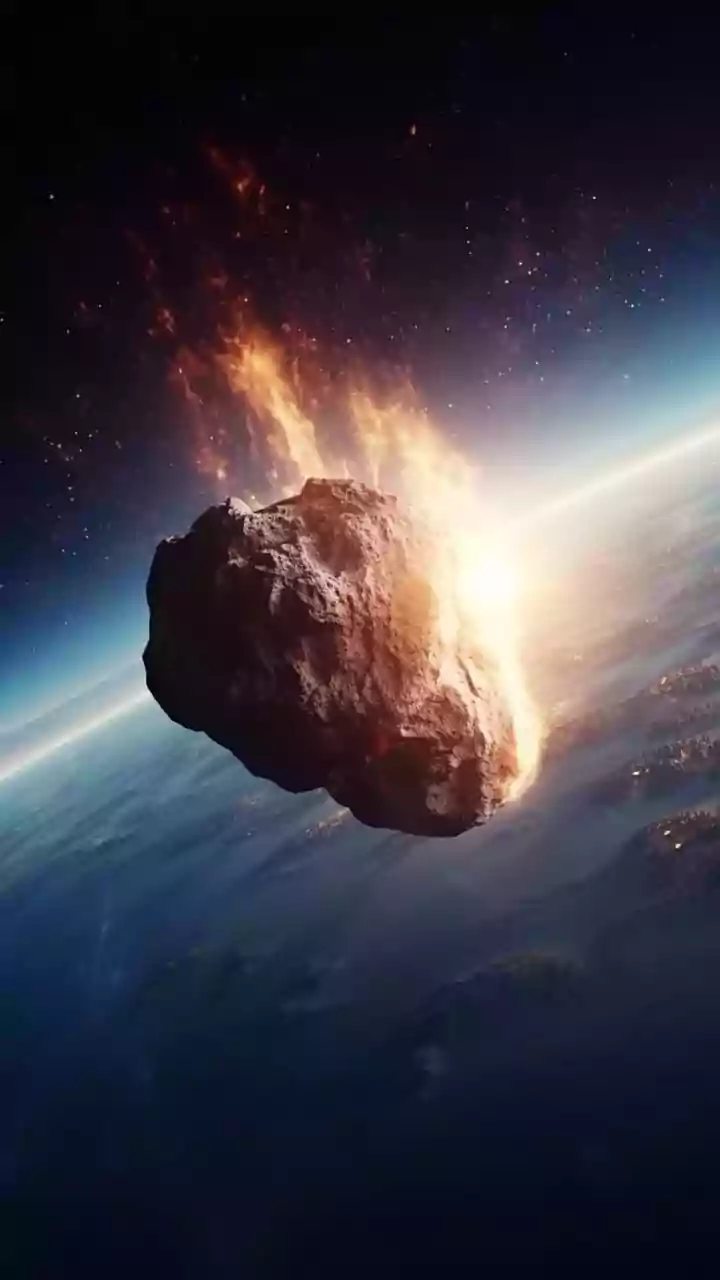
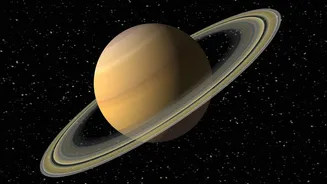
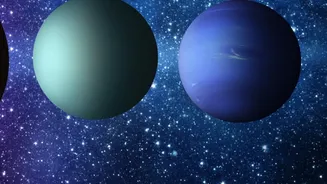
The results of these new simulations are dramatic. In a significant number of scenarios, the outer solar system becomes unstable far earlier than ever predicted—not in a hundred billion years, but within just a few billion years of the Sun becoming a white dwarf, and sometimes even before. The random kicks can push the giant planets into new orbital resonances, causing their paths to cross. The simulations showed a variety of wild outcomes: Saturn could be ejected from the solar system entirely, sent to wander the galaxy as a rogue planet. In other scenarios, Uranus and Neptune swap their orbital positions. In the most extreme cases, involving the largest ejected mass blobs, the instability leads to planetary collisions, destroying the planets in a final, cataclysmic crash.
Why This Cosmic Forecast Matters
While this cosmic drama is set to unfold billions of years in the future,' it has immediate implications for astronomy.' It forces a rethink of the long term stability of planetary systems,' not just our own.' Astronomers searching for planets around other white dwarf stars may have been looking for stable,' orderly systems similar to what our solar system was once thought to become.' This new research suggests they should instead be looking for evidence of chaos:' planets in highly unusual,' eccentric orbits,' or systems with fewer planets than might be expected.' It suggests that the end state for many solar systems is not quiet retirement,' but a period of violent rearrangement.' The calm and order we see in our solar system today may be a temporary state,' destined to be broken by the Sun's own chaotic death throes.