



The Soul of Punjabi Winter
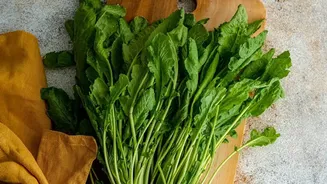
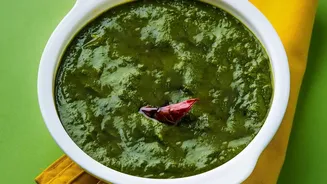
Sarson da Saag is a quintessential Punjabi dish made primarily from mustard greens (sarson). The name itself translates to 'mustard greens', though the final dish is a complex blend of multiple leafy vegetables. Its arrival on menus and in homes is a true
indicator that winter has set in. This is because mustard is a winter crop, with its leaves being harvested during the cooler months when they are tender and have the most robust flavour. Historically a staple food for farmers in Punjab, the dish provided the necessary calories and warmth to endure long days of physical labour in the cold. Its connection to the harvest season makes it a symbol of prosperity and the earth's bounty.
A Symphony of Greens
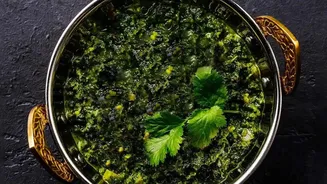
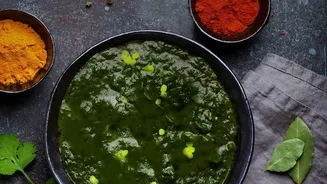
While mustard leaves provide the signature peppery and slightly bitter taste, Sarson da Saag is rarely made with them alone. To balance the pungency and create a creamier, more mellow flavour, other seasonal greens are added. The most common additions are spinach (palak), which adds smoothness, and bathua (chenopodium or goosefoot), which contributes a unique earthy depth. Some recipes also incorporate fenugreek (methi) or tender radish leaves. This blend is crucial; the different textures and flavours meld together during the slow cooking process to create a dish that is layered and harmonious. Traditionally, the ratio is often two parts mustard greens to one part each of spinach and bathua.
The Art of Slow Cooking
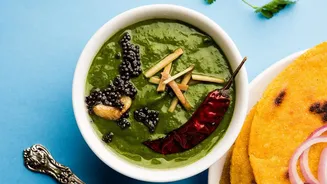
The magic of Sarson da Saag lies in its unhurried preparation. Traditionally, the chopped greens were simmered for hours in an earthen pot over a low flame. This long cooking time is essential to break down the tough leaves until they become incredibly tender and fuse into a cohesive, creamy puree. The greens are cooked with aromatics like ginger, garlic, and green chillies. After simmering, the mixture is mashed, traditionally with a wooden masher called a 'ghotna', to achieve a coarse texture rather than a perfectly smooth one. Finally, maize flour (makki ka atta) is added as a thickening agent, contributing to its signature consistency before a final tempering of ghee, onions, and spices is added.
A Winter Nutritional Powerhouse
Beyond its comforting taste, Sarson da Saag is a powerhouse of nutrition, perfectly suited for winter health. Mustard greens are exceptionally rich in vitamins K, A, and C, which are crucial for bone health, vision, and a strong immune system. The combination of greens is loaded with dietary fibre, which aids digestion, and essential minerals like iron, calcium, and magnesium. According to Ayurveda, mustard greens are warming in nature, helping to improve circulation and keep the body warm during cold weather. The inclusion of ghee in its preparation not only adds flavour but also helps the body absorb the fat-soluble vitamins present in the greens.
The Perfect Companions
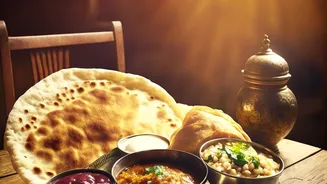
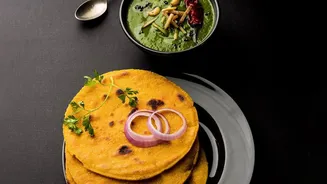
Sarson da Saag is almost inseparable from its traditional partner: Makki di Roti. This rustic flatbread is made from maize flour, another winter harvest, and its slightly sweet, crumbly texture perfectly complements the savoury, pungent saag. The meal is considered incomplete without a generous dollop of white butter (makhan) or ghee melting on top of the hot saag. Often, a side of jaggery (gur) and raw onions or radish is served alongside, providing a sweet and sharp contrast that rounds out the entire culinary experience. This combination is more than a meal; it's a cultural symbol of Punjabi hospitality and comfort.