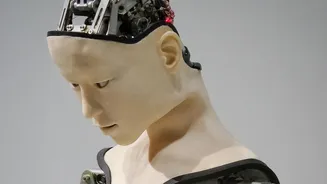








For years, the conversation around artificial intelligence has been dominated by fears of mass job losses. A recent forecast from Gartner, however, paints a more optimistic picture, predicting AI will create more jobs than it eliminates by 2030.
The Surprising Numbers
Contrary
to the widespread narrative of robotic replacements, technology research firm Gartner projects that AI will be a net positive for global employment. According to its forecast, AI is expected to create 10.6 million new jobs worldwide by 2030 while eliminating 8.9 million, resulting in a net gain of 1.7 million jobs. This challenges the simplistic view of AI as purely a job-destroying force. Instead, Gartner suggests that leading organizations view AI not as a tool for replacing labour, but as a catalyst to completely reinvent their operations. The story, however, is one of massive transformation, not gentle evolution. The net gain of 1.7 million jobs is the result of a much larger churn beneath the surface, affecting millions of workers and multiple industries in profoundly different ways.
The Great Job Reshuffle
The impact of AI will not be evenly distributed. Gartner's analysis breaks down the forecast by industry, revealing a varied landscape. The technology sector, despite having the highest exposure to AI, is projected to see the largest net gain, with 1.9 million jobs created versus only 400,000 lost. This is because implementing and managing AI itself requires a new workforce. Asset-intensive industries, like manufacturing, will see a more balanced but still positive shift, with 6.4 million jobs created and 6 million eliminated. The public sector is the only area where Gartner forecasts a net loss, with 900,000 jobs eliminated against 400,000 created. A more subtle effect is 'deferred hiring'. Gartner notes that in 2026, executives postponed creating 1.3 million positions due to AI, a trend expected to affect 5 million potential jobs by 2030. These aren't jobs lost, but roles that will never be created as AI alters company needs.
The Jobs at Risk
While the overall outlook is positive, the displacement of nearly 9 million jobs is a significant disruption. The roles most vulnerable to automation are those characterized by repetitive, rule-based, and data-driven tasks. This includes positions like data entry clerks, telemarketers, bookkeeping and accounting clerks, and some customer service representatives. These are jobs where current AI tools can already perform tasks with high efficiency. Even some higher-skilled roles, such as junior software developers, paralegals, and market research analysts, face significant disruption as AI takes over routine coding, research, and data analysis.
The New Era of AI-Powered Careers
So, where will the 10.6 million new jobs come from? They will emerge in roles that manage, guide, and leverage AI systems. The World Economic Forum notes that the fastest growing roles are tech related such as AI and machine learning specialists big data specialists and fintech engineers Beyond pure tech new hybrid roles are appearing These jobs involve humans working alongside AI where the technology handles routine tasks and humans provide critical thinking judgment and complex problem solving Examples include AI assisted healthcare technicians algorithm auditors who ensure fairness and transparency and AI business analysts who strategize AI implementation There is also a growing need for roles that did not exist a few years ago like prompt engineers who specialize in communicating with AI and synthetic data curators who create artificial data to train models more effectively
The Real Challenge : Transformation , Not Scarcity
The core message from Gartner , echoed by other institutions like McKinsey , is that the primary challenge isn't a future scarcity of jobs , but a massive need for workforce mobility and reskilling . Gartner predicts that by 2030 , more than one in five workers — over $435$ million people globally — will need to adapt to significant changes in their roles . Similarly , a McKinsey report suggests that millions may need to switch occupations entirely , a transition requiring a pace of career change far exceeding historical averages . The essential skills for this new era are shifting from task execution to higher order thinking . Analytical thinking , creativity , flexibility , and a commitment to lifelong learning are becoming paramount as AI handles the more predictable aspects of work . The future of work , it seems , is less about being replaced by a machine and more about learning how to work with one .