





The Sun’s Restless Cycle
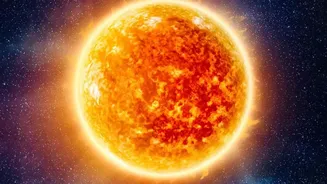
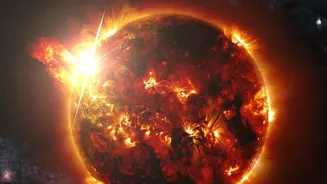
Our sun operates on an approximately 11-year cycle, swinging between periods of quiet and intense activity. The peak of this activity is known as the solar maximum. During this phase, the sun's magnetic field becomes highly unstable and complex, leading
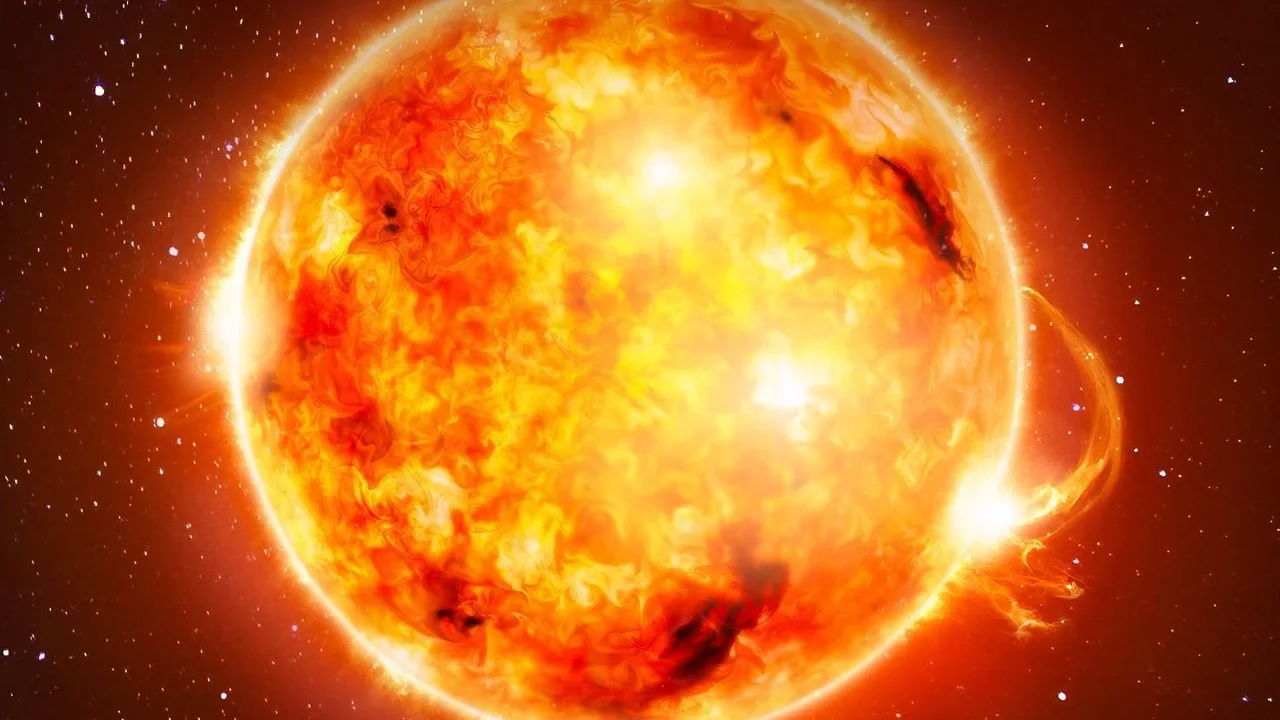
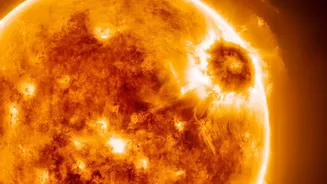
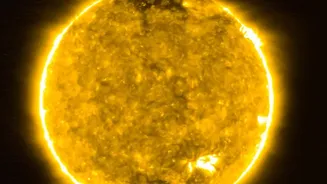
to a significant increase in sunspots—dark, cooler areas on the sun's surface that are hotbeds of magnetic energy. The current cycle, Solar Cycle 25, which began in December 2019, has been more active than initially predicted and reached its peak activity period in late 2024. This heightened activity is expected to continue through 2026, meaning we are in a prime window for solar phenomena. It is this magnetic instability during solar maximum that sets the stage for powerful explosions like solar flares and coronal mass ejections.
Flares vs. CMEs: A Key Distinction
Though often mentioned together, solar flares and coronal mass ejections (CMEs) are different events. A solar flare is an intense burst of radiation, essentially a gigantic flash of light, that travels at the speed of light and can reach Earth in just over eight minutes. These flares primarily affect the Earth's ionosphere, the upper layer of our atmosphere, causing short-term radio blackouts, particularly for high-frequency communications used by aircraft and maritime operations. A CME, on the other hand, is a massive eruption of plasma and magnetic field from the sun's outer atmosphere, the corona. Think of a flare as the muzzle flash from a cannon, while the CME is the actual cannonball—a huge cloud of charged particles hurtling through space. CMEs travel much slower, taking anywhere from 15 hours to several days to reach Earth, which gives us some warning time. While flares can happen without CMEs, the most powerful and disruptive events for us on Earth typically involve both.
A Celestial Light Show: The Aurora
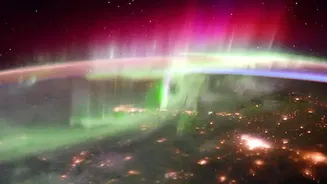
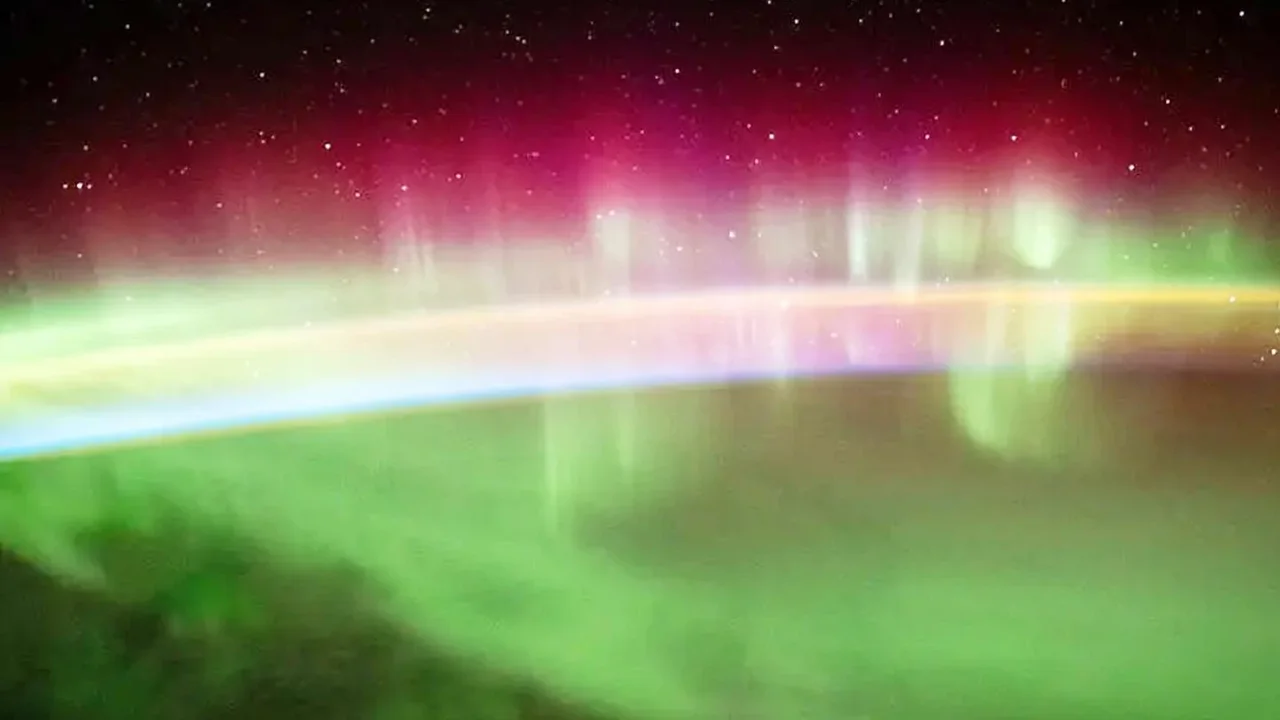
When a CME directed toward Earth arrives, its cloud of charged particles collides with our planet’s protective magnetic field, the magnetosphere. This interaction funnels the particles down along magnetic field lines toward the North and South Poles. As these high-energy particles slam into atoms and molecules—primarily oxygen and nitrogen—in our upper atmosphere, they transfer energy, causing the atmospheric gases to glow. This magnificent glowing light is what we see as the aurora borealis (Northern Lights) and aurora australis (Southern Lights). The different colours are produced by different gases at various altitudes; green is typically from oxygen at lower altitudes, while red can be from high-altitude oxygen. During intense geomagnetic storms caused by powerful CMEs, these auroras can be brighter and seen at much lower latitudes than usual.
Signal Distortions and Grid Strain
The same geomagnetic storms that produce beautiful auroras can wreak havoc on our technological infrastructure. The influx of charged particles can disrupt satellites in orbit, particularly the communications and GPS satellites in high geosynchronous orbits. This can lead to errors in GPS navigation, with coordinates straying by significant margins, and interfere with satellite television and other communication signals. The fluctuating magnetic fields can also induce powerful, uncontrolled electrical currents in long conductors on the ground, such as power lines and pipelines. These are known as geomagnetically induced currents (GICs). GICs can flow into electrical transformers, causing them to overheat and potentially fail, leading to widespread power outages. Historic events like the 1989 blackout in Quebec, which left six million people without power, serve as a stark reminder of our vulnerability to severe space weather.