

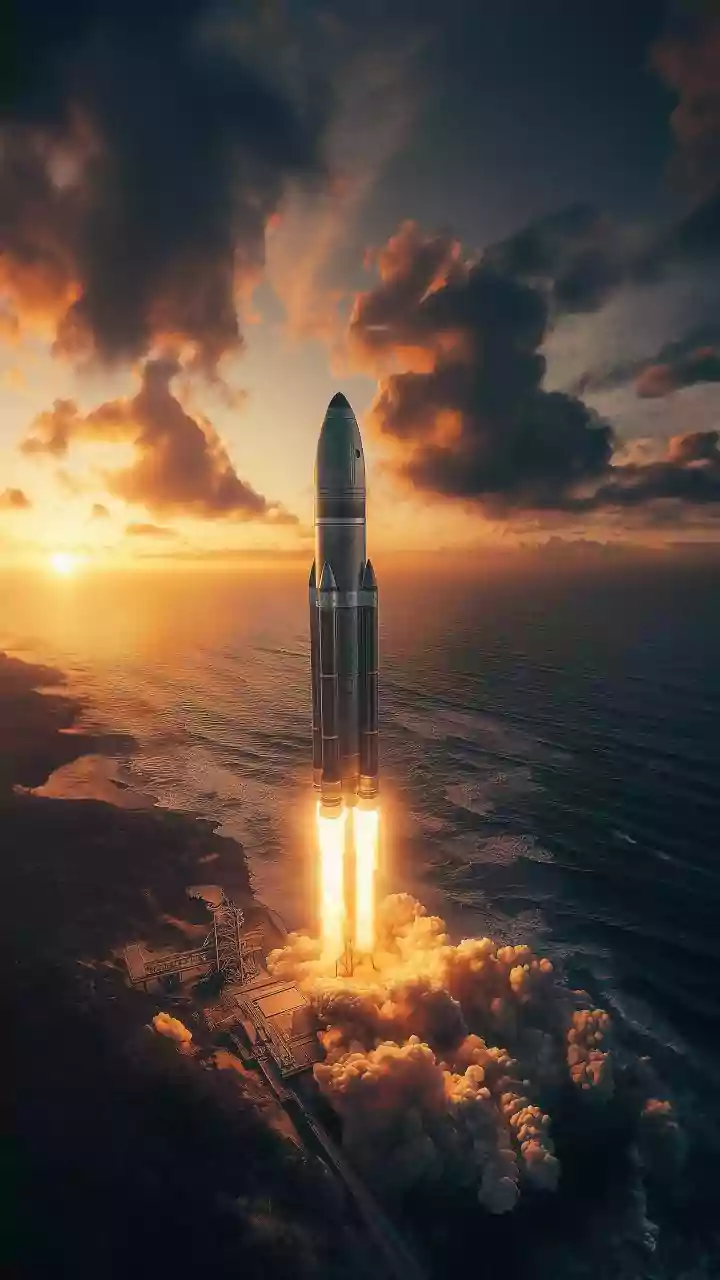

The world’s most powerful rocket, SpaceX’s Starship, is preparing for another ambitious test flight. While it launches from Texas, its journey will end much closer to home, with a planned splashdown in the Indian Ocean. Here’s what it means.
What Exactly Is Starship?
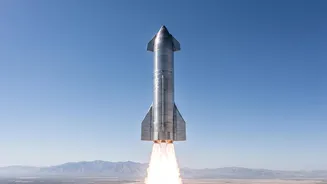
Think of Starship
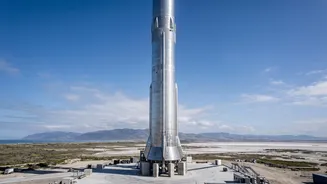
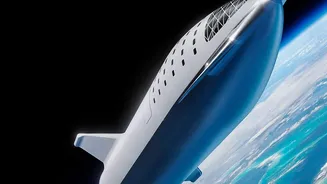
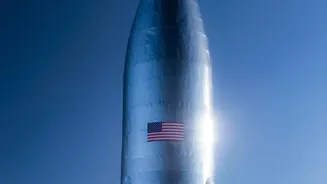
as the next generation of space travel. Developed by Elon Musk's company, SpaceX, it is the largest and most powerful rocket ever built. Standing taller than the Qutub Minar, its primary purpose is to make humanity a multi-planetary species, with ambitions to carry crew and cargo to the Moon, Mars, and beyond. What makes Starship revolutionary is its design for full and rapid reusability. Unlike traditional rockets that are discarded after a single use, both parts of the Starship system—the Super Heavy booster and the Starship upper stage—are intended to return to Earth and be flown again, drastically cutting the cost of accessing space.
The Trajectory: A Fiery Finale in the Indian Ocean
The headline's mention of flying 'over India' refers to the final phase of Starship's test missions. After launching from Starbase in Texas, the upper stage vehicle travels on a suborbital path across the globe. This trajectory concludes with a controlled atmospheric re-entry and a soft splashdown in the Indian Ocean. This specific flight path is chosen primarily for safety. By targeting a remote ocean area, SpaceX can test the vehicle's re-entry capabilities, including its heat shield and flight controls, without endangering populated areas on land. Previous test flights have also successfully concluded in the Indian Ocean, making it a proven, albeit temporary, landing zone as the company perfects its technology.
A Stepping Stone to Full Reusability
While a splashdown in the ocean may sound dramatic, it is an intentional and crucial part of SpaceX's iterative development process. Each test flight pushes the vehicle further, gathering invaluable data from every phase, from launch and ascent to the punishing heat of re-entry. On recent flights, Starship has successfully performed a 'landing flip' maneuver and come to rest intact in the water, allowing engineers to see how the vehicle and its heatshield performed. The ultimate goal, however, is not to land in the ocean. In the future, SpaceX plans for both the booster and the Starship upper stage to return to the launch site and be caught mid-air by the giant mechanical arms of the launch tower, a system nicknamed 'Mechazilla'. This would enable rapid turnaround for the next launch, making the system truly reusable. Some tests have already successfully caught the booster.
Why This Matters for India and the World
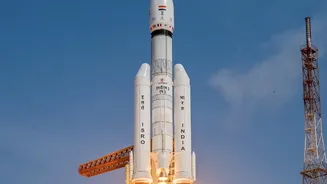
While Starship won't be visible from the ground in India during its descent, its presence in the skies above the Indian Ocean is significant. It places the region at the terminus of the world's most advanced spaceflight testing program. This highlights the Indian Ocean's strategic importance in the new space age, not just for shipping lanes but as a component of global space logistics and safety protocols. For India, a rising space power in its own right with ISRO's incredible achievements, the rapid progress of commercial players like SpaceX signals a paradigm shift. The development of a fully reusable, heavy-lift rocket like Starship promises to make access to orbit cheaper and more frequent. This could eventually create new opportunities for international collaboration, satellite launches, and even scientific missions, potentially benefiting India's own ambitious space program in the long run. It is a reminder that the future of space exploration is happening now, and its journey brings it right to India's oceanic doorstep.