




The dream of seeing human footprints on Martian soil is a powerful one. But as robotic explorers send back stunning data from the Red Planet, a critical question emerges: are the immense health risks and costs for humans worth it?
The Unseen Danger: Radiation
The single greatest obstacle
to a human Mars mission is radiation. Unlike Earth, which is protected by a global magnetic field and a thick atmosphere, deep space is awash with dangerous particles. Astronauts would be exposed to two main types: a constant stream of galactic cosmic rays (GCRs) from distant supernovae and unpredictable bursts of solar energetic particles from our own sun. During a mission that could last up to three years, this exposure would be relentless. Data suggests that a round trip to Mars could expose an astronaut to at least 60% of their entire career radiation limit. This constant bombardment damages DNA and significantly increases the lifetime risk of cancer, cardiovascular disease, and degenerative conditions affecting the central nervous system.
The Toll on the Human Body
Beyond radiation, the human body itself struggles with long-duration spaceflight. Mars' gravity is only 38% of Earth's, and extended time in reduced gravity leads to muscle atrophy, a significant loss of bone density, and a weakening of the cardiovascular system. Studies of astronauts on the International Space Station (ISS) have already shown these effects, along with vision problems. Then there is the psychological strain. A small crew would be confined together for years, with communication delays to Earth of up to 22 minutes each way, making real-time conversation impossible. This profound isolation can lead to depression, sleep disruption, and cognitive decline, all of which could jeopardize mission safety. Finally, the Martian dust itself, which contains compounds like perchlorates, could pose a toxic risk if inhaled over long periods, potentially causing respiratory and thyroid problems.
Our Tireless Robotic Proxies
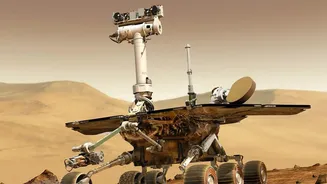
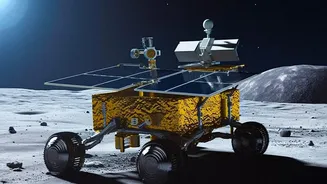
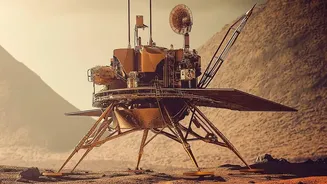
While the challenges for humans are immense, our robotic explorers are thriving. Rovers like Curiosity and Perseverance have revolutionized our understanding of Mars, proving it once hosted lakes and habitable environments. These robotic geologists are increasingly sophisticated. Perseverance is equipped with 23 cameras, can take high-definition video, and even has a helicopter drone sidekick, Ingenuity. Robots don't need food, water, or oxygen. They can withstand the harsh radiation and operate for years; the Curiosity rover has been exploring since 2012. Critically, they are also far more cost-effective. A crewed mission to Mars could cost hundreds of billions of dollars, while the Perseverance rover's mission cost under $3 billion. Since they don't need a return ticket, the engineering complexity and fuel requirements are drastically lower.
The Irreplaceable Human Element
Despite the undeniable advantages of robots, they have significant limitations. A rover's top speed is incredibly slow, around 0.14 km/h, and every action must be meticulously planned and transmitted from Earth, factoring in long communication delays. A human geologist could accomplish in minutes what might take a rover weeks, such as digging a trench or selecting an interesting rock on sight. Humans possess intuition, adaptability, and the ability to problem-solve in real-time when faced with unexpected situations—a skill no robot can currently replicate. An astronaut can improvise a fix, make a split-second scientific judgment, and react to discoveries instantly. This capacity for on-the-spot decision-making and versatile experimentation remains the key argument for putting boots on the ground.