




Decoding the Numbers
Before you start, it helps to understand what the numbers on your binoculars mean. You'll see a marking like 7x50 or 10x50. The first number is the magnification — 7x or 10x means the object will appear seven or ten times closer. The second number is the diameter
of the large front lenses in millimeters. A larger second number means more light-gathering power, resulting in a brighter image, which is crucial for astronomy. For stargazing, a magnification between 7x and 10x is ideal; it's powerful enough to reveal details but not so high that every tiny shake of your hand makes the image jump around. A pair of 7x50 or 10x50 binoculars is often considered the perfect starting point for budding astronomers.
Getting Set Up for Success
Your viewing experience depends as much on your setup as your equipment. First, find the darkest spot you can, away from streetlights and house lights. It takes about 20 to 30 minutes for your eyes to fully adapt to the dark, so be patient. Next, stability is key. High magnification also magnifies the natural tremor in your hands. To combat this, try bracing your arms against a wall, a fence, or the roof of a car. An even better solution is to rest your elbows on a steady surface while you observe. For longer viewing sessions, investing in a simple tripod with a binocular adapter can be a game-changer, especially for binoculars with 10x magnification or more.
First Stop: The Moon
The Moon is the perfect first target and never fails to impress. Through binoculars, it transforms from a flat disc into a three-dimensional world of stunning texture. You’ll see the dark, smooth plains known as 'seas' and the bright, pockmarked highlands riddled with craters. For the most dramatic views, observe the Moon when it's not full. The best place to look is along the terminator—the line separating the sunlit and dark parts of the Moon. Here, the low-angle sunlight casts long, deep shadows, making mountains and crater rims stand out in breathtaking detail.
Beyond the Moon: Star Clusters and Nebulae
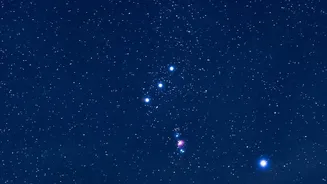
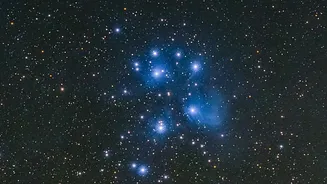
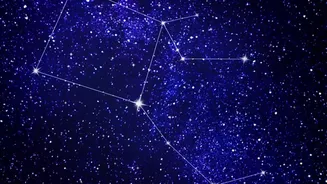
Binoculars have a wide field of view, which makes them perfect for observing sprawling star clusters that don't fit into a telescope's narrow eyepiece. A classic target is the Pleiades (M45), a sparkling cluster of young, hot stars that looks like a tiny, glimmering question mark to the naked eye but explodes into a diamond-like spray of stars through binoculars. The Hyades cluster, which forms the V-shape of Taurus's head, is another beautiful sight. On a clear, dark night, you can even hunt for the faint, fuzzy patch of the Orion Nebula (M42) in the sword of Orion, or the ghostly glow of the Andromeda Galaxy (M31), our closest galactic neighbor.
Finding Your Way Around
The night sky can feel vast and intimidating, but finding these celestial sights is easier than ever. There are numerous smartphone apps that act as digital star charts. You simply point your phone at the sky, and the app will identify constellations, stars, and planets in real-time, guiding you to your target. You can also use a more traditional technique: find a bright, known star with your naked eye, then slowly sweep the area around it with your binoculars to locate the fainter object you're searching for. This method of 'star hopping' is a classic and rewarding way to learn the constellations.