

Our Star's Finite Fuel
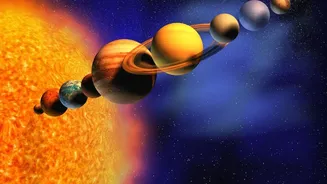
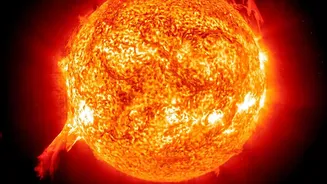
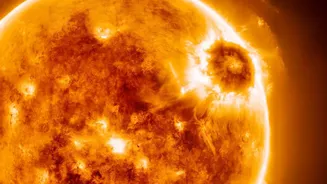
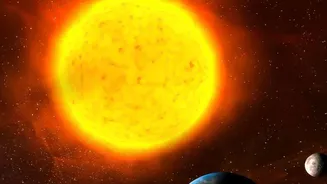
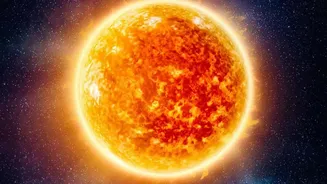
The Sun is currently about 4.6 billion years old, comfortably in its middle age. It is a yellow dwarf star, powered by a process called nuclear fusion in its core, where immense pressure and temperature fuse hydrogen atoms into helium. This process releases
the enormous energy we experience as sunlight and heat. However, this fuel is finite. In about another 5 billion years, the hydrogen in the Sun's core will run out. This is when its long, drawn-out death sequence will begin, transforming the solar system into a place that would be unrecognisable today.
A More Chaotic Collapse
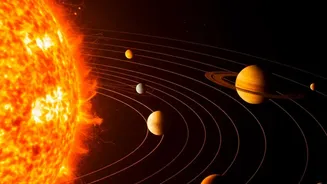
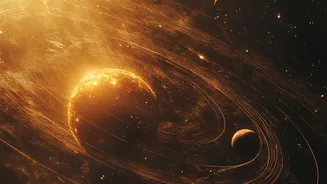
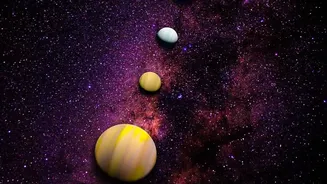
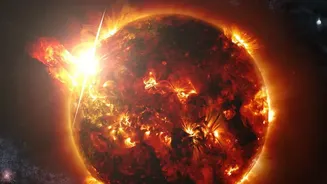
For years, scientists modelled the Sun's end as a relatively smooth process. However, a new study published in The Astrophysical Journal Letters presents a more violent picture. Researchers from Caltech and the University of Michigan suggest that as the Sun dies, it will shed its mass not in a steady stream, but in uneven, random bursts. These bursts will act like cosmic kicks, disrupting the careful gravitational balance of our solar system. This new model dramatically shortens the timeline for the final destruction of the outer planets, from a quintillion years down to a mere 1 billion years after the Sun becomes a white dwarf.
The Red Giant Phase
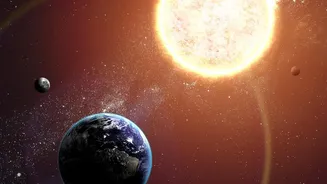
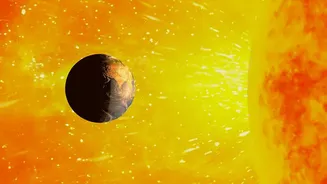
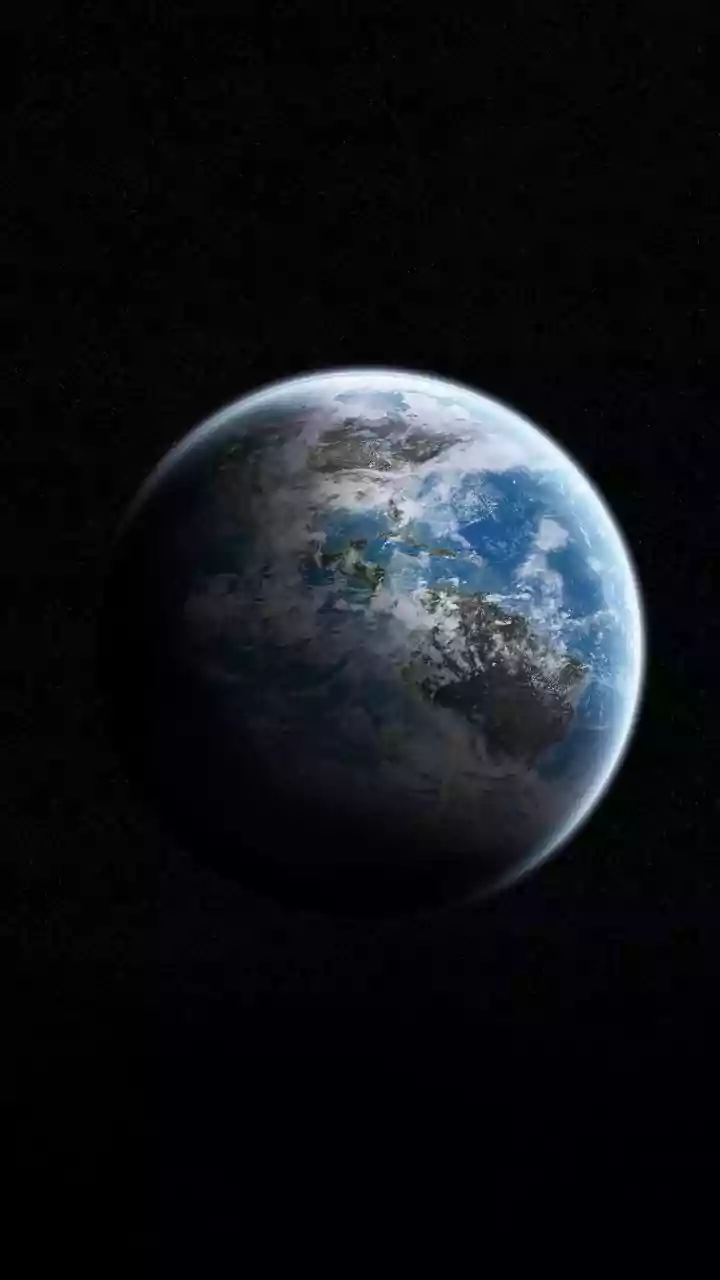
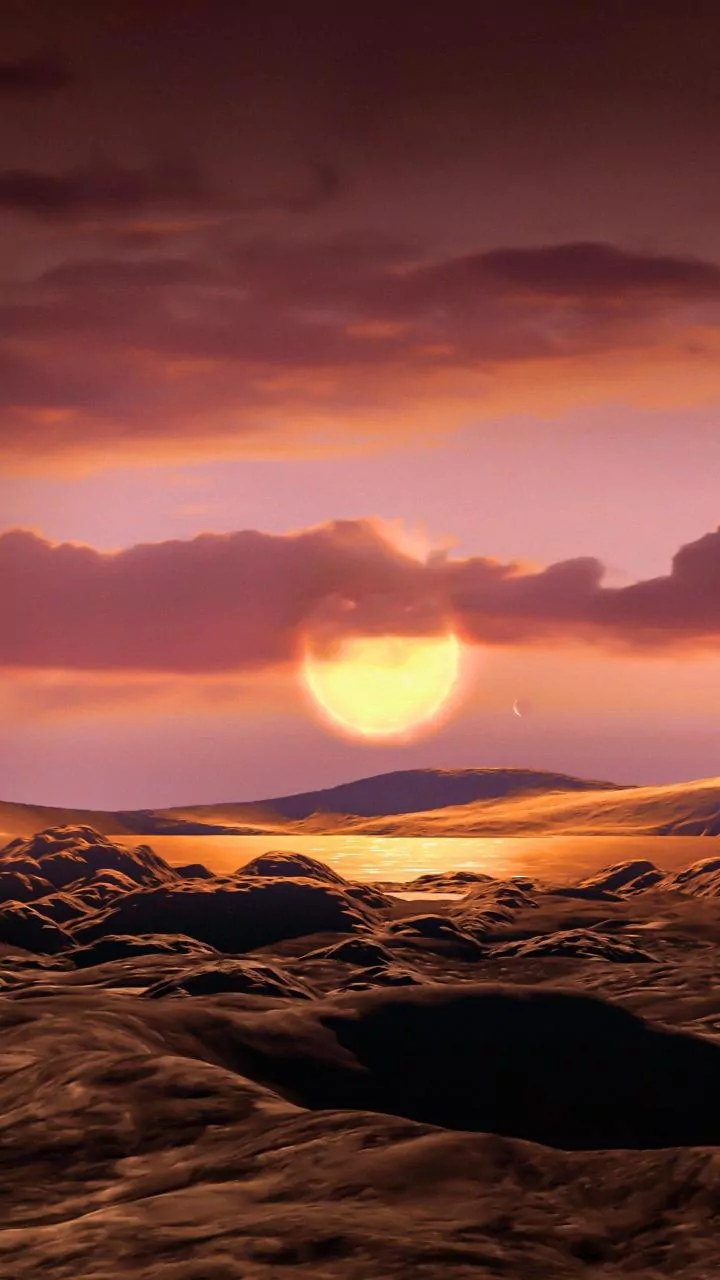
The first major stage of the Sun’s demise is its transformation into a red giant. Once the core's hydrogen is spent, the core will contract and heat up, igniting hydrogen fusion in a shell surrounding it. This will cause the Sun's outer layers to expand dramatically, potentially swelling to over 200 times its current size. In this phase, the Sun will engulf the inner planets. Mercury and Venus are certain to be swallowed. The fate of Earth hangs in a delicate balance. Some models suggest our planet's orbit will widen as the Sun loses mass, allowing it to escape being engulfed. However, even if it escapes, the intense heat will boil away our oceans and strip our atmosphere, rendering Earth completely sterile long before the Sun reaches its largest size.
A Ghostly Afterglow
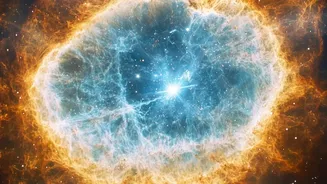
After the red giant phase, the dying Sun will cast off its bloated outer layers into space. This expanding cloud of gas and dust will be illuminated by the intensely hot, exposed core of the star, creating a spectacular and beautiful structure known as a planetary nebula. The name is a historical misnomer from early astronomers who thought they resembled planets through their small telescopes; they have nothing to do with actual planets. These nebulae are relatively short-lived cosmic phenomena, lasting only about 10,000 to 50,000 years before the material disperses into the galaxy.
The Final Remnant: A White Dwarf
Once the outer layers have drifted away, all that will remain of our magnificent Sun is a white dwarf—a smouldering, Earth-sized stellar corpse. This object will be incredibly dense, packing the mass of the Sun into a volume the size of a planet. With no nuclear fuel left to burn, the white dwarf will simply be a core of leftover carbon and oxygen, slowly radiating its remaining heat into the void over billions of years. Even with the Sun reduced to this state, the new chaotic model suggests its gravitational jolts could send the remaining giant planets like Uranus and Neptune careening into each other or eject them from the solar system entirely. Eventually, after an almost unimaginable length of time, the white dwarf will cool completely, becoming a cold, dark black dwarf, a final, silent monument to the star that once anchored our solar system.