


The Polenta: Your Golden Foundation
The heart of this dish is the polenta. For convenience, pre-cooked polenta sold in a tube is a fantastic time-saver. It's already cooked and firm, making it perfect for slicing and grilling. Simply slice the log into half-inch to one-inch thick rounds.
If you prefer to make your own, cook polenta according to package directions until it's very thick. You can enrich it with Parmesan cheese, butter, or herbs for extra flavor. Pour the cooked polenta into a greased baking dish, smooth it out to an even thickness, and chill it in the refrigerator for at least four hours, or overnight, until completely firm. This step is crucial for ensuring the cakes hold their shape on the grill.
The Art of Roasting Vegetables
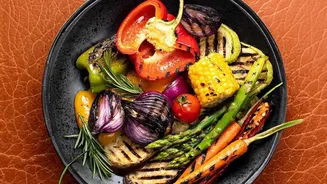
The key to great roasted vegetables is managing different textures. For a mix of crispy and tender, choose a variety of vegetables. Root vegetables like carrots and sweet potatoes become tender and sweet, while broccoli and cauliflower florets get wonderfully caramelized at the edges. Cut denser vegetables, like potatoes and carrots, into smaller, uniform pieces so they cook at the same rate as quicker-cooking vegetables like bell peppers and zucchini. Toss everything with olive oil, salt, and pepper. For the best results, roast on a parchment-lined baking sheet in a single layer at a high temperature, around 450°F (232°C). Roasting in a crowded pan will cause the vegetables to steam instead of brown. Some vegetables, like onions, cook faster and can be added partway through the roasting time.
Mastering the Grill
Grilling polenta can seem tricky, but a few tips ensure success. The most important rule is to use a hot, well-oiled grill to prevent sticking. Whether you're using an outdoor barbecue or an indoor grill pan, preheat it to medium-high heat. Brush both sides of your polenta slices with olive oil and season with salt and pepper. Place the cakes on the hot grill and, crucially, do not move them for at least 4-5 minutes. This allows a golden-brown crust to form, which helps the polenta release easily from the grates. Flip carefully with a spatula and cook for another few minutes on the other side until you have beautiful grill marks and a crispy exterior.
A Symphony of Toppings
Now for the fun part: assembly. The grilled polenta cakes are your base, and the roasted vegetables are your main act, but toppings are what bring it all together. For a creamy element, consider a smear of goat cheese, mascarpone, or even a dollop of dilled sour cream. For a fresh, acidic bite, a simple bruschetta topping of diced tomatoes, garlic, and basil is perfect. To add a salty, savory dimension, try crumbled feta, kalamata olives, or sun-dried tomatoes. A drizzle of balsamic glaze or a sprinkle of fresh herbs like parsley or basil right before serving adds a final layer of complexity and freshness. Don't be afraid to mix and match to find your favorite combination.
Endless Variations
This recipe is a template, not a strict set of rules. Think of it as a starting point for countless meals. You can change the vegetables based on the season—butternut squash in the fall, asparagus in the spring. For a heartier meal, top the polenta cakes with pulled pork, saucy beans, or grilled shrimp. You can also create an impressive appetizer board by serving the grilled polenta with a variety of cheeses, cured meats, and fruits. The combination of a crispy, creamy polenta base with the deep flavors of roasted vegetables provides a satisfying foundation for almost any topping you can imagine.