







Start with the Official Forecast: IMD
Your first stop should always be the India Meteorological Department (IMD). The IMD issues district-specific, colour-coded alerts that are crucial for understanding the day's potential severity. A 'Green' alert means no warning, 'Yellow' means be aware,
'Orange' means be prepared for potentially disruptive weather, and 'Red' is a warning to take action to protect yourself from extremely bad weather. These alerts, often issued for Mumbai, Thane, and Palghar, are the most reliable indicator of whether it's a day for a normal commute or one that requires extreme caution. You can find these updates on the IMD Mumbai website or their official social media handles.
Go Hyperlocal with Essential Apps
A general forecast is good, but hyperlocal information is better. For Mumbai commuters, a few apps are indispensable. M-Indicator is a lifeline, offering live tracking and status updates for Western, Central, and Harbour line local trains. Its train chat feature allows commuters to share real-time information on delays, cancellations, and waterlogging on the tracks. The app also includes information on BEST bus routes. Another powerful tool is the YATRI app, developed with Central Railway, which provides official updates straight from the railway control room, including notifications on delays and alternate routes. For road travel, apps like Chalo provide live bus tracking.
Check Real-Time Waterlogging Status
A downpour can turn a familiar street into an impassable waterway in minutes. Before you step out, check for real-time waterlogging information. The Disaster Management Cell of the Brihanmumbai Municipal Corporation (BMC) provides updates on its portal and social media channels. Additionally, experimental platforms developed by IIT Bombay, such as the 'Mumbai Flood' app and web portal, offer near real-time waterlogging information from monitoring stations at known flood-prone spots. Crowdsourced platforms like MumbaiRainWatch also provide live updates on whether key areas and subways like Andheri, Milan, and Hindmata are clear or flooded.
Monitor Live Traffic and Diversions
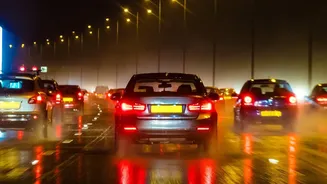
Heavy rain inevitably means traffic snarls. The Mumbai Traffic Police are active on social media, especially X (formerly Twitter), providing continuous updates on traffic diversions, road closures, and accident-related delays. Following their official handle is a non-negotiable for anyone driving or taking a cab. Google Maps and other navigation apps are also useful for their real-time traffic data, which can help you spot congestion and automatically suggest faster alternative routes away from the worst of the jams. During severe spells, traffic police personnel are deployed at critical spots to manage flow, and their social media provides the most current ground report.
Don't Forget the High Tide Timings
In a coastal city like Mumbai, heavy rain during a high tide is a recipe for disaster. When the tide is high, the sea prevents rainwater from draining out, leading to rapid and severe waterlogging, especially in low-lying areas. Official bodies like the BMC and Western Railway regularly issue high tide alerts, advising citizens to be extra cautious during these specific windows. If the forecast predicts heavy rain coinciding with a high tide of over four meters, it’s a strong signal to reconsider non-essential travel. Information on tide timings is readily available on the BMC's disaster management website and various weather apps.
Plan for the Journey, Not Just the Destination
Finally, a prepared mindset is your best tool. Have a backup plan. If you take the train, know which bus route could be an alternative. Keep your phone charged and consider carrying a power bank. Pack a small kit with essentials like a waterproof bag for your electronics, a change of socks, and some snacks in case you get stranded. Many seasoned commuters keep a spare set of clothes and footwear at their workplace. It’s not about being pessimistic; it’s about being a pragmatic Mumbai commuter who knows that during the monsoon, the journey itself is the challenge.