

The Science of a Pop
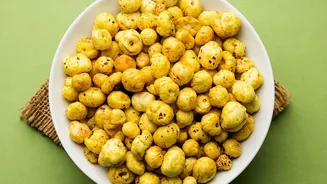
Popcorn's unique texture comes from a miniature, high-pressure explosion. Each kernel of a specific corn variety, Zea mays everta, contains a small amount of moisture trapped within its hard, non-porous outer shell, called the pericarp. When heated to
around 180°C, this moisture turns into steam, building up immense pressure inside. Suddenly, the hull can no longer contain the force and ruptures. The superheated, gelatinised starch inside rapidly expands and cools, turning the kernel inside out to create the fluffy, irregular shape we know and love. This violent, instantaneous process is what gives popcorn its characteristic large, airy structure with a delicate, crisp exterior that shatters when you bite into it.
The Art of the Puff
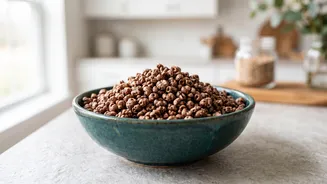
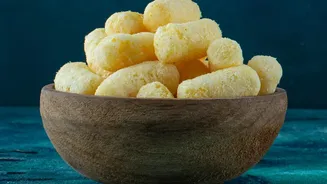
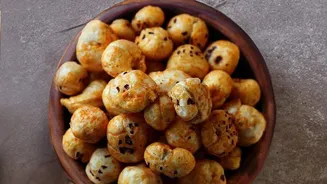
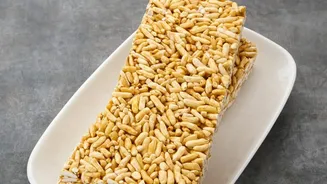
Puffed ragi snacks, on the other hand, are typically a product of modern food technology, specifically a process called extrusion. Instead of a whole kernel exploding, ragi (finger millet) is first ground into flour. This flour is then mixed with water and other ingredients to form a dough or slurry. This mixture is fed into an extruder, which uses heat and pressure to cook the dough as it's forced through a narrow opening, or die. As the cooked dough exits the high-pressure environment of the extruder into atmospheric pressure, the sudden drop causes the moisture within to flash into steam, puffing the material into a light, porous structure. This method allows for uniform shapes—like balls, curls, or sticks—and creates a texture that is often more consistent and delicate than popcorn.
A Tale of Two Grains
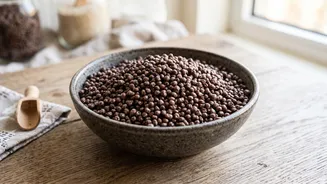
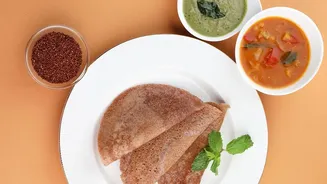
The fundamental differences in texture also originate from the grains themselves. Popcorn comes from maize, a grain rich in carbohydrates with a specific starch composition that gelatinises perfectly under pressure. Ragi, or finger millet, has a different nutritional profile. It is renowned in India for being exceptionally high in calcium—significantly more than other cereals—and rich in dietary fibre. The structure of the ragi grain is also different; it has a distinctive multi-layered seed coat. When ground into flour for extrusion, its fine particles and higher fibre content contribute to a different kind of expanded product. The resulting puff is often denser and has a finer, more even cellular structure compared to the chaotic, large air pockets of popcorn.
The Sensation of the Crunch
Food scientists often distinguish between 'crispy' and 'crunchy'. Crispy foods are seen as light, brittle, and create a high-pitched shattering sound—think of a thin potato chip or the skin of perfectly fried chicken. Crunchy foods are denser, requiring more force to break, and produce a louder, lower-pitched sound, like a raw carrot or a hard biscuit. By these definitions, popcorn is a perfect example of a crispy snack. It has a light, fragile structure that fractures easily. Puffed ragi snacks often fall somewhere between crispy and crunchy. While light, their more uniform and compact cell structure can offer a sturdier, more substantial 'crunch' that may dissolve more slowly in the mouth, providing a different kind of satisfying mouthfeel.
From a Snack to a Treat
The base texture of both snacks makes them excellent canvases for flavour. Popcorn's large, irregular surface with many crevices is ideal for catching melted butter and fine salt. Its relatively neutral flavour also makes it a great base for both savoury and sweet coatings, from simple spices to thick caramel, although liquids can quickly compromise its crispness. Puffed ragi snacks, with their porous and often slightly rougher surface, are exceptionally good at holding onto powdered seasonings, as seen in the many 'masala puff' variations available. Their inherent earthy, nutty flavour, a characteristic of the millet itself, also adds a layer of complexity that complements traditional Indian spices beautifully.