



The King of All Exercises
Why are squats so highly regarded? Because they are a compound exercise, meaning they work multiple muscle groups across multiple joints simultaneously. The primary muscles targeted are the quadriceps (front of your thighs), hamstrings (back of your thighs), and
glutes. But the benefits don't stop there. Squats also engage your core for stability, strengthen your back muscles, and improve mobility in your hips, knees, and ankles. This translates directly to real-world strength, making everyday activities like lifting heavy objects, getting up from a chair, or playing with your kids on the floor feel easier. Plus, by engaging so many large muscle groups, squats get your heart pumping, providing a cardiovascular benefit and helping you burn calories.
How to Perform the Perfect Squat
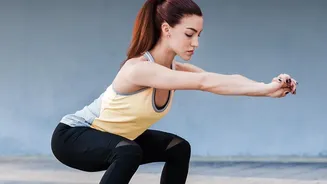
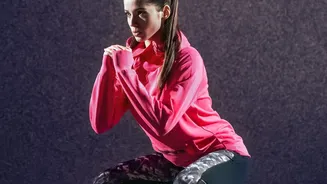
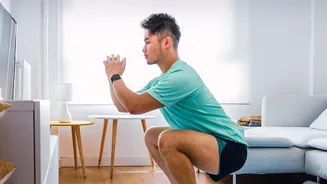
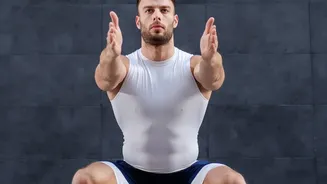
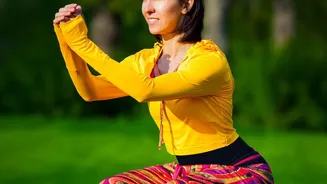
Mastering the form is key to reaping the benefits and avoiding injury. Think of it as sitting back into an imaginary chair. Start by standing with your feet about shoulder-width apart, with your toes pointed slightly outward. Keep your chest up and your spine in a neutral, straight position. Begin the movement by hinging at your hips and pushing them backward first, then bend your knees to lower your body. Continue lowering until your thighs are at least parallel to the ground, or as low as you can comfortably go while maintaining good form. Ensure your weight is in your heels, and your knees are tracking in line with your feet, not caving inward. To stand back up, push through your heels and extend your hips and knees to return to the starting position.
Common Mistakes to Avoid
Several common form errors can make your squat less effective and increase injury risk. The most frequent is allowing your knees to collapse inward, which puts stress on the knee joints. To fix this, consciously push your knees outward so they stay aligned with your feet. Another mistake is lifting your heels off the ground, which shifts your weight forward and can strain your knees. Focus on keeping your feet flat and your weight back. Many people also round their back, especially as they get tired. A simple cue to prevent this is to keep your chest puffed out and your gaze forward, not down at the ground. Finally, don't just drop down quickly. Control the movement on the way down and avoid bouncing out of the bottom to ensure your muscles, not momentum, are doing the work.
Take Your Squat to the Playground
The playground offers a variety of 'equipment' to modify your squats. For beginners or those needing extra support, hold onto a pole or the chain of a swing for an assisted squat, which can help you maintain balance and an upright torso. A park bench is perfect for box squats. Simply squat down until you gently tap the bench seat before standing back up. This is an excellent way to learn control and ensure you're reaching a consistent depth. For a more advanced challenge, try split squats by placing the top of one foot on the bench behind you and squatting with your front leg. This unilateral movement is fantastic for building single-leg strength and stability. And if you want to add a cardiovascular blast, find a clear space and perform explosive jump squats.