



Meet a Spectacularly Messy Neighbor
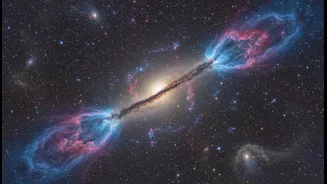
Centaurus A, also known as NGC 5128, is not your average, well-behaved spiral galaxy. Located a relatively close 11 to 13 million light-years away, it's one of the most studied objects in the southern sky. What makes it so fascinating is its violent and
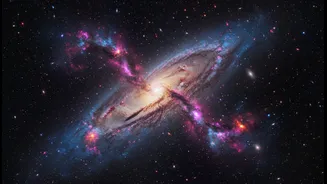
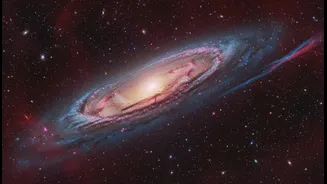
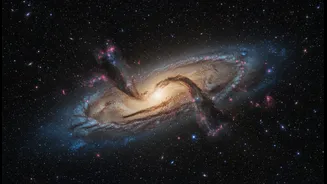
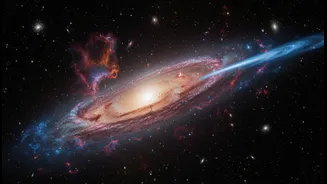
messy history. Astronomers believe that about two billion years ago, a large elliptical galaxy collided with and consumed a smaller spiral galaxy. The most striking visual evidence of this cosmic crash is the thick, dark band of dust that cuts across the galaxy's bright center. This dust lane is the twisted wreckage of the smaller galaxy, now serving as a nursery for furious bursts of new star formation. At its heart, Centaurus A hosts an active galactic nucleus—a supermassive black hole, 55 million times the mass of our sun, that is actively feeding on gas and dust. This makes it the closest active galaxy to Earth, a perfect laboratory for studying the dramatic lives of galaxies.
A Stunning New Look Through the Dust
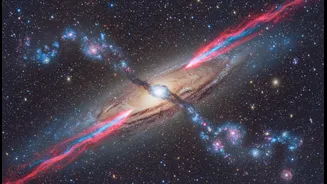
For years, that dramatic dust lane has acted like a curtain, hiding the galaxy’s core from view. Telescopes that see in visible light, like Hubble, couldn't fully penetrate it. But now, to mark its fourth anniversary of science operations, NASA's James Webb Space Telescope (JWST) has given us an unprecedented view. Using its powerful infrared instruments, Webb has peered through the dusty veil, transforming what was once a hazy glow into a sparkling field of millions of individual stars. The new images, released on July 6, 2026, combine the capabilities of Webb's Near-Infrared and Mid-Infrared instruments to trace the intricate filaments, loops, and glowing clouds of gas and dust with breathtaking clarity. This is the most detailed look we've ever had at the aftermath of this galactic merger.
The Black Hole’s Creative Destruction
At the center of it all is the supermassive black hole, and the new Webb data provides fresh insight into its complex relationship with the surrounding galaxy. It’s a dynamic of both creation and destruction. As the black hole feeds, it can launch powerful jets and outflows of energy that push gas away, potentially halting star formation in a process that could eventually “kill” a galaxy. However, the new data also shows how the pressure from these outflows can compress nearby gas clouds, triggering new waves of star birth. For the first time, astronomers can see this cosmic feedback loop in action with incredible detail, observing warmer hydrogen gas rotating near the black hole while other gas rushes outward. Centaurus A offers a front-row seat to understanding how these cosmic engines shape the evolution of the galaxies they inhabit.
Galactic Archaeology Unlocks History
Being able to see millions of individual stars isn't just about getting a prettier picture; it's about doing science. This new level of detail allows for a kind of “galactic archaeology.” By studying the different populations of stars—their ages, locations, and movements—astronomers can piece together the galaxy’s history event by event. They can now better trace the sequence of events that followed the ancient collision and better understand how mergers build new, larger galaxies over billions of years. The new images have also revealed surprises that have scientists intrigued, including a mysterious, delicate S-shaped structure near the core that they are just beginning to investigate. It’s a vivid record of cosmic history, written in its stars, and we are just learning how to read it.