



The Three Enemies of Fresh Oil
Like any natural product, cooking oil degrades over time. This process, known as rancidity, is accelerated by three main factors: light, oxygen, and heat. Exposure to any of these elements can trigger a process called oxidation, which breaks down the fats
in the oil. This not only ruins the flavour, making it taste bitter or stale, but it can also destroy beneficial nutrients like antioxidants. The convenient spot next to the stove might seem practical, but the constant exposure to heat will cause the oil to spoil much faster. Similarly, a bottle sitting in direct sunlight is being actively damaged by UV rays. And every time you open the bottle, you introduce oxygen, which also contributes to the breakdown process.
Smart Shopping Starts at the Store
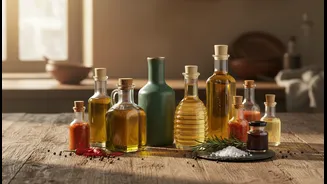
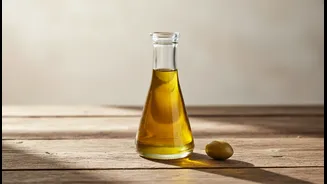
Preserving oil quality begins before you even bring it home. When you're at the grocery store, pay attention to the packaging. Many high-quality oils, especially extra virgin olive oil, are sold in dark green or amber glass bottles. This isn't just for aesthetics; the dark glass is specifically designed to block the harmful UV rays that accelerate spoilage. If possible, avoid oils sold in clear glass bottles, as they offer little protection from light. Also, check the 'best by' date to ensure you're getting a fresh bottle. An unopened bottle of vegetable or olive oil can last for a year or more, but its quality declines after opening, so it's wise not to buy more than you can realistically use within a few months.
Best Practices for Home Storage
Once you get your oil home, the best place to store it is in a cool, dark, and dry location, like a kitchen pantry or cabinet away from the stove and other appliances. The ideal storage temperature is between 55 and 70 degrees Fahrenheit. Always make sure the cap is sealed tightly after each use to minimize its exposure to oxygen. If you buy oil in a large tin, it's a good idea to decant a smaller amount into a dark glass bottle for daily use. This keeps the bulk of your oil sealed and protected while providing convenient access to what you need. Avoid the temptation to mix old and new oil, as this will degrade the fresh oil more quickly.
To Refrigerate or Not to Refrigerate?
The question of whether to refrigerate cooking oil can be confusing. For most common oils like olive, canola, and vegetable oil, pantry storage is perfectly fine. However, certain delicate oils, particularly those high in polyunsaturated fats like walnut, flaxseed, and grapeseed oil, are more prone to rancidity and benefit from being refrigerated. If you choose to refrigerate other oils like extra virgin olive oil, you may notice them becoming cloudy and thick. This is normal and doesn't harm the oil; simply let it return to room temperature before using, and it will become clear again. Refrigeration can extend the shelf life, but for most everyday oils, proper pantry storage is sufficient.
How to Tell if Oil Has Gone Bad
Even with the best storage, all oils will eventually go bad. Your senses are your best tool for detecting spoilage. First, give the oil a sniff. Fresh oil should have a neutral or pleasant aroma. If it smells soapy, metallic, or like crayons, it has likely gone rancid. Next, observe its appearance. If the oil has become significantly darker or appears cloudy (when at room temperature), it's a sign of degradation. You might also notice a sticky, gummy residue forming on the bottle. Finally, if you're still unsure, you can do a small taste test. A rancid oil will have a distinctly unpleasant, bitter, or sour taste. If your oil shows any of these signs, it's best to discard it, as it will impart off-flavours to your food.