






The Race Against Wilting
In India's vast agricultural landscape, a significant portion of what is grown never reaches the consumer. For high-value, perishable crops like roses, post-harvest losses can be devastating, with some estimates suggesting waste as high as 30-40%. The
primary culprits are a lack of adequate storage infrastructure and unreliable electricity in rural areas. For rose farmers, this means their delicate, premium product begins to lose value almost immediately after harvest. Without access to cold storage, they are often forced into distress sales, selling their entire day's harvest to middlemen at rock-bottom prices to avoid total spoilage. This dynamic has historically trapped many small and marginal farmers in a cycle of low profitability, even when cultivating in-demand crops.
The Sun’s Cold Embrace
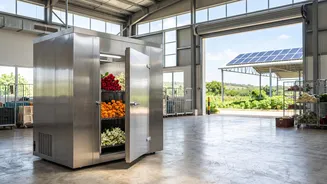
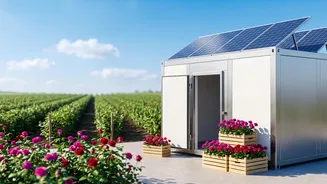
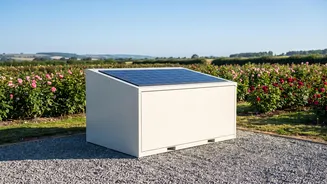
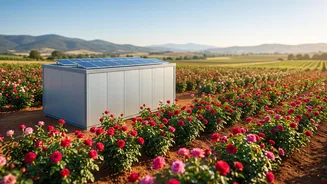
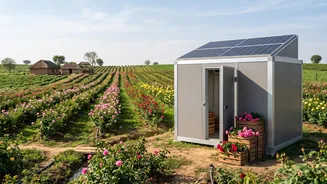
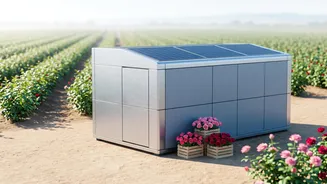
The solution emerging at the farm gate is the off-grid solar cold storage unit. These are essentially walk-in cold rooms powered by solar photovoltaic (PV) panels. What makes them transformative is their ability to operate independently of the main power grid, which is often erratic or completely absent in remote farming communities. Modern units use innovative thermal energy storage instead of expensive chemical batteries, allowing them to provide backup cooling for over 30 hours, ensuring produce stays fresh overnight and even on cloudy days. This technology, which can maintain temperatures ideal for floriculture (0°C to 15°C), is now available in compact, 5 to 10-metric-tonne capacities perfectly suited for small farmer groups.
From Spoilage to Profitability
The economic impact is immediate and profound. By having access to on-farm cold storage, growers can drastically cut post-harvest losses. With spoilage reduced, farmers have more high-quality flowers to sell, directly increasing their revenue. The ability to preserve their harvest gives them newfound market power. Instead of being forced to sell immediately, they can hold their roses and wait for more favourable market prices, breaking their dependence on local intermediaries. This flexibility allows farmers to aggregate their produce and negotiate better terms, fundamentally changing their earning potential.
Unlocking New Markets and Models
Solar cold storage does more than just preserve flowers; it unlocks access to more lucrative markets. Farmers are no longer confined to selling locally. With their produce kept fresh for longer, they can transport it to distant urban centres or even tap into the export market, where prices are significantly higher. This shift is being facilitated by Farmer Producer Organisations (FPOs), which are playing a crucial role in making this technology accessible. FPOs often own, lease, or share cold storage units, allowing individual farmers to benefit without bearing the full capital cost. This cooperative model empowers entire communities, enabling them to achieve economies of scale and improve their collective bargaining power.
A Sustainable Blueprint for Agriculture
The Indian government has recognized the potential of this technology, promoting it through initiatives like the Mission for Integrated Development of Horticulture (MIDH) and the Agriculture Infrastructure Fund, which provide subsidies and low-interest loans. These schemes are helping to scale the adoption of decentralised renewable energy (DRE) solutions across the country. The transformation seen in rose supply chains serves as a powerful blueprint for other perishable goods, from fruits and vegetables to dairy and fisheries. By tackling food waste, boosting rural incomes, and promoting clean energy, off-grid solar storage is proving to be a cornerstone of a more resilient and sustainable agricultural future for India.