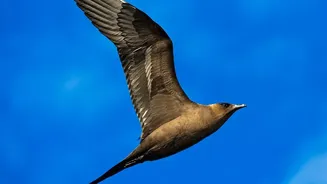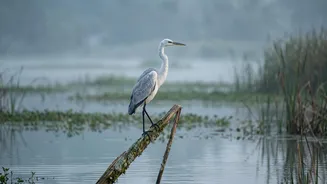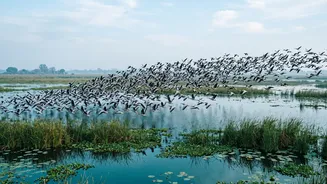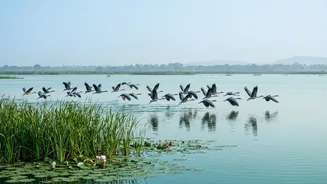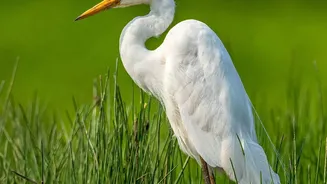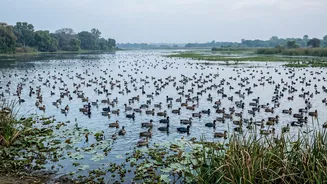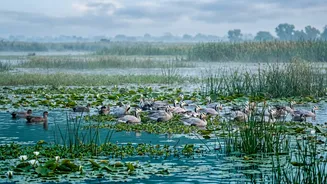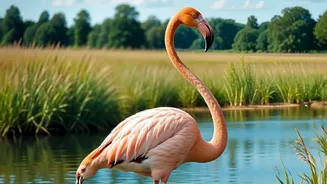








As a familiar chill settles over Northern India, the sky and water bodies are coming alive with the arrival of winged visitors. Thousands of migratory waterfowl have begun their annual journey, escaping the harsh cold of their northern homes.
An Arduous Journey Across Continents
This annual
migration is one of nature's most spectacular feats of endurance. Birds travel thousands of kilometres along the Central Asian Flyway, a major migratory route, from their breeding grounds in Siberia, Kazakhstan, Mongolia, and other parts of Central Asia and Europe. They fly over the Himalayas, with some species like the bar-headed goose known for flying at extreme altitudes to reach their wintering grounds in the comparatively warmer climes of the Indian subcontinent. The journey is triggered by dropping temperatures and frozen water bodies in their native lands, which makes finding food a challenge. India, with its vast network of wetlands, provides a crucial refuge for them to rest, feed, and survive the winter months.
Northern India's Welcoming Havens
Several key wetlands across Northern India serve as vital stopover points and winter homes. In Punjab, the Harike Wetland, one of the region's largest, is a primary destination situated at the confluence of the Sutlej and Beas rivers. Other important sites in Punjab include the Keshopur Miani, Nangal, and Ropar wetlands. In Himachal Pradesh, the Pong Dam Lake, a vast reservoir also known as Maharana Pratap Sagar, becomes a bustling hub for waterfowl, set against the stunning backdrop of the Dhauladhar mountain range. Further north, the wetlands of Kashmir, including Hokersar, Hygam, and Wular Lake, host immense flocks, transforming into vibrant ecosystems teeming with avian life.
The Feathered Guests of Honour
A diverse array of species makes this annual pilgrimage. Among the most prominent arrivals are the bar-headed geese, famous for their high-altitude journey across the Himalayas. They are joined by large numbers of northern pintails, common teals, northern shovelers, Eurasian wigeons, and several species of pochards. Birdwatchers can also spot ruddy shelducks, gadwalls, coots, and various shorebirds like sandpipers and plovers. In Kashmir's wetlands, mallards and gadwalls are often among the first to arrive in large numbers. The arrival of these species is a much-anticipated event for ornithologists and nature enthusiasts, signalling the health and readiness of the local ecosystems.
A Barometer of Ecological Health
The arrival of migratory birds is more than just a beautiful spectacle; it is a critical indicator of the health of our wetlands. The diversity and number of birds a wetland supports reflect the quality of its water, the availability of food, and the overall stability of the habitat. However, these vital ecosystems face persistent threats. Pollution from industrial effluents and urban sewage, shrinking habitats due to agricultural encroachment and urban development, and illegal poaching all place immense pressure on these birds and their wintering grounds. Climate change is also disrupting ancient migratory patterns, with warmer winters sometimes delaying the arrival of birds or shortening their stay.
Conservation is Key
Recognising the importance of these wetlands, conservation efforts are underway. State wildlife departments, along with organisations like the World Wildlife Fund for Nature (WWF), conduct annual waterbird censuses to monitor populations and habitat conditions. Anti-poaching patrols are deployed, especially during the peak migratory season, to protect the visiting birds. Furthermore, several key wetlands like Harike, Pong Dam Lake, and Wular Lake have been designated as Ramsar sites, recognising their international importance and underlining the need for their preservation. The success of these measures, however, also depends on community participation and a collective understanding of the fragility of these ecosystems.