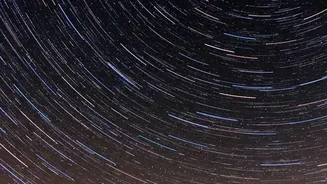








Saturn's Opposition: The Star of the Show
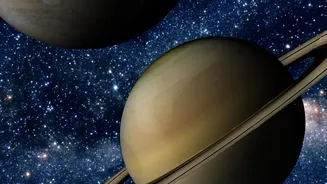
The main event this month is Saturn, which reaches opposition on October 4, 2026. Opposition is when Earth passes directly between the Sun and an outer planet, placing Saturn opposite the Sun in our sky. This means it will rise around sunset, remain visible
all night, and be at its closest and brightest for the year. For viewers in India, look for Saturn rising around 6:11 PM IST on October 4; it will be visible throughout the night before setting around 6:23 AM the next morning. While it will appear as a bright, steady, yellowish point of light to the naked eye, even a small telescope will reveal its famous rings. This is the best time of year to observe the ringed planet.
Jupiter: A Beacon in the Morning Sky
While Saturn dominates the evening, the king of planets, Jupiter, commands the morning. You can find Jupiter rising in the pre-dawn hours, shining brilliantly. On October 6, skywatchers are in for a treat as a thin crescent Moon will appear close to the bright planet before sunrise, creating a beautiful pairing in the sky. Jupiter is the second-brightest planet after Venus and is unmistakable. Its steady, silvery light makes it easy to distinguish from twinkling stars. You don’t need any special equipment to spot it, but binoculars might reveal up to four of its largest moons, appearing as tiny pinpricks of light lined up beside the planet.
Meteor Trails: The Draconids
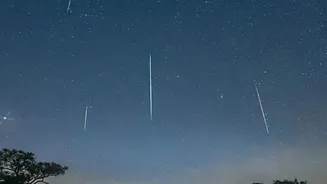
October hosts two notable meteor showers. First up are the Draconids, peaking on the night of October 8-9. This is a minor shower, typically producing about 5 to 10 meteors per hour. Unlike most showers, the Draconids are best viewed in the early evening, just after sunset. The radiant, or the point from which the meteors appear to originate, is the constellation Draco the Dragon. Favourable viewing conditions this year with a nearly moonless sky during the peak mean even faint meteors should be visible. These meteors are known for being slow-moving, which can make them a graceful sight.
Meteor Trails: The Orionids
The month's second shower is the famous Orionids, which will peak on the night of October 21-22. These meteors are fragments left behind by the famous Halley's Comet. The Orionids are known for their speed and can produce up to 20 bright meteors per hour in ideal conditions. The best time to watch is after midnight until dawn. The Moon will be a waxing gibbous and could wash out some fainter meteors in the early part of the night, but it sets a few hours before dawn, leaving a dark window for optimal viewing in the pre-dawn hours of October 22. Look towards the constellation Orion the Hunter to catch these fleeting streaks of light.
Tips for the Best Viewing Experience
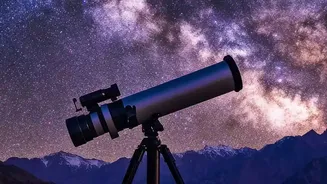
To make the most of your skywatching, find a location away from city lights. Light pollution in urban areas can obscure all but the brightest objects. Even a short drive to the outskirts of a city can make a huge difference. For meteor showers, no special equipment is needed. Find a comfortable spot, perhaps with a reclining chair or a blanket, and allow your eyes about 20-30 minutes to fully adjust to the darkness. Patience is key, as meteors can appear in spurts. While top-tier stargazing locations like Hanle in Ladakh or Spiti Valley offer pristine skies, you can enjoy October's celestial events from any dark, clear spot across India.