






What is Microgravity and Why Does It Matter?
Often called 'zero gravity', microgravity is the condition of near-weightlessness experienced by astronauts in orbit. It's not that gravity disappears; rather, it’s a state of continuous free-fall around the Earth. This unique environment is a game-changer
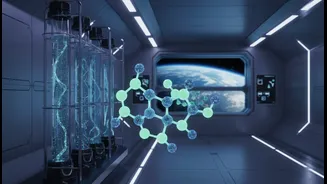
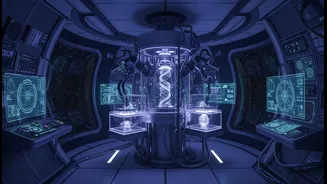
for science. On Earth, gravity influences everything, causing denser materials to sink and heated liquids to rise. In microgravity, these effects vanish. This allows scientists to observe processes that are normally masked by gravity's pull. For instance, crystals for medicines can grow larger and more perfectly, and human cells can form 3D structures that more closely mimic tissues in the body. These unique conditions can lead to breakthroughs in medicine, materials science, and technology that are impossible to achieve on the ground.
ISRO's Big Push into a Weightless World
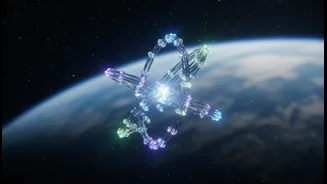
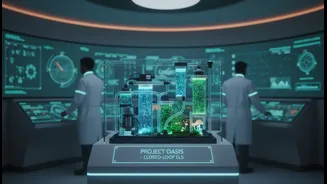
The Indian Space Research Organisation (ISRO) is aggressively expanding its focus to include this high-potential field. A key part of this strategy is linked to the upcoming Gaganyaan human spaceflight missions and the planned Bharatiya Antariksh Station, India's own space station set to be operational by 2035. These platforms are not just for astronauts; they are high-tech laboratories in space. In May 2026, ISRO launched the Indian Microgravity Experiments (IMEx-2026) initiative, an open invitation for Indian researchers, academic institutions, and even startups to propose experiments for these future missions. This signifies a major push to build a domestic ecosystem for microgravity research, turning spaceflights into valuable scientific opportunities. ISRO has already been conducting experiments on international missions, studying everything from how microalgae could become a food source for astronauts to how muscle regeneration is affected by space travel.
The New Frontier: Careers in the Microgravity Sector
ISRO's focus on microgravity is creating demand for a new generation of specialists who can bridge the gap between space and terrestrial science. This isn't just about becoming an astronaut. The real boom is in ground-based roles for scientists and engineers who design, build, and analyse these space-bound experiments. Key fields include: Biotechnology & Pharmacology: With microgravity enabling purer protein crystallization and 3D cell growth, opportunities are expanding for researchers to develop new drugs and study diseases like cancer and muscle atrophy. Professionals in this area will design experiments to understand how biological systems function without gravity. Materials Science: The ability to create unique alloys and flawless crystals in space opens doors for materials scientists to develop next-gen semiconductors and optical fibres. This has direct applications in the electronics and telecommunications industries. Agricultural Science: As ISRO explores how to grow crops in space for long-duration missions, there is a need for botanists and agricultural scientists to study plant growth, seed viability, and sustainable life-support systems. Robotics and Automation Engineers: Many microgravity experiments will be automated. Engineers who can design and build robotic systems to handle delicate tasks in a space environment will be crucial. * Data Scientists: Every experiment will generate vast amounts of data that needs to be transmitted, processed, and analysed. Data scientists with skills in AI and machine learning will be essential to interpret the results and extract meaningful insights.
How to Prepare for a Space Science Career
For students aspiring to enter this field, the path begins with a strong foundation in STEM subjects. A degree in fields like biotechnology, materials engineering, physics, computer science, or agricultural science is a great starting point. Beyond academics, aspiring space scientists should seek hands-on experience through internships and research projects. Universities like the Indian Institute of Space Science and Technology (IIST) and research institutes such as TIFR and IISERs offer specialized programs. The growing private space sector in India, with over 300 startups, is also becoming a major employer. Companies like Skyroot Aerospace, Pixxel, and Bellatrix Aerospace are not just launching rockets; they are building the hardware, software, and systems that will support India's future in space, including microgravity research. Getting involved in university clubs for rocketry or satellite design can provide invaluable practical experience.