






The Problem With a Sedentary Day
Many of us with desk jobs in India spend eight, nine, or even more hours sitting down. While it seems harmless, this prolonged inactivity has a direct impact on our lower body. The primary issue is a phenomenon sometimes called 'gluteal amnesia' or 'dead
butt syndrome'. When you sit for extended periods, your gluteal (buttock) muscles can essentially forget how to fire correctly. Simultaneously, the muscles at the front of your hips, the hip flexors, become tight and shortened. This combination of weak, inactive glutes and tight hip flexors is a recipe for discomfort, creating a muscular imbalance that can ripple throughout your body.
Why 'Sleepy' Muscles Matter
Dormant muscles are more than just a strange feeling; they have real consequences. When your glutes and hamstrings are not activating properly, your body recruits other, less suitable muscles to compensate. This often puts a strain on your lower back, leading to the aches and pains that are all too common among office workers. It can also affect your posture, causing you to slump or hunch. Over time, this imbalance can impact your stability, making you more prone to injury not just at the gym, but during everyday activities like walking or climbing stairs. Waking these muscles up isn't about building a new physique; it's about restoring your body's natural, functional strength.
The Desk Side Sit: A How-To Guide
The desk side sit is a modified squat that serves as the perfect antidote. It requires no equipment and can be done discreetly in just a minute.
1. **Stand Up:** Position yourself in front of your chair, facing away from your desk. Your feet should be about shoulder-width apart, toes pointing forward.
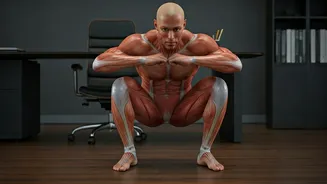
2. **Initiate the Movement:** Keeping your chest up and your back straight, hinge at your hips and begin to lower your body as if you are about to sit in your chair. The focus should be on pushing your hips back, not just bending your knees.
3. **Lower and Pause:** Go down until your glutes are just hovering above the chair's seat. Hold for a count of two. You should feel the muscles in your glutes and thighs engage. Ensure your knees are tracking over your feet and not collapsing inward.
4. **Power Up:** Drive through your heels to return to a standing position, squeezing your glutes at the top. This completes one repetition.
Make It a Habit
The key to combating the effects of sitting is consistency. A single set of desk side sits is good, but integrating them into your day is even better. Think of it as a 'movement snack'. Set an alarm on your phone or computer to go off once every hour. When it does, stand up and perform a set of 10 to 15 desk side sits. This simple routine takes less than two minutes but does wonders for breaking the cycle of inactivity. It re-engages your posterior chain, gets blood flowing, and provides a much-needed mental break, helping you return to your work feeling more focused and energised.
Simple Ways to Level Up
Once you're comfortable with the basic movement, you can add small variations to increase the challenge and benefits.
* **Add a Hold:** Instead of just pausing for two seconds, try holding the lowest position of the sit for 10-20 seconds. This isometric hold will increase time under tension and build muscular endurance.
* **Increase the Range:** If your chair is low, try performing the sit without it, lowering yourself to a parallel squat position before returning to standing.
* **Add a Calf Raise:** As you return to the standing position, press up onto the balls of your feet for a quick calf raise. This incorporates another often-neglected lower leg muscle.
* **Slow It Down:** Perform the entire movement more slowly, taking three seconds to lower and three seconds to rise. This eliminates momentum and forces your muscles to do all the work.