



A Strategic Shift at the Top
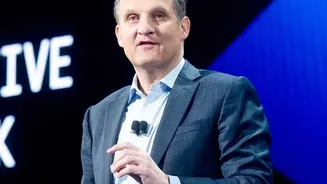
In a significant move, Meta has appointed a former Amazon Web Services (AWS) executive, David Brown, to lead its infrastructure operations. He will succeed Santosh Janardhan, a 17-year veteran who was instrumental in building Meta's global data center
fleet. Janardhan is set to step down in early 2027, staying on to ensure a smooth transition. This change is critical, as it places a leader with deep experience in hyperscale cloud computing at the helm of Meta's aggressive AI buildout. The decision to bring in top talent from AWS indicates that Meta recognizes the need for a fundamental shift in how it builds and manages the colossal infrastructure required for artificial intelligence, moving beyond its traditional social media architecture.
The Unprecedented Race for Compute Power
At the heart of this transition is Meta's enormous investment in 'compute capacity'—the raw processing power needed to train and run advanced AI models. The company has publicly stated its goal to acquire a massive stockpile of GPUs (Graphics Processing Units), the specialized chips that are the workhorses of AI. CEO Mark Zuckerberg has outlined plans to possess the equivalent of nearly 600,000 high-end GPUs, establishing Meta as one of the world's largest holders of AI compute power, alongside Microsoft and Google. This hardware arms race is forcing a complete rethinking of data center design. Instead of building facilities incrementally, Meta is now planning multi-building campuses years in advance, designed to accommodate several generations of power-hungry AI hardware.
Building Gigawatt-Scale Data Centres
The scale of Meta's ambition is reflected in its new data centers, which are measured in gigawatts—a unit of power typically reserved for entire cities. The company has multiple next-generation data centers under construction, including the Prometheus campus in Ohio and the massive Hyperion campus in Louisiana, which could reach a 5-gigawatt capacity. These facilities are designed from the ground up for AI, featuring flexible architectures and advanced cooling systems capable of handling future hardware. This massive buildout is backed by staggering capital expenditures, with Meta expecting to spend between $130 billion and $145 billion in 2026 alone on its infrastructure push.
The Long-Term Bet on AGI and Custom Chips
This infrastructure expansion isn't just for improving Facebook and Instagram recommendations. Mark Zuckerberg has been clear that the ultimate goal is to build Artificial General Intelligence (AGI)—AI that can match or surpass human capabilities across a wide range of tasks. To achieve this and control costs, Meta is also heavily investing in its own custom-designed AI chips. The company is developing its 'Meta Training and Inference Accelerator' (MTIA) silicon, with a chip codenamed 'Artemis' designed to handle AI inference workloads more efficiently. This two-pronged approach of buying top-tier commercial chips while developing its own allows Meta to reduce its reliance on single suppliers like Nvidia and optimize performance for its specific needs, a strategy also employed by rivals Google and Amazon.
What It Means for Billions of Users
For the more than 3.5 billion people who use Meta's apps daily, this massive behind-the-scenes investment will translate into more powerful and integrated AI features. This includes smarter AI assistants, more creative tools on Instagram and Facebook, AI-powered ad systems, and new capabilities within apps like WhatsApp. By building and controlling its own massive infrastructure, Meta aims to make these advanced AI experiences widely and affordably available. The leadership change and infrastructure boom are clear signs that Meta is not just participating in the AI race but is determined to build the foundational engine that will power its next decade of innovation.