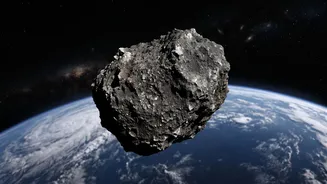






In the vastness of space, a tiny rock just 11 metres across is causing a stir. It's called 1998 KY26, and it's not just any asteroid. It's spinning incredibly fast and, more mysteriously, it seems to be accelerating. Scientists are now using advanced
thermal models to figure out why.
Meet the Spinning Top of the Solar System
First discovered in 1998, asteroid 1998 KY26 is a fascinating celestial object. Recent observations have revealed it is much smaller and faster-spinning than first thought, with a diameter of about 11 metres and a rotation period of just over five minutes. To put that in perspective, a 'day' on this asteroid is shorter than your average coffee break. This rapid spin is so extreme that if it were a loose pile of rubble, it would have flung itself apart long ago. This suggests it is likely a single, solid chunk of rock, what scientists call a monolithic body. It is classified as a Near-Earth Asteroid, meaning its orbit brings it relatively close to our planet, though it poses no imminent threat.
What Does 'Accelerating' Actually Mean?
The headline's mention of 'accelerating' can be interpreted in two ways. The more intriguing puzzle for scientists has been a strange non-gravitational acceleration, a tiny push that nudges the asteroid's path through space. One theory was that 1998 KY26 was a 'dark comet,' venting hidden ice as gas, which would act like a tiny rocket engine. However, the very thermal modelling mentioned in the headline now casts doubt on this. New models from aerospace engineers show the asteroid is likely too warm to hold onto buried water ice for long periods. The other acceleration, which is more predictable, relates to its spin. This is caused by a subtle phenomenon known as the YORP effect. Sunlight warms the asteroid's irregular surface, and as it radiates that heat back into space, it creates a minuscule but constant torque, causing its spin to gradually speed up over millions of years.
The Power of Thermal Modelling
So, how can scientists study a tiny rock millions of kilometres away? They use thermal modelling. By observing the asteroid in infrared light, they can measure the heat it radiates. This data is fed into complex computer models that account for its size, shape, spin, and orbit. These new models, developed by researchers at the Georgia Institute of Technology, calculate the temperatures on the asteroid's surface and deep within its core. The results show that even the coldest parts of 1998 KY26 are significantly above the temperature where water ice could survive over long timescales. While this challenges the 'dark comet' theory, it helps scientists refine their understanding of the asteroid's composition and behaviour.
A Future Destination for Hayabusa2
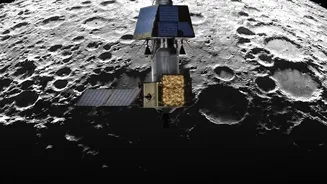
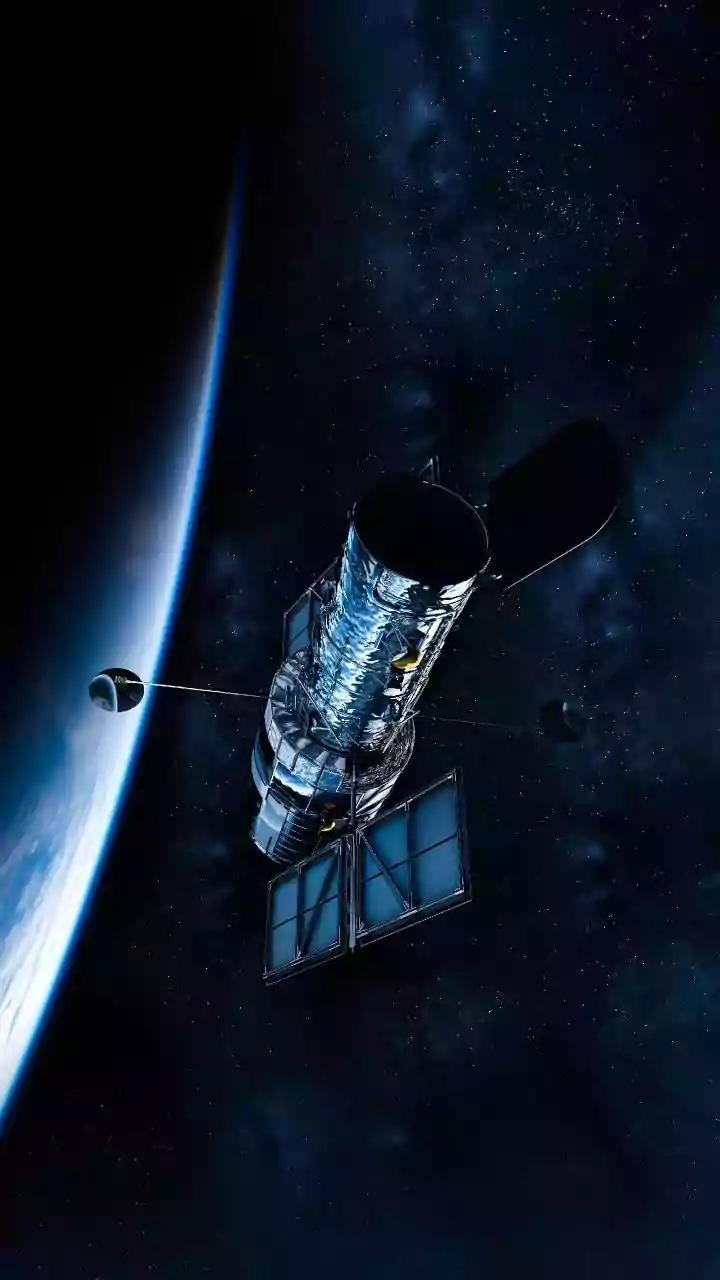
The interest in 1998 KY26 isn't purely theoretical. The Japan Aerospace Exploration Agency's (JAXA) Hayabusa2 spacecraft, famous for returning samples from the asteroid Ryugu, is now on an extended mission. Its final destination? A rendezvous with 1998 KY26, scheduled for July 2031. This will be the first time a space mission visits such a small, rapidly rotating asteroid. The detailed characterisation from these new thermal models is crucial for planning the mission. Understanding the asteroid's physical properties ahead of time will help ensure the safety and success of the Hayabusa2 spacecraft as it approaches this tiny, fast-moving target.
Why We Study These Small Rocks
Studying an object like 1998 KY26 has major implications for planetary science and defence. Its size is comparable to the impactors that caused the Tunguska and Chelyabinsk events, making it a valuable case study for understanding potentially hazardous objects. By learning about its composition, structure, and how forces like the YORP effect alter its spin and path, scientists can build better models to predict the behaviour of other asteroids. This research not only unravels the history of our solar system but also provides critical knowledge that could one day be used to protect Earth from a potential impact.