






The Overlooked Arteries of Climate Resilience
When we discuss climate action, the conversation often revolves around reducing carbon emissions, transitioning to green energy, and protecting forests. While these are critical, a growing body of evidence suggests a major gap in our approach: our rivers.
For too long, national climate strategies have treated rivers as a secondary concern, failing to fully integrate their health and management into adaptation and mitigation plans. This oversight is perilous. Climate change manifests primarily through water—be it devastating floods, prolonged droughts, or unpredictable monsoons. Rivers and their surrounding ecosystems, like floodplains and wetlands, have the natural potential to act as shock absorbers against these impacts, but only if they are healthy and functional. Ignoring them is not just an environmental mistake; it’s a fundamental flaw in building national resilience.
What the New Research Reveals
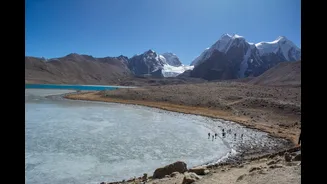
Recent reports, including a significant analysis from WWF, highlight that climate change will worsen the world's existing water crises by altering the quantity, quality, and timing of water supplies. For India, this translates to tangible threats. Changes in rainfall patterns and the melting of Himalayan glaciers directly affect the flow of major rivers like the Ganga and Brahmaputra, impacting everything from agriculture to energy production. Studies show that rising water temperatures reduce dissolved oxygen, which is essential for aquatic life, threatening the biodiversity of river ecosystems. Freshwater species populations have already seen a catastrophic decline, and altered river flows will only increase this pressure. The research makes it clear: a stable economy and society depend on stable river systems, which are now under unprecedented threat.
An Indian Imperative
In India, the stakes could not be higher. The country's agriculture, which forms the backbone of the rural economy, is heavily dependent on river-fed irrigation. The nation’s major rivers, from the glacier-fed Himalayan systems to the monsoon-fed peninsular rivers like the Godavari and Krishna, provide freshwater to hundreds of millions of people. Climate disruptions are creating a dual crisis of more frequent, intense floods and longer periods of acute water scarcity. This volatility not only threatens food security and livelihoods but can also escalate water-sharing conflicts between states. For instance, the degradation of the Godavari River basin, home to nearly 100 million people, shows how climate change, pollution, and deforestation can combine to threaten a vital lifeline. Therefore, integrating river health into India’s National Action Plan on Climate Change is not just an option, but a necessity for survival and sustainable development.
Moving Beyond Concrete and Dams
The solution proposed by this new wave of research is not simply more grey infrastructure like dams and embankments, which can often fragment rivers and harm ecosystems. Instead, the call is for a global shift towards 'nature-based solutions' (NbS). These are strategies that use natural processes to build resilience. Examples include restoring floodplains to absorb excess water, planting vegetation along riverbanks to prevent erosion and cool water temperatures, and removing obsolete dams to reconnect river habitats. Initiatives like the Netherlands' 'Room for the River' program have already shown that giving rivers space to flood safely is a viable and effective strategy. In an urban context, creating rain gardens and permeable surfaces can help manage storm water and reduce runoff into stressed river systems. These approaches offer a double benefit: they mitigate climate impacts while also restoring biodiversity and improving water quality.
The Path Forward for Policymakers
For India, the path forward involves a significant policy shift. The recent findings strongly recommend that countries incorporate freshwater conservation and restoration targets directly into their national climate commitments, known as Nationally Determined Contributions (NDCs), and National Adaptation Plans (NAPs). This means moving beyond siloed thinking where one department handles water resources and another handles climate policy. An integrated approach is essential. A restored wetland, for example, can contribute to climate adaptation (flood control), biodiversity conservation, and water security all at once. Forestry interventions along river basins, like the project planned for the Godavari, can enhance carbon sequestration, improve groundwater recharge, and reduce soil erosion. By making healthy rivers a central pillar of its climate strategy, India can unlock powerful, cost-effective solutions that protect both people and nature from the escalating climate crisis.