




For anyone with curly hair, the quest for defined, frizz-free ringlets can feel like a lifelong journey. But what if the secret isn't just in the products you use, but when you apply them? Let's unravel the science behind damp-hair styling.
Understanding Your Hair's Foundation
Before we dive
into techniques, it's helpful to understand the 'why' behind your curls. Your hair's unique pattern is primarily determined by the shape of your hair follicles and permanent protein bonds called disulfide bonds. However, the day-to-day behaviour of your curls—how they clump, whether they frizz, and how they hold a style—is governed by weaker, temporary connections called hydrogen bonds. These bonds are the key players in our styling routine. They break when exposed to water and reform as the hair dries. This is why your hair can be reshaped when wet and why humidity can cause a perfectly styled look to revert to its natural state.
The Magic of 'Curl Clumps'
The foundation of well-defined curls is the 'curl clump'. This is when individual strands of hair group together to form a larger, more defined curl or wave. When curls clump effectively, they appear smoother, more uniform, and less prone to looking stringy or frizzy. The goal of any great curly styling routine is to encourage these clumps to form and stay together as the hair dries. Water is the essential ingredient for this process, as it helps the strands glide together and form these crucial groups. Styling on very wet hair is a popular technique because it maximises this clumping effect.
So, Why Damp Styling?
If soaking wet hair creates great clumps, why would we opt for damp styling? The answer lies in finding the perfect balance between moisture and product efficacy. While styling on dripping wet hair ensures excellent clumping, it can also dilute your styling products, making them less effective. Furthermore, hair heavily weighed down by water can result in less volume at the roots. Damp styling—where hair is no longer dripping but is still evenly moist—offers the sweet spot. The hair cuticles are still open and receptive to moisture, allowing products to penetrate effectively, but there isn't so much excess water that your expensive creams and gels are simply washed away. This method allows for better product absorption and often results in more bounce and volume.
The Science of the Set
When you apply styling products to damp hair, you're doing more than just adding moisture; you're creating a 'cast'. This cast, often formed by gels or mousses, holds your curl clumps in their defined shape. As your hair dries, the hydrogen bonds reform within this new, defined structure. The cast protects the curls from frizz and disruption while they set. Once your hair is completely dry, you can gently 'scrunch out the crunch' to break the cast, revealing soft, defined, and durable ringlets that hold their shape. The dampness provides the ideal canvas, allowing the product to create a strong yet flexible hold without being diluted.
Your Damp_Styling Guide
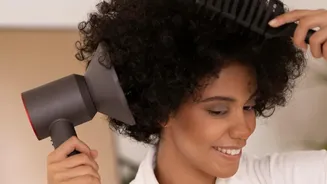
Ready to try it? Start with freshly washed and conditioned hair. Instead of wringing it out, use a microfibre towel or an old tshirt to gently squeeze out excess water until it's damp but not dripping. This is a technique known as 'plopping'. Next, work in sections. Take your favourite curl cream or leavein conditioner and apply it using the 'praying hands' method (smoothing it down the hair shaft between your palms) or by raking it through with your fingers to ensure even distribution. Follow this with a gel or mousse to provide hold, scrunching it upwards towards the scalp to encourage curl formation. Finally, you can either airdry or use a diffuser on low speed and low heat to gently dry your hair, touching it as little as possible until it's 100% dry.
Choosing Your Styling Arsenal
The success of damp styling also hinges on using the right products. A good routine involves layering hydration with hold. Start with a hydrating leavein conditioner or curl cream to provide moisture and act as a base. These products help to smooth the hair cuticle and are essential for frizz control. Then, layer a product with hold, like a gel or mousse. Gels are excellent for creating a strong cast and longlasting definition, while mousses can provide a lighter hold with more volume. Look for products designed for your hairs porosity—whether it absorbs moisture easily (high porosity) or resists it (low porosity)—to achieve the best results.