








A Pact for Planetary Safety
In late June 2026, heads of space agencies from the expanded BRICS bloc gathered in Bengaluru for a two-day summit hosted by the Indian Space Research Organisation (ISRO). The meeting, held under India's BRICS Chairship, brought together delegates from ten
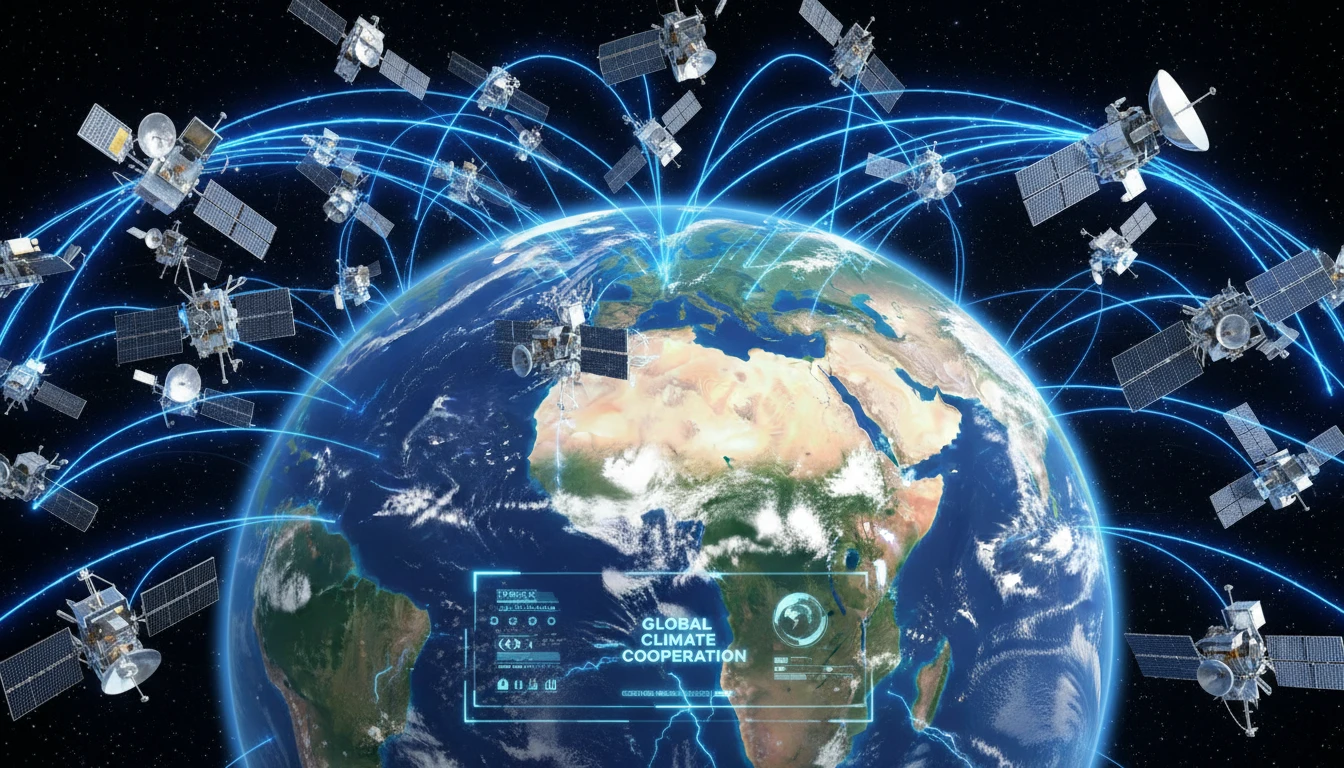
member nations, including Brazil, Russia, India, China, and South Africa, as well as new members like Egypt, Iran, and the UAE. While discussions covered a range of topics from a proposed BRICS Space Council to sustainable space activities, the most significant outcome was a firm commitment to bolster space-based cooperation for disaster management. This involves strengthening an existing agreement for a "virtual constellation" of remote sensing satellites, a system where member countries share data from their respective Earth observation satellites to create a more powerful, unified monitoring network.
Satellites as First Responders
The BRICS Remote Sensing Satellite Constellation is not a single new satellite but a clever framework for data sharing. It combines the capabilities of existing satellites, like India's Resourcesat series and China's Gaofen satellites, to work as a coordinated team. This collaborative approach is critical for disaster management. Remote sensing satellites act as powerful eyes in the sky, capable of monitoring vast areas before, during, and after a crisis. They can track the path of a cyclone, map the extent of floodwaters in real-time, identify areas at risk of landslides, and assess the damage to infrastructure after an earthquake, helping to guide rescue and relief efforts more effectively. The agreement allows all member nations, even those without their own remote sensing satellites like South Africa, to access this crucial data.
Why This, Why Now?
The heightened focus on disaster management is a direct response to a shared global challenge. The frequency and intensity of natural disasters, exacerbated by climate change, pose a critical threat to development across the Global South. From devastating floods in Brazil to intense heatwaves in India, BRICS nations have consistently faced the severe socio-economic impacts of these events. The cooperation acknowledges that space technology is no longer a luxury but an essential tool for building resilience. By pooling their space assets, the member countries can achieve a level of monitoring and rapid data acquisition that would be difficult and costly to attain alone. This move formalizes and expands a cooperation that has been developing for years, with the original agreement signed in 2021.
The Bigger Picture: Geopolitics and Growth
This initiative is about more than just humanitarian aid; it carries significant geopolitical weight. The Bengaluru meeting also advanced discussions on forming a BRICS Space Council, an institutional body to guide long-term cooperation. Such moves signal a push towards greater technological self-reliance and the creation of a collaborative space ecosystem outside of Western-led alliances. At the meeting, Indian officials pitched the idea of a "BRICS Space Economy," urging the bloc to move from simple coordination to co-creation and joint innovation. For India, hosting the summit was also an opportunity to showcase its burgeoning private space industry. Delegates visited facilities of Indian space start-ups, highlighting the country's growing capabilities as a key player in the global space sector.