
Seeing the Invisible Universe
Imagine trying to watch a concert from behind a thick, dusty curtain. You might hear the music, but you can’t see the show. For astronomers studying the birth of stars, this is a daily reality. The universe is filled with vast clouds of cosmic gas and
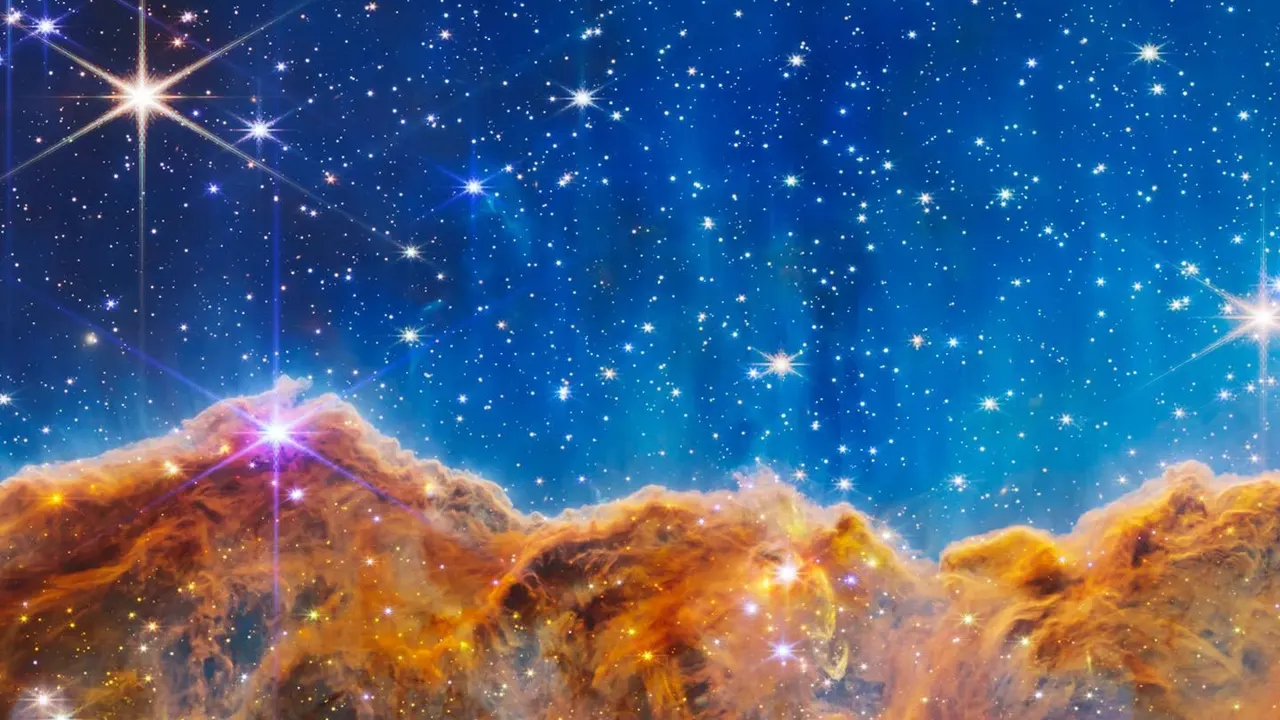
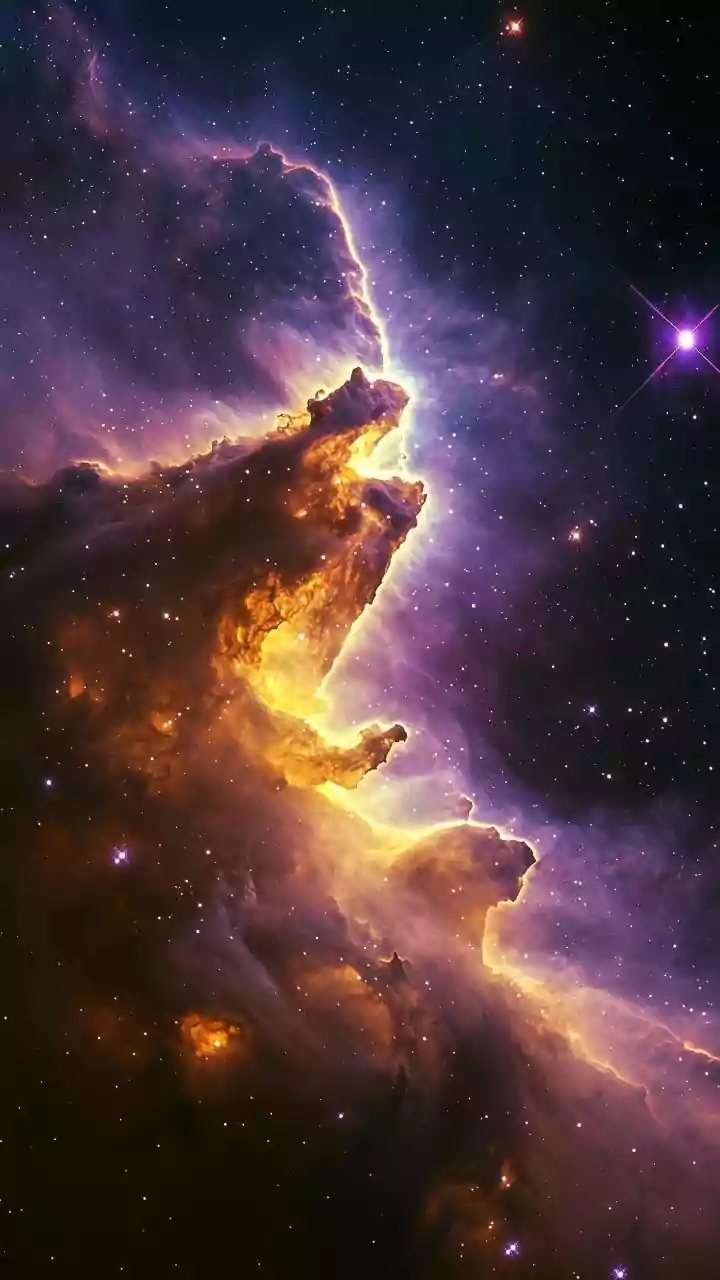
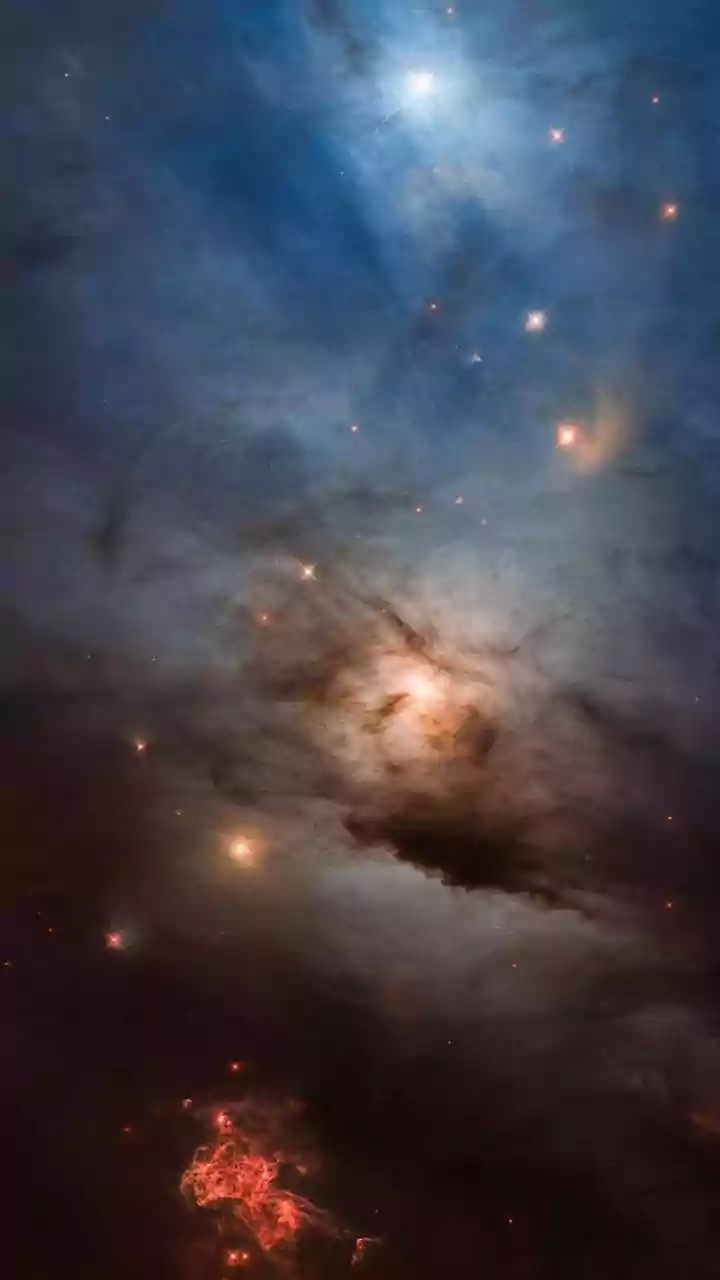
dust, the very ingredients of stars. These clouds, known as stellar nurseries, are so dense that they block visible light, shrouding the star-making process in secrecy. This is where infrared light becomes a superpower. Infrared is a type of electromagnetic radiation with wavelengths longer than the visible light our eyes can perceive. While visible light gets scattered or absorbed by the tiny particles in cosmic dust clouds, the longer wavelengths of infrared can pass right through them, much like radio waves pass through walls. This allows telescopes designed to see in the infrared, like the James Webb Space Telescope (JWST), to pierce the dusty veil and witness the complex details of stellar birth.
Inside the Cosmic Nursery
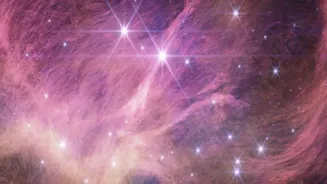
When infrared telescopes peer into these stellar nurseries, they reveal a dynamic and chaotic environment. They capture the faint heat glow from protostars, which are dense, contracting cores of gas on their way to becoming true stars. These embryonic stars are not yet hot enough to shine brightly in visible light, but their warmth makes them glow in the infrared spectrum. We can see powerful jets of gas being ejected by these infant stars and observe how they interact with the surrounding cloud. These observations provide crucial data on how a star gathers mass, its age, and its impact on the galaxy it belongs to. By analysing this light, scientists can build a more complete picture of the entire star formation cycle, from the initial collapse of a gas cloud to the emergence of a new solar system.
A New Golden Age of Astronomy
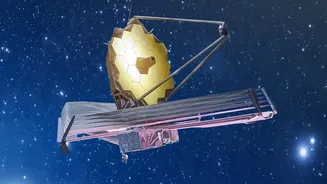
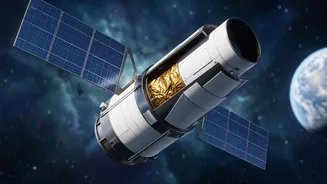
The James Webb Space Telescope, a joint project of NASA, the European Space Agency, and the Canadian Space Agency, has revolutionized this field. Launched in 2021, its massive mirror and advanced instruments, like the Near-Infrared Camera (NIRCam) and Mid-Infrared Instrument (MIRI), are specifically designed to capture this elusive light. MIRI is particularly adept at seeing cooler objects and the glow of the dust itself, while NIRCam excels at imaging the earliest and most distant galaxies. This power allows JWST to do more than just see through dust; it allows it to look back in time.
Looking Back in Time
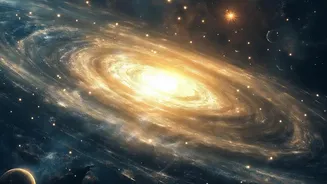
Because light takes time to travel across the vastness of space, looking at very distant objects is equivalent to looking into the past. The light from a galaxy billions of light-years away has been travelling for billions of years to reach us. Furthermore, due to the expansion of the universe, the light from these first luminous objects has been stretched. Visible and ultraviolet light emitted by the first stars and galaxies has been stretched into the longer wavelengths of infrared light, a phenomenon known as "redshift". JWST is fine-tuned to detect this redshifted light, giving astronomers an unprecedented view of galaxies that formed just a few hundred million years after the Big Bang. Recent discoveries have shown that these early galaxies were surprisingly massive and formed stars in rapid, intense bursts, challenging previous models of cosmic evolution.
Unlocking Our Cosmic Origins
Studying the birth of stars in the early universe is fundamental to understanding our own origins. These first generations of stars transformed a simple universe composed of hydrogen and helium into the complex, element-rich cosmos we see today. They forged the heavier elements that eventually formed other stars, planets, and even life itself. Recent findings from JWST have even revealed that early galaxies contained far more smaller, fainter stars than previously thought, changing our estimates of their total mass. By capturing the intricate details of this ancient process, infrared imagery is helping scientists answer some of the most profound questions: How did the first galaxies grow? What were the first stars like? And how did the universe become the place we know today? Each new image provides another piece of the puzzle.