



More Than Just a Test Flight
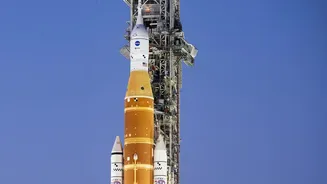
While Artemis II's primary goal was to test the Orion spacecraft's life-support systems and flight capabilities with a human crew, the mission was packed with scientific objectives from the start. The four-person crew—three NASA astronauts and one from the Canadian
Space Agency—were not just passengers; they were active researchers on a 700,000-mile journey. In early October 2026, NASA released over 800 gigabytes of data from the mission, including thousands of images, crew audio, and detailed notes, effectively handing the scientific baton to researchers worldwide. This trove of information provides an unprecedented look at the Moon, Earth, and the effects of deep space on the human body.
The Power of the Human Eye
A key part of the mission relied on the one piece of technology that can’t be replicated by robotics: the human eye, backed by an inquisitive brain. The astronauts were tasked with observing and describing their surroundings, and their findings highlight why sending people into deep space remains crucial. One of the most stunning discoveries was the observation of at least five faint 'pinprick' flashes of light on the Moon's darkened surface. These were confirmed to be meteoroid impacts, likely caused by pebble-sized rocks hitting the surface at thousands of miles per hour. The crew spotted these flashes with their naked eyes from 46,000 miles away, a feat that astonished some scientists on the ground and provided invaluable data on the frequency of such impacts, a critical safety concern for future lunar bases.
A Lunar Rainbow and Rugged Terrain
For decades, we’ve seen the Moon as a world of grey. The Artemis II crew saw something different. They reported a surprising palette of subtle colors, including browns, tans, and even hints of green and blue. These hues are not just beautiful; they are geological clues. Scientists believe the blue tones could indicate titanium-rich volcanic rock, while the greens may signal the presence of glass formed by ancient eruptions or impacts. The crew's visual descriptions, when paired with data from orbiters like the LRO, help scientists better understand the Moon's mineral composition. The astronauts also studied the terminator—the line between lunar day and night—where low-angle light throws the rugged terrain into sharp relief, providing a preview of the conditions future landers will face near the south pole.
A New Perspective on Earth and a 'Moon Kiss'
Looking back from the Moon, the crew also gathered vital observations of Earth. Seeing our planet's systems from such a distance provides a unique perspective for climate science and atmospheric studies. But some of the most compelling observations were purely about the wonder of exploration. The crew captured stunning images of the Earth rising over the lunar horizon and a solar eclipse caused by the Moon blocking the Sun. During their flyby of the far side, they described the massive Orientale Basin, whose annular rings resembled a 'kiss on the far side of the moon', and noted how new, bright craters shone like 'pinpricks in a lampshade'. These descriptions, filled with human emotion and analogy, help translate complex geology into something everyone can understand.
The Science of Staying Healthy in Space
Beyond geology, the Artemis II crew members themselves were subjects of study. The mission provided the first opportunity in over 50 years to study the effects of the deep space radiation environment on the human body. Experiments monitored the astronauts' immune systems, sleep patterns, and cognitive performance. This research is essential for developing the protocols and preventative measures needed to protect future astronauts on long-duration missions to the Moon and, eventually, Mars. The data collected will help NASA build better shelters and plan missions to minimize risks from solar storms and other space weather phenomena.