





You'll Believe A Man Can Fly
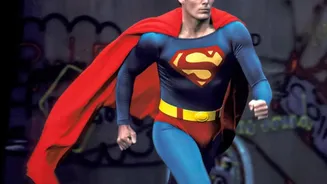
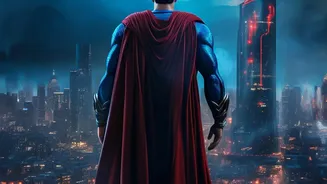
Before 1978, superhero movies were often seen as B-grade, campy affairs. Richard Donner’s 'Superman' changed everything with its then-groundbreaking tagline, “You’ll believe a man can fly.” The film treated its source material with a reverence and sincerity
that was unheard of at the time. Starring the perfectly cast Christopher Reeve, it presented a hero who was earnest, powerful, and aspirational, setting the template for the modern blockbuster. Its influence went beyond the screen; the film's depiction of Krypton as a crystalline, sterile world and the 'S' shield as a family crest were so iconic they were later adopted into the comics themselves. It proved that a comic book film could have a massive budget, a serious tone, and emotional depth, becoming the bedrock upon which the entire genre was built.
The Art Deco Dark Knight Redefined Animation
'Batman: The Animated Series' premiered in 1992 and immediately set a new standard for what a cartoon could be. It wasn't just for kids. With its timeless, dark art deco aesthetic and mature thematic depth, the series treated its audience with intelligence. More importantly, it revolutionized character storytelling within the Batman mythos. The most famous example is Mr. Freeze. Previously a C-list villain with an ice gun gimmick, the show gave him a tragic, heartbreaking backstory: a scientist driven to crime to save his cryogenically frozen wife. This new origin was so compelling and popular that DC Comics adopted it as canon, transforming a forgettable rogue into one of Batman's most complex antagonists. The show also introduced the world to Harley Quinn, who became so beloved she transcended the series to become a pillar of the DC Universe in comics, film, and beyond.
Why So Serious? Why So Successful?
By 2008, superhero films were common, but few were considered true cinematic art. Christopher Nolan's 'The Dark Knight' shattered that perception. Part of a new wave of grounded, realistic comic book films, it was a dark, complex crime thriller that just happened to feature Batman. The film’s cultural dominance was cemented by Heath Ledger’s mesmerizing and terrifying performance as the Joker. His transformative portrayal of an agent of pure anarchy earned him a posthumous Academy Award for Best Supporting Actor, the first time a major acting Oscar was awarded for a superhero film. This critical validation was a watershed moment. It forced the industry and critics to take the genre seriously, proving that these stories could be vehicles for profound explorations of order, chaos, and morality. The film’s success also influenced the Academy Awards, contributing to the decision to expand the Best Picture category after many felt it was snubbed for a nomination.
A Leap of Faith Into the Comic Page
For decades, adaptations tried to make comic book worlds fit the constraints of live-action reality. 'Spider-Man: Into the Spider-Verse' (2018) did the opposite: it brought the language of comics to life on screen. The film was a visual revolution, blending 3D CGI with 2D hand-drawn techniques, action words, panel boxes, and Ben-Day dots to create a moving comic book. But its innovation wasn't just stylistic. At its core, the story was a heartfelt celebration of legacy, mentorship, and the idea that anyone can wear the mask. By focusing on Miles Morales while honoring the Peter Parker stories that came before, it redefined what a Spider-Man film could be. It embraced the convoluted, multi-versal nature of comics and turned it into an accessible, emotionally resonant story about finding your own way. The film's commercial and critical success, including an Oscar for Best Animated Feature, has since opened the floodgates for more stylistically adventurous animation across the industry.