



Earth’s Delicate Energy Balance
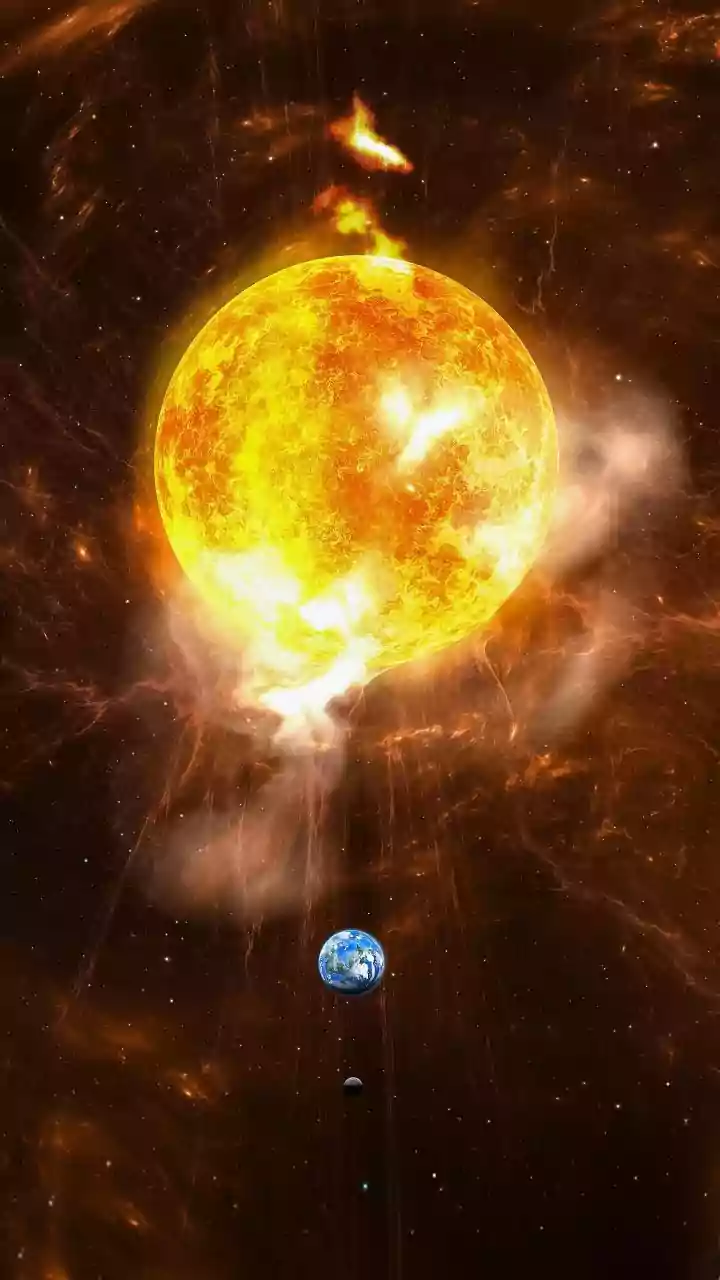
To understand why this mission is so important, we first need to think about Earth like a giant energy account. Every day, it receives a massive deposit of energy from the Sun. At the same time, it makes withdrawals by reflecting some of that solar energy back
into space and radiating its own heat. This balance is known as Earth’s radiation budget. For our planet’s climate to remain stable, the books have to balance. If more energy is trapped than released, the planet warms. For decades, scientists have used satellites to measure these components, but tiny uncertainties in those measurements can lead to big questions about the future. After all, if you’re trying to track a very slow but steady change, you need an incredibly precise ruler.
A New Calibration Standard in Orbit
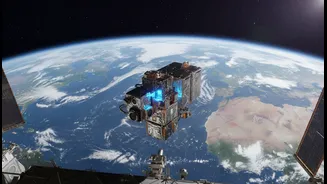
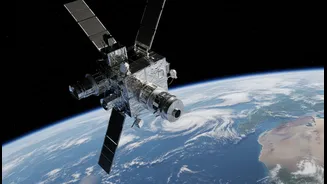
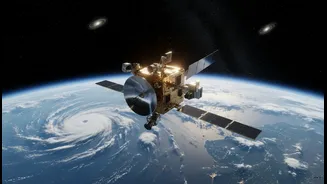
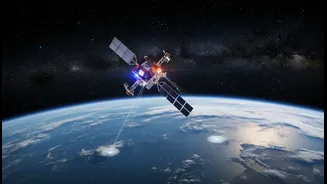
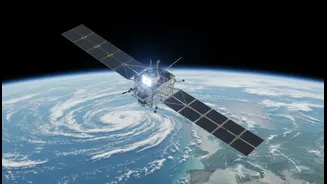
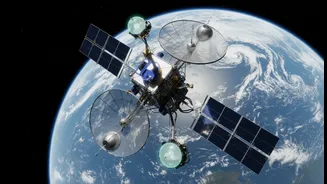
Enter the Climate Absolute Radiance and Refractivity Observatory Pathfinder, or CLARREO Pathfinder (CPF). Launched in May 2026 and installed on the International Space Station (ISS), this instrument is essentially a metrology lab in orbit. Its job is to measure the sunlight bouncing off Earth with an accuracy that is five to ten times better than any sensor that has come before it. But its true purpose isn't just to collect its own pristine data. Instead, it serves as a gold standard, a reference point by which all other Earth-observation instruments can be judged and corrected. The mission recently celebrated a major milestone by capturing its first detailed measurements—a 'first light' achievement—confirming the instrument is operating successfully in space.
How to Calibrate a Satellite
Many satellites experience degradation over time as they are exposed to the harsh environment of space, which can affect the accuracy of their measurements. CLARREO Pathfinder is different because it is designed for constant self-correction. It frequently calibrates itself by taking direct measurements of the Sun and the Moon, two incredibly stable and well-known celestial bodies. This gives it a rock-solid, SI-traceable baseline for accuracy. Its primary mission is to then perform what is called inter-calibration. As it orbits on the ISS, it will specifically look at the same patches of Earth at the same time and from the same angle as other satellites, such as the CERES and VIIRS instruments. By comparing its ultra-accurate readings with those of the other satellites, scientists can fine-tune the data from the entire fleet, effectively raising the quality of global observations.
Building Trust in Our Climate Future
This is where the mission's true value comes into focus. More accurate and consistent data on Earth's radiation budget directly translates into better and more reliable climate models. Climate models are complex simulations that try to predict future changes based on current data and our understanding of physics. Their biggest limitation is uncertainty in the input data. By reducing that uncertainty, CLARREO Pathfinder helps to validate and refine these models. The result is that scientists can distinguish a real climate trend from simple measurement noise much faster—potentially detecting critical changes decades sooner than would otherwise be possible. This gives policymakers and the public a clearer, more trustworthy picture of the changes our planet is undergoing and what we might expect in the years to come.