





Why is Kolkata often called the 'London of India'? This flattering comparison is deeply rooted in the city's past, pointing to a time when its grand buildings were a deliberate reflection of British imperial power. But what does it mean today?
The 'Second City' of the Empire
To understand
the nickname, one must travel back to when Kolkata, then Calcutta, was the capital of British India. From 1772 until the capital shifted to Delhi in 1911, Calcutta was the administrative, commercial, and cultural epicentre of the British Raj. It was often called the 'Second City' of the British Empire, second only to London in importance. This status wasn't just political; it was physically inscribed onto the city itself. The British East India Company and later the Crown invested heavily in creating a capital that would project imperial grandeur, transforming a cluster of villages into a metropolis of power. This ambition gave rise to another of its historical nicknames: the 'City of Palaces'.
Architectural Echoes of London
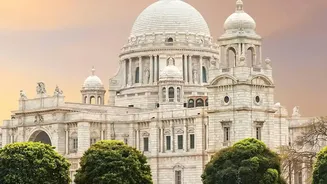
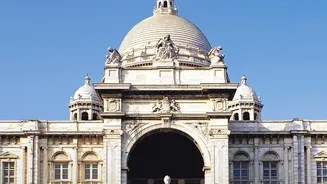
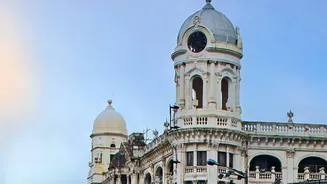
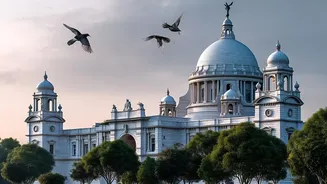
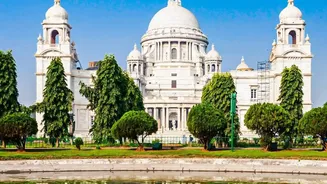
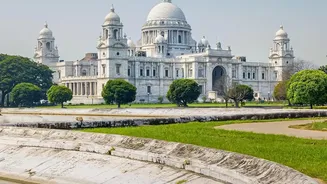
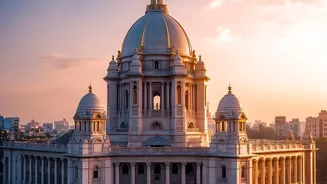
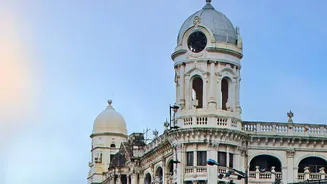
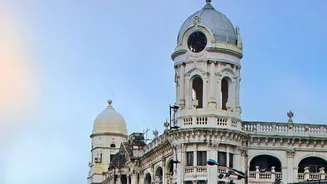
The most visible link between the two cities is their architecture. The British built Kolkata in their own image, employing the dominant architectural styles of the era. As you walk through the city's historic core, you’ll find stunning examples of Neoclassical, Gothic Revival, and Victorian designs that would not look out of place in London. The magnificent Victoria Memorial, a gleaming white marble monument to Queen Victoria, blends British and Mughal styles but its grand scale is pure imperial statement. St. Paul's Cathedral, with its soaring spire and stained-glass windows, is a classic example of Indo-Gothic architecture. The Calcutta High Court was designed in the neo-Gothic style, mirroring similar structures in Europe. These buildings, along with the Writers' Building and the General Post Office, were designed to be symbols of permanence and authority, creating a cityscape that felt familiar and looked powerful to its colonial administrators.
A Tale of Two Rivers
Beyond individual buildings, the very layout of parts of Kolkata was influenced by London. Both are sprawling riverine cities, with London on the Thames and Kolkata on the Hooghly. This geographical similarity played a key role in both cities' development as major trade and transportation hubs. The British developed the Hooghly's riverbanks with ghats, promenades, and warehouses that created a commercial and social lifeline for the city, much like the Thames functions for London. The presence of a major, navigable river as the city's artery further solidified the comparison in the minds of traders, administrators, and visitors during the colonial period.
Why Nicknames Stick
The phenomenon of one city being nicknamed after another is a global one. We hear of Bucharest as the 'Little Paris' or Amsterdam as the 'Venice of the North'. These nicknames serve as a powerful form of city branding, acting as a mental shortcut for travellers. They create an instant image, suggesting a certain atmosphere, culture, or aesthetic. For a place like Jaipur, being the 'Pink City' is a direct reference to its unique architecture, a brand that has been carefully maintained. Architecture provides a tangible, visible identity that is easy to market and remember. An iconic building or a distinct style can become synonymous with the city itself, becoming a magnet for tourists and investment. In this way, 'London of India' wasn't just a casual observation; it was a brand identity rooted in a very real architectural legacy.
Beyond the Colonial Gaze
While the nickname highlights a specific and important part of its history, Kolkata's identity is far more complex. The colonial architecture itself is not purely European; many buildings cleverly incorporated Indian design elements like high ceilings and verandas to adapt to the local climate. Moreover, the city that grew around these imperial structures has always been a vibrant centre of Bengali culture, art, and intellectualism, earning it the title 'Cultural Capital of India'. The nickname, therefore, is a starting point, a doorway into the city's past. But to truly know Kolkata is to appreciate the unique fusion of cultures—British, Bengali, and beyond—that makes it not a copy of London, but a distinctive metropolis with its own soul.