






A Dazzling Celestial Dance
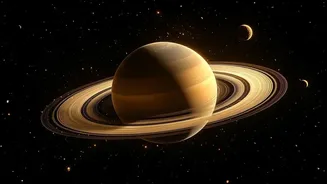
Throughout October 2026, Saturn is a star of the night sky. The planet reached 'opposition' on October 4, an event where Earth passes directly between Saturn and the Sun. This alignment makes Saturn appear at its biggest and brightest for the entire year,
shining like a steady, golden point of light that remains visible all night long. The headline event for casual skywatchers, however, arrives on the nights of October 24 and 25. On these nights, the Moon will have a close encounter with Saturn in the sky, an event astronomers call a conjunction. The two celestial bodies will appear side-by-side, offering a stunning visual treat that is both easy to find and beautiful to witness.
Your Date with the Ringed Planet
Mark your calendars for the evenings of October 24 and 25, 2026. On these two nights, the nearly full waxing gibbous Moon will serve as a brilliant guidepost to locate Saturn. The best time to start looking is just after dusk, as soon as the sky begins to darken. The pair will already be well-placed in the sky and will remain visible for hours, slowly journeying across the night before setting. This provides a generous window for viewing, so there's no need to stay up until the early hours of the morning unless you want to. The event will be visible from all across India, provided you have clear skies.
Finding the Pair in the Night Sky
Locating this celestial duo is incredibly simple: just find the Moon. On the evening of October 24, a bright, 97%-lit Moon will be situated near Saturn in the constellation Aquarius. Look towards the southern sky after sunset. You won't be able to miss the Moon's glow, and right next to it, you'll spot Saturn as a distinctly bright 'star' that doesn’t twinkle like other stars. Planets shine with a steadier light because they are much closer to us. This steady, yellowish dot near the bright Moon is your target. No special star maps are needed, making this a perfect event for beginners and families.
What Equipment Do You Need?
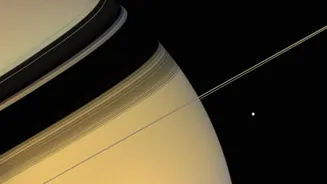
The great news is that you don't need any special equipment to enjoy this cosmic sight. The conjunction of the Moon and Saturn is easily visible to the naked eye. However, if you have a pair of binoculars, you will be rewarded with a much better view. Binoculars will make Saturn appear more distinct rather than just a point of light, and you'll get a breathtaking view of the lunar surface. If you have access to a small telescope, the view becomes truly unforgettable. Even a basic 75mm telescope can be powerful enough to resolve Saturn's iconic rings, which are currently tilted nicely towards Earth. Seeing the rings for yourself is a jaw-dropping experience that turns a simple observation into a core memory.
More to See This October
While you're enjoying the Moon and Saturn, don't forget to look around for other celestial attractions. October 2026 is a busy month in the sky. Mars and Jupiter are also visible, though they appear in the early morning sky before sunrise. For those willing to stay up late or wake up early, the Orionid meteor shower peaks on the nights of October 21-22. Caused by debris from Halley's Comet, this shower can produce 10-20 meteors per hour. However, the bright Moon during that week will wash out the fainter meteors, but you might still catch a few bright ones streaking across the sky.
Tips for the Perfect Viewing Night
To make the most of your stargazing evening, try to find a location away from bright city lights. Light pollution can significantly dim your view of the stars and planets. Even a local park or a quiet rooftop can make a big difference. Give your eyes about 20 minutes to fully adapt to the darkness; this will allow you to see much fainter objects. Avoid looking at your bright phone screen, as it will ruin your night vision. If you need a light, use a torch with a red filter. Finally, get comfortable. Bring a chair or a blanket, dress for the cooler night air, and simply enjoy the majestic, silent show happening millions of kilometres away.