






What is a PUC Certificate?
A Pollution Under Control (PUC) certificate is a mandatory document that certifies your vehicle's emissions are within the prescribed government standards. It's proof that your car or bike isn't polluting the air more than it's legally allowed to. Under the Motor
Vehicles Act, every vehicle running on Indian roads must have a valid PUC certificate. Traffic authorities can demand to see this document during checks, and with digital integration, your vehicle's PUC status is linked to its registration number on the national Parivahan database.
The New PUC Validity Rules Explained
The Ministry of Road Transport and Highways notified the Central Motor Vehicles (Sixteenth Amendment) Rules, 2026, on November 13, fundamentally changing PUC validity periods, especially for BS-VI vehicles. Previously, validity was simpler, but the new rules create a tiered system based on the vehicle's emission standard (BS stage), age, and whether it's for private (non-transport) or commercial (transport) use. The key takeaway is that newer, cleaner vehicles get a longer grace period between tests, while older vehicles require more frequent checks to ensure they aren't contributing excessively to pollution.
Validity for Private (Non-Transport) Vehicles
This is where most car and bike owners will see a change. For private BS-VI vehicles, the new rules are: - Up to 6 years old: The PUC certificate is valid for three years. This is a significant extension from the previous one-year validity. - More than 6 years but up to 10 years old: The certificate must be renewed annually (every year). - More than 10 years old: The validity is shortened to six months, requiring biannual testing. For older vehicles: - BS-IV vehicles: The validity is now a standard six months across the country. - BS-I, BS-II, and BS-III vehicles: These have the shortest validity, requiring a new PUC certificate every three months.
Rules for Commercial (Transport) Vehicles
The rules for commercial vehicles like taxis, trucks, and buses have also been updated with a similar age-based logic, though with shorter validities than private vehicles. - BS-VI transport vehicles up to 6 years old: The PUC will be valid for two years. - BS-VI transport vehicles over 6 years but up to 10 years old: The validity is one year. - BS-VI transport vehicles over 10 years old: They must renew their PUC every six months, similar to older private vehicles.
The Cost of Non-Compliance: Heavy Challans
Ignoring your PUC certificate's expiry date can be a costly mistake. Under Section 190(2) of the Motor Vehicles Act, driving without a valid PUC can result in a challan of up to ₹10,000. In addition to the hefty fine, penalties can also include imprisonment for up to three months and a suspension of your driving license for three months. Given the strict enforcement and digitised tracking, it's wiser to comply than to risk the penalty. A valid PUC is also required by the IRDAI for renewing your vehicle's insurance policy.
How to Get and Renew Your PUC Certificate
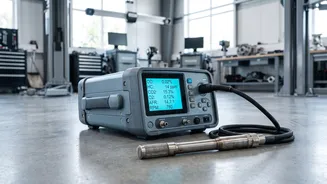
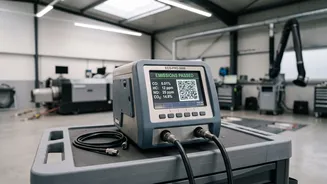
You cannot get or renew a PUC certificate online, as it requires a physical emission test. The process is straightforward: take your vehicle to an authorised testing centre, which can often be found at petrol pumps or standalone workshops. An operator will use a probe to measure your vehicle's exhaust emissions. If the readings are within the permissible limits, a certificate is generated instantly. The results are uploaded to the central Parivahan server in real-time. You can, however, download a digital copy of your valid certificate from the Parivahan website using your vehicle's registration and chassis number.