




Nicknames like 'City of Joy' and 'Cultural Capital' are well known, but 'London of India' speaks to a specific, transformative era. We explore how Kolkata's time as the capital of British India shaped its identity and left an indelible mark.
The Imperial Foundation
Kolkata's
journey to becoming the 'second city' of the British Empire began in the late 17th century. What started as a trading post for the East India Company on the banks of the Hooghly River, comprising three villages, was strategically chosen for its access to the sea. In 1772, Warren Hastings, the first Governor-General, shifted the administration from Murshidabad, officially making Calcutta the capital of British India. This decision catalysed its rapid growth, transforming it from a collection of villages into the political, commercial, and administrative nerve centre of British rule in the subcontinent for nearly 140 years.
An Architectural Echo of London
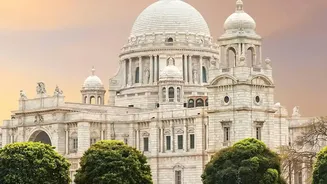
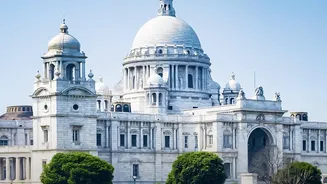
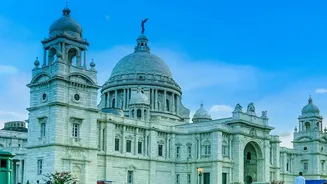
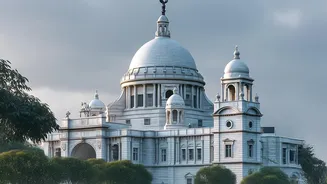
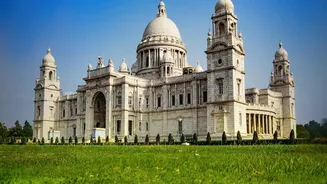
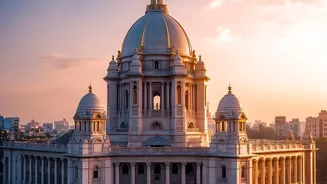
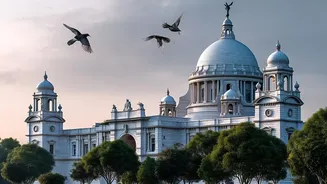
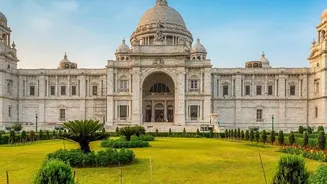
The nickname 'London of India' is most visibly rooted in the city's architecture. The British sought to build a capital that reflected their imperial power, resulting in a construction boom of grand, European-style buildings. Influenced by Neoclassical, Gothic Revival, and Victorian styles, structures like the Writers' Building, the General Post Office, and St. Paul's Cathedral gave the city a distinctly European feel. This ambition earned Kolkata another moniker: 'The City of Palaces', not just for official buildings but also for the numerous palatial mansions built by wealthy Bengali zamindars and traders who blended European and local styles. The Victoria Memorial, a magnificent marble monument, remains the crowning jewel of this Indo-Saracenic and British architectural fusion.
The Cultural and Intellectual Crucible
Beyond the brick and mortar, Kolkata's development as a capital fostered a unique cultural environment. It became a melting pot where British and Indian traditions converged, sparking the Bengal Renaissance. The establishment of universities, the Calcutta High Court, and various scientific and literary institutions turned the city into the subcontinent's intellectual hub. This era cultivated a new class of Indian elites, often called the 'Bhadralok', who were educated in Western thought yet deeply engaged with Indian philosophy and arts. The city was a place of vibrant debate, social reform, and burgeoning nationalist sentiment, making its cultural landscape as significant as its political one.
The Capital Shifts to Delhi
In 1911, King George V announced the momentous decision to shift the capital of British India from Calcutta to Delhi. The official reasons were strategic; Delhi was more centrally located, making it easier to govern the vast subcontinent. However, the move was also politically motivated. Calcutta had become a hotbed of nationalist and revolutionary activity, particularly after the controversial Partition of Bengal in 1905. By moving the capital, the British sought to distance the administration from this centre of political unrest. The shift marked the end of an era for Kolkata, diminishing its political preeminence.
Echoes of an Imperial Past
Though no longer a capital, the legacy of Kolkata's imperial past is alive in its streets. The iconic yellow taxis, the historic tram network, and the grand, sometimes crumbling, colonial-era buildings are constant reminders of its history. The 'London of India' nickname, while rooted in a colonial context, speaks to a period of immense growth that shaped the city's physical and cultural fabric. Modern Kolkata is a bustling metropolis that has forged its own vibrant identity, but its past as the seat of an empire remains an inseparable part of its story, offering a fascinating glimpse into the complex history of India.