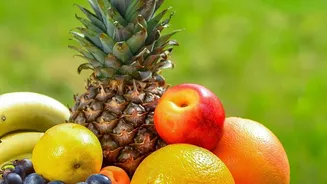

In the world of fruit, choosing a favourite can feel impossible. When both pineapple and pear are on offer, which one should you pick? Rather than declaring a champion, let's explore what makes each of these delicious fruits a nutritional standout.
The Calorie and Carb Count
At
a glance, both fruits are quite similar in their basic energy profile. A 100-gram serving of fresh pineapple contains around 50 calories, while the same amount of pear has about 57 calories. Both are low-calorie foods comprised almost entirely of carbohydrates, with negligible fat and protein. Their sugar content is also comparable, with pineapple having roughly 9.9 grams of sugar per 100 grams and pear having about 9.8 grams. This makes them both a naturally sweet and refreshing snack, but their impact on blood sugar differs. Pear has a low glycemic index of around 38, while pineapple's is higher, around 59 to 66, meaning it can raise blood sugar more quickly.
A Tale of Two Fibers
This is where the two fruits start to show their differences. Pears are a powerhouse of dietary fiber. A single medium pear can provide about 5.5 to 6 grams of fiber, which is roughly 20-22% of your daily needs. This includes soluble fiber like pectin, which helps promote digestive regularity and feeds beneficial gut bacteria. Pineapple also contains fiber, but in smaller amounts, typically around 1.4 grams per 100 grams. While still beneficial, pear is the clear frontrunner for anyone looking to significantly boost their fiber intake to support digestive health and feel full longer.
The Vitamin C and Manganese Powerhouse
When it comes to certain vitamins and minerals, pineapple truly shines. It is an exceptional source of Vitamin C, with a single cup of pineapple chunks providing nearly a full day's requirement. This vital antioxidant is essential for a healthy immune system, skin health, and iron absorption. Pineapple is also one of the best fruit sources of the mineral manganese, which is crucial for bone health, metabolism, and antioxidant defenses. While pears do contain Vitamin C, the amount is significantly lower than in pineapple. However, pears offer a good amount of Vitamin K, which is important for blood clotting and bone health, as well as copper.
Beyond the Basics: Special Compounds
Pineapple's claim to fame is bromelain, a complex mixture of enzymes found only in this fruit. Bromelain is known for its ability to break down protein, which can aid in digestion. It also has well-researched anti-inflammatory properties, with studies suggesting it may help reduce swelling, bruising, and pain after injury or surgery. Pears have their own set of beneficial plant compounds, including antioxidants like flavonoids and anthocyanins, particularly in the skin. These compounds are linked to reducing inflammation and may help protect against chronic diseases.
How to Best Enjoy Them
To get the most nutritional benefit from both fruits, it’s best to eat them fresh and whole. For pears, that means eating the skin, which contains a significant amount of the fruit's fiber and antioxidants. Pears are incredibly versatile and can be enjoyed fresh, baked, or added to salads and savoury dishes. For pineapple, fresh is also best, as the canning process can destroy the beneficial bromelain enzyme and often involves added sugars. Fresh pineapple is great on its own, grilled to bring out its sweetness, or blended into smoothies.