






The Two-Hour Rule: Your New Best Friend
The single most important takeaway from dermatologists is this: sunscreen needs to be reapplied at least every two hours when you are exposed to the sun. This isn't a marketing gimmick; it's based on how sunscreen works. Over time, the active ingredients
in sunscreen break down as they are exposed to UV radiation. This degradation happens regardless of the SPF number on the bottle. Think of it as a protective shield that slowly wears away. Setting a two-hour timer on your phone is a simple and effective way to stay protected throughout the day.
What Do SPF Numbers Actually Mean?
It's a pervasive myth that a higher Sun Protection Factor (SPF) number means you can wait longer between applications. This is incorrect. An SPF number is a measure of how much UVB radiation it blocks, not how long it lasts. For example, SPF 30 blocks about 97% of UVB rays, while SPF 50 blocks about 98%. That difference in protection is small, and both need to be reapplied at the same two-hour interval. A higher SPF provides a stronger shield for that two-hour window, but the clock starts ticking on its effectiveness as soon as you are in the sun.
The Sunscreen Killers: Sweat, Water, and Friction
Your daily activities can dramatically shorten the life of your sunscreen. If you're swimming or sweating, you need to reapply much more frequently. No sunscreen is truly "waterproof" or "sweatproof." Labels will instead say "water-resistant" for either 40 or 80 minutes. This is the maximum time the sunscreen will remain effective while you are in the water or sweating heavily. As soon as you towel off, you have physically wiped away the protection and must reapply immediately, no matter how long it has been. Even just touching your face, putting on sunglasses, or wiping your nose can remove sunscreen from those areas, leaving them vulnerable.
Are You Using Enough? (Probably Not)
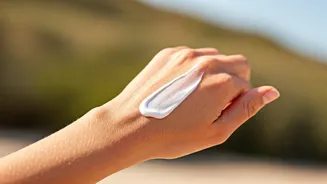
Even if you're diligent about reapplying, you might not be getting the full benefit if you're not using enough product. Studies show that most people only apply 25-50% of the recommended amount. To achieve the SPF listed on the bottle, you need to apply it generously. The guideline from dermatologists is to use about one ounce—the amount that would fill a shot glass—to cover your entire body. For your face and neck alone, you should use about half a teaspoon. If you use less, an SPF 50 might only be providing the protection of an SPF 20. Don't skimp; a thick, even layer is your best defence.
Sunscreen for Everyday Life, Not Just the Beach
Sunscreen isn't just for holidays and beach trips. Daily, incidental sun exposure adds up. Harmful UV rays can penetrate clouds and even glass windows, meaning you're exposed during your commute, while sitting near a window at work, or just running errands. While you may not need to reapply as obsessively as you would during a day outdoors, if you sit next to a window all day, dermatologists recommend reapplying every four to six hours. Making sunscreen application and reapplication a daily habit is one of the most effective ways to prevent premature aging and reduce your risk of skin cancer.