




Start with a Waterproof Foundation
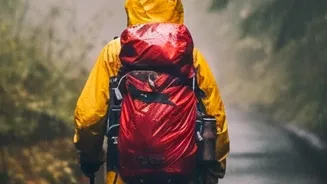
Your first line of defence is your primary travel bag. While many backpacks and suitcases claim to be water-resistant, a heavy downpour can quickly prove otherwise. For serious monsoon travel, investing in a fully waterproof backpack is your best bet.
Look for bags made from materials like PVC tarpaulin or those with a polyurethane coating and sealed seams. These are designed to keep water out completely. If a new bag isn't an option, a high-quality, correctly-sized rain cover is essential. However, be aware that standard rain covers can be unreliable in high winds and often leave the back panel of a backpack exposed. An additional layer of internal waterproofing is always a wise strategy.
Create an Internal Fortress for Electronics
Water is the natural enemy of your expensive gadgets. Relying on just your main bag is a risk you shouldn't take. The key is to create multiple barriers. Start by placing laptops, cameras, power banks, and chargers in individual waterproof pouches or heavy-duty zip-lock bags. For added security, group these smaller bags into a larger 'dry bag'. Dry bags, popular with kayakers and hikers, feature a roll-top closure that creates an airtight and watertight seal when properly fastened. This 'bag-within-a-bag' system ensures that even if your main luggage is compromised, your electronics remain perfectly safe and dry. Don't forget to toss a few silica gel packets into your electronics bags; they absorb ambient moisture and can prevent issues like lens fogging in a camera.
Keep Your Wardrobe Dry and Fresh
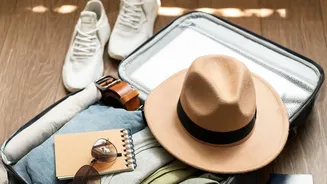
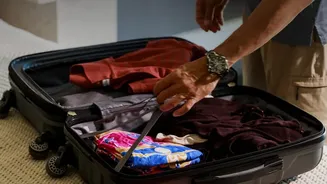
Arriving at your destination only to find a suitcase full of damp, musty clothes is a common monsoon travel woe. The solution starts with your choice of fabric. Leave heavy cotton and denim items at home; they absorb moisture like a sponge and can take days to dry in high humidity. Instead, pack clothes made from synthetic, quick-drying fabrics like polyester or nylon. To organize and protect your clothing, use packing cubes. For monsoon travel, consider upgrading to water-resistant packing cubes. They provide an extra layer of protection and are perfect for quarantining any damp items, like a used raincoat or wet socks, from your clean, dry clothes. This prevents moisture and mildew from spreading through your entire luggage.
Pack the Right Footwear and Outerwear
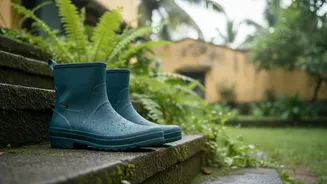
Your choice of what you wear can be as important as how you pack. A lightweight, breathable, and truly waterproof rain jacket is non-negotiable. Unlike a simple poncho, a good jacket will protect you from wind-driven rain and won't be a hassle in crowded places. When it comes to footwear, prioritize waterproof shoes or sandals with a good grip for slippery surfaces. It's also wise to pack a separate shoe bag, ideally a water-resistant one, to store wet or muddy footwear without soiling the rest of your belongings. A pair of lightweight, anti-slip sandals is also great to have for your hotel room or short walks, allowing your feet to dry and breathe.
Essential Monsoon Travel Extras
A few small, smart items can make a huge difference during a rainy journey. A powerful insect repellent is a must, as the monsoon season often sees a spike in mosquito populations. A portable power bank is crucial for keeping your devices charged, especially as power cuts can be more frequent during heavy rains. Also, consider carrying a compact, quick-drying microfibre towel; it's far more practical than a standard cotton towel that will struggle to dry in the damp air. Finally, while many experts suggest a good rain jacket is superior to an umbrella, a small, sturdy umbrella can still be useful for short dashes when you don't want to put on a full jacket.