



The dolphin push-up is a powerful exercise for building shoulder and core strength, but it requires proper technique. This guide breaks down the movement into safe, manageable steps, helping you master it without injury.
What Is a Dolphin Push-Up?
The dolphin push-up is a dynamic
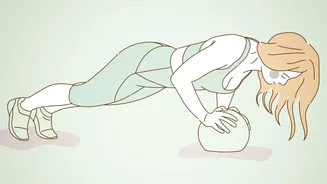
bodyweight exercise that merges a forearm plank with an inverted 'V' shape, similar to yoga's Dolphin Pose. The movement involves starting on your forearms, lifting your hips high, and then lowering your head towards your hands before pressing back up. This powerful sequence primarily targets the shoulders (deltoids), but also heavily engages your core, upper back, chest, and triceps. Besides building serious upper-body strength and stability, it also offers a great stretch for the hamstrings and calves, making it a highly efficient, multi-purpose exercise. Because it's performed on the forearms, it's also a fantastic wrist-friendly alternative to traditional push-ups.
The Foundation: Strength Prerequisites
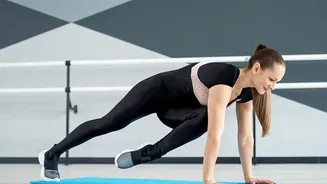
Before attempting the full movement, it's crucial to have a solid foundation to ensure safety and effectiveness. The dolphin push-up is an intermediate to advanced exercise, so don't rush the process. You should be comfortable holding a standard forearm plank for at least 30 to 45 seconds with good form—meaning your back is flat and your hips aren't sagging. Additionally, you need the shoulder stability to hold a static Dolphin Pose (an inverted V-shape on your forearms) without your shoulders caving in or shrugging up by your ears. Mastering these isometric holds is the first and most important step in preparing your body for the dynamic motion to come.
Progression 1: Master the Dolphin Pose
Start on your hands and knees. Lower your forearms to the floor, ensuring your elbows are directly under your shoulders. You can either keep your forearms parallel or interlace your fingers for a stronger base. From there, tuck your toes and lift your hips up and back, forming an inverted 'V' shape with your body. Keep a slight bend in your knees if your hamstrings are tight, but focus on creating a long line from your elbows through your spine. Press firmly through your forearms to keep your shoulders active and away from your ears. Hold this position for 20-30 seconds, rest, and repeat for 3-4 sets. This builds the isometric strength and stability needed.
Progression 2: Introduce Gentle Movement
Once you are stable in the Dolphin Pose, you can begin to introduce movement. From your inverted 'V' position, gently rock your body forward so your shoulders move towards a position over your elbows, and then press back to the starting Dolphin Pose. This is a smaller range of motion than a full pushup. The goal is to get your shoulder stabiliser muscles, like the serratus anterior, accustomed to controlling movement under load. Think of it as a 'sawing' motion. Perform 8–10 slow and controlled rocks, focusing on keeping your core tight and preventing your hips from dropping. This mini–movement is the bridge between the static hold and the full push–up.
Progression 3: The Full Dolphin Push–Up
Now you're ready to combine the elements. Start in your strong Dolphin Pose with hips high. Begin to lower your head towards your hands as your shoulders travel forward past your elbows. Your body will move in a diagonal forward–and–down motion. Just before your head touches the floor, forcefully press through your forearms and shoulders to push your hips back up to the starting inverted 'V' position. The key is to keep your core engaged throughout so your hips remain elevated and don't sag into a plank. Breathe out as you push back up. Start with a low number of reps, like 3–5, and focus entirely on perfect form before adding more.
Common Mistakes to Avoid
Proper form is everything. One of the most common mistakes is letting the hips sag, which turns the exercise into a simple forearm plank rock and removes the focus from the shoulders. Another frequent error is letting the shoulders shrug up to the ears, which creates neck tension; always think about pressing your shoulders away from your ears. Also, watch for elbows that flare out wide. Keeping them shoulder–width apart creates a stable and safe base for the movement. Finally, remember to breathe. Don't hold your breath; inhale on the way down and exhale powerfully as you push back up to the start.