



Peeking Behind the Cosmic Veil
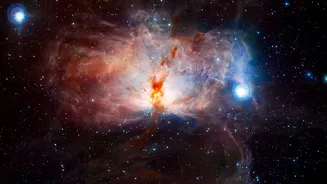
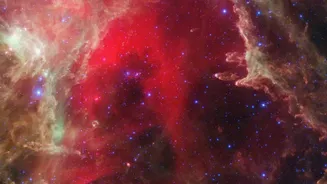
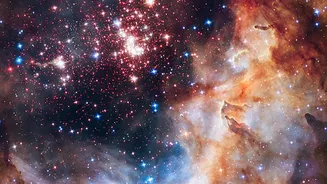
Stellar nurseries are vast, beautiful clouds of gas and dust where gravity slowly pulls material together to form new stars. For astronomers, these regions are both a source of fascination and frustration. While they are the cradles of all stars and planetary
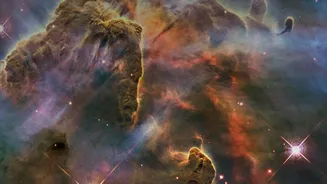
systems, the very dust that fuels star birth also acts like a thick fog, blocking visible light and hiding the action within. Telescopes like Hubble, which see primarily in visible light, gave us stunning images of the outer edges of these nurseries, like the iconic Pillars of Creation, but the core processes remained largely obscured. It was like trying to understand a factory by only looking at its exterior walls. We knew what was happening inside in theory, but we couldn't see the machinery in motion.
The Infrared Advantage
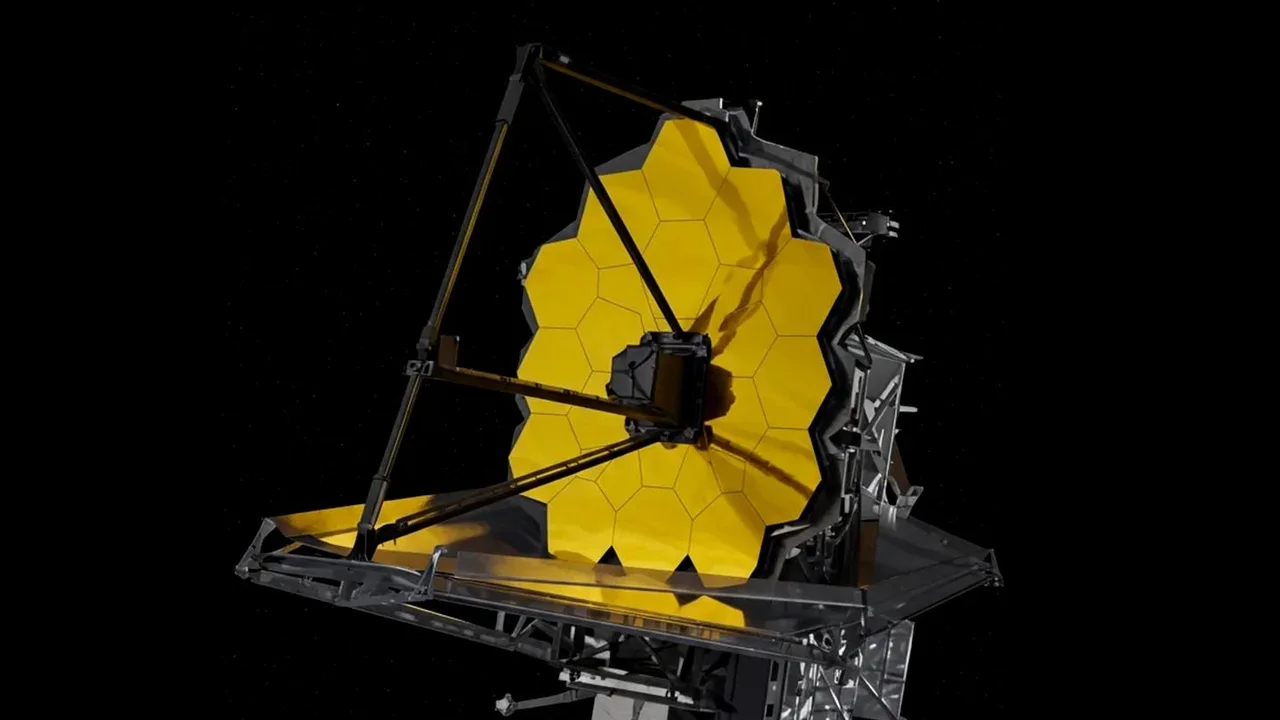
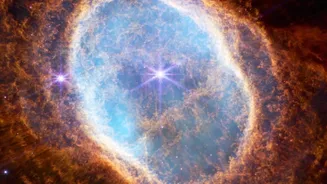
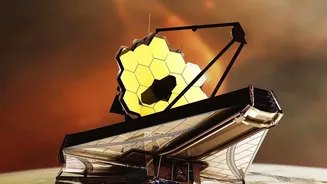
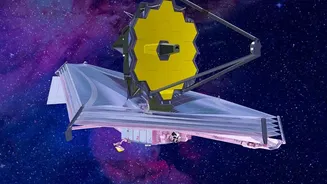
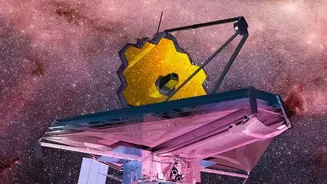
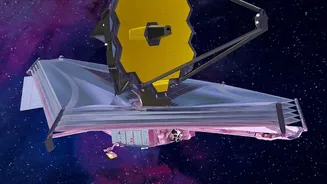
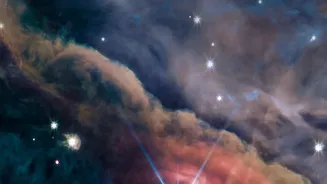
This is where the James Webb Space Telescope (JWST) comes in. Its primary superpower is its ability to see the universe in infrared light. Infrared wavelengths are longer than visible light, which allows them to pass through clouds of cosmic dust that would otherwise absorb or scatter shorter wavelengths. This allows JWST to peer directly into the heart of stellar nurseries, transforming opaque clouds into transparent windows. For the first time, scientists can observe the earliest stages of star formation directly, watching as protostars—infant stars still gathering mass from their parent cloud—begin to glow. This has provided an unprecedented look at how stars and their planetary systems come into being.
What New Discoveries Reveal
JWST's observations have already yielded groundbreaking discoveries. In regions like the Sagittarius B2 cloud, the most active star-forming region in our galaxy, astronomers have uncovered a wealth of previously invisible stars. The telescope's sensitivity revealed that this stellar nursery may be even more active than previously estimated. In other nurseries, JWST has captured stunningly detailed images of jets and outflows from young stars. These are powerful streams of material ejected from the poles of protostars, which plow through the surrounding gas and dust. By studying the composition and structure of these outflows, scientists are gaining new insights into how a star's growth is regulated. Some observations have even found unexpected phenomena, such as high-energy ultraviolet radiation around infant stars, which challenges existing models of star formation.
Rewriting the Textbooks on Starbirth
These new views are not just adding details; they are forcing a rewrite of astronomical theories. For example, by observing the sheer number and types of young stars, JWST is helping astronomers understand the efficiency of star formation and why some regions are more prolific than others. Observations of the Sagittarius B2 cloud, for instance, show a sharp, compressed edge, suggesting a past event may have crushed the cloud and triggered its intense star-birthing activity. Furthermore, studies of protoplanetary disks—the swirling disks of gas and dust around young stars where planets form—are revealing how gas flows and stellar winds shape the architecture of future solar systems. Discoveries of Jupiter-sized worlds forming in these nurseries are providing direct evidence of how planets coalesce, pushing the boundaries of the star formation process itself.