



First, Let Your Eyes Adjust
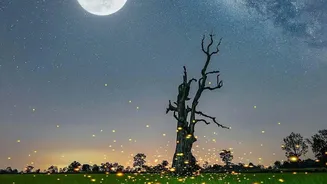
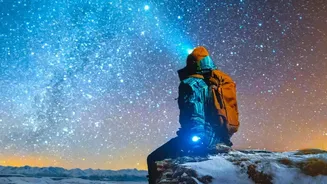
The most important tool you have is your own vision, but it needs time to adapt to the dark. Find a spot away from bright streetlights and building lights. It takes about 20 to 30 minutes for your eyes to become fully sensitive to low light, revealing
a multitude of stars that were previously invisible. Patience is key. Avoid looking at your phone, as its bright screen will reset your night vision. If you need a light, use a red torch, as red light has a minimal effect on your eyes' dark adaptation. This simple step can be the difference between seeing a few bright dots and a sky teeming with life.
Planets on Parade: Saturn Takes Center Stage
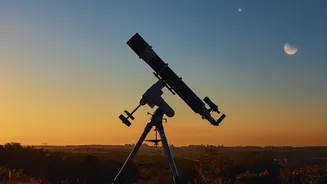
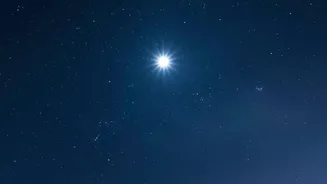
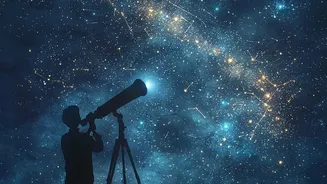
October 2026 is a fantastic month for planet-spotting. The main event is Saturn, which reaches its opposition on October 4. This means Earth is directly between Saturn and the sun, making the ringed planet appear at its biggest and brightest for the year. It will be visible all night long, rising in the east around sunset and looking like a steady, bright, yellowish point of light. No telescope is needed to see Saturn itself, though its famous rings require at least binoculars. In the pre-dawn hours, you can also spot Mars and Jupiter. Look towards the eastern horizon before sunrise to see the reddish hue of Mars and the brilliant light of Jupiter, the largest planet in our solar system.
Catch a 'Shooting Star': Two Meteor Showers
October hosts two meteor showers. First are the Draconids, which peak on the evening of October 8-9. This is an unusual shower because the best viewing time is in the early evening, just after full darkness sets in, not after midnight. The moon will be nearly new, providing ideal dark sky conditions for spotting these meteors. While typically a modest shower with about 10 meteors per hour, the Draconids have been known to produce surprising outbursts. Later in the month, the Orionid meteor shower peaks on the night of October 21-22. Produced by debris from the famous Halley's Comet, the Orionids are known for their bright, fast meteors. You can expect to see up to 20 meteors per hour under dark skies. While a bright moon will be present in the evening, it sets a few hours before dawn, leaving the prime viewing window dark and perfect for the show.
Follow the Moon's Phases
The Moon itself is a beautiful object to observe. October begins with a waning moon leading to the New Moon on October 10. A new moon provides the darkest skies, making it the best time for stargazing faint objects. The Full Moon, known as the Hunter's Moon, will rise on October 26. For many in India, this full moon coincides with Kojagiri Purnima, a festival honouring the goddess Lakshmi. Watching the full moon rise on the eastern horizon around sunset is a dramatic sight, as it often appears larger and tinted with an orange hue.
Go Constellation Hunting
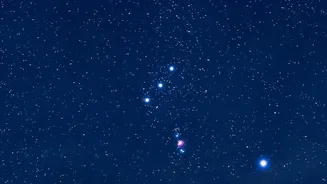
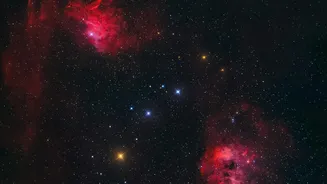
You don't need to be an expert to find constellations. The key for Northern Hemisphere observers this month is the Great Square of Pegasus. Look for a large, easily recognizable square of four bright stars in the eastern sky during the evening. It’s a great anchor point. From there, you can try to trace other nearby patterns. Another iconic constellation, Orion the Hunter, begins to rise in the east before midnight and is the source of the Orionid meteor shower. Using a simple stargazing app on your phone (with a red-light filter on) can be a great help, acting as a modern star map to guide your eyes across the celestial canvas.